
Finasteride 1 mg,
does it really help with Slowed progression and increased hair growth in adult male androgenetic alopecia?
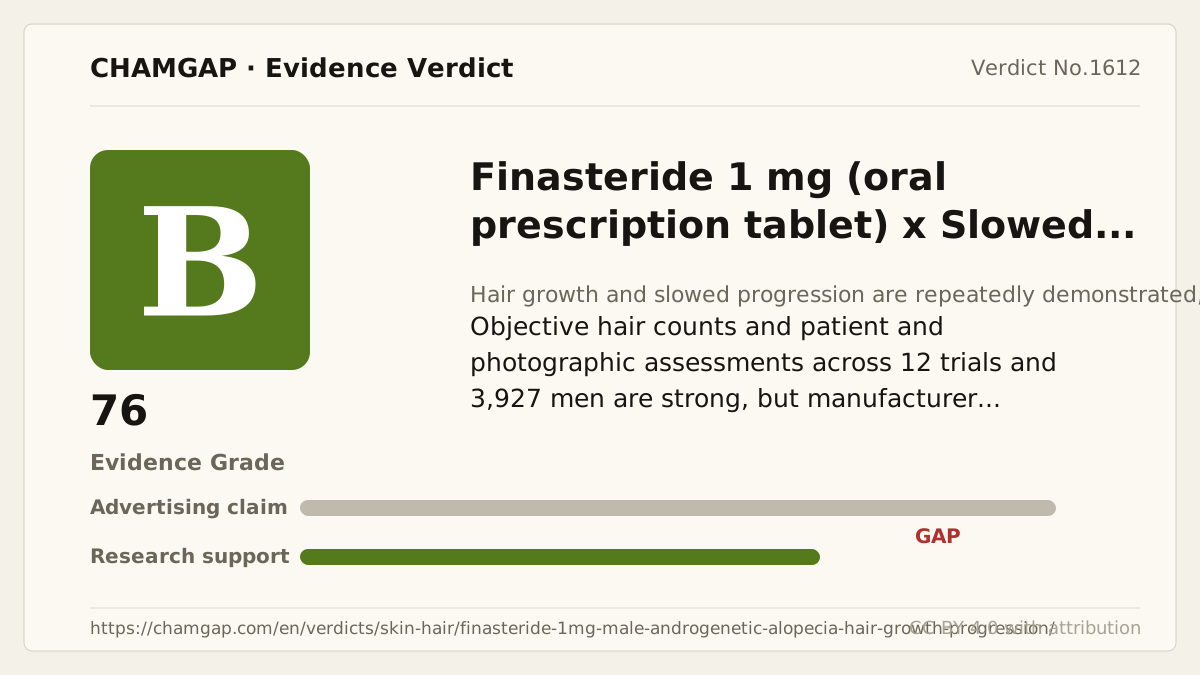
research showsOral finasteride 1 mg is rated B because it slows progression and increases hair growth in adult male androgenetic alopecia. A peer-reviewed systematic review synthesized 12 randomized trials involving 3,927 men and found that hair count increased by 9.42% more than placebo in the short term (95% CI 7.95% to 10.90%) and by 24.3% more in the long term (17.92% to 30.60%); patient, investigator, and photographic assessments also favored finasteride. Two one-year phase 3 trials involving 1,553 men and a two-year extension consistently supported objective hair counts and slowed progression. Direct hair count and appearance outcomes are not surrogate-only evidence, but concentration in the Merck development program and dependence on continued treatment yield B with 76 points.
ads claimMarketing can expand the findings into a cure, permanent benefit after discontinuation, or absence of adverse effects. The evidence supports slowed progression and average improvements in hair count and appearance during continued treatment of adult male androgenetic alopecia; response varies, and the result does not automatically apply to other causes of hair loss.
Useful facts when choosing a product
- The usual prescription dose for adult male androgenetic alopecia is finasteride 1 mg once daily, and at least three months of continued use is generally needed before judging visible response.
- Benefit is maintained during continued treatment rather than being a permanent cure, and acquired hair benefit can reverse within about 12 months after discontinuation.
- Reduced libido, erectile dysfunction, and ejaculatory dysfunction can occur; persistent sexual, psychiatric, and physical symptoms described as post-finasteride syndrome have been reported, but their frequency and causality remain debated.
- Depressed mood or suicidal thoughts require prompt clinical contact, and women who are or may be pregnant should not handle crushed or broken tablets because of risk to a male fetus.
Chamgap Semantic Classification Code
Candidate index · review held
UNK.finasteride.oral.slowed-progression-and-increased-hair-growth-male-androgenetic-alopecia.increase.placeboUnknown > Finasteride > Oral > Slowed progression and increased hair growth male androgenetic alopecia > Increase claim > Placebo
An automated migration candidate, not an issued permanent code; exact claim scope remains under review. This machine-generated migration candidate helps retrieval but is not a permanent assignment. The original verdict ID and URL remain authoritative.
What the research actually shows
Mella and colleagues 2010 was a peer-reviewed systematic review of 12 randomized trials and 3,927 men, reporting short- and long-term improvements in hair count and patient, investigator, and photographic assessments. Kaufman and colleagues 1998 was a peer-reviewed original article listing the Finasteride Male Pattern Hair Loss Study Group and covering two one-year randomized trials of 1,553 men and a blinded second-year extension of 1,215; in an area with 876 hairs at baseline, the placebo-adjusted differences were 107 hairs at one year and 138 at two years. Lee and colleagues 2019 was a peer-reviewed safety meta-analysis of 15 trials and 4,495 men, finding a relative risk of 1.66 for sexual adverse effects with finasteride 1 mg. The 2025 EMA safety review was regulatory material that confirmed suicidal ideation as an adverse reaction to 1-mg and 5-mg tablets; it is not a peer-reviewed efficacy original article.
Why this is classified as B (76)
A systematic review of 12 trials and 3,927 men found placebo-adjusted hair-count gains of 9.42% short term and 24.3% long term, with consistent patient and photographic improvement. Hair count is a direct measurement and hair-loss progression and appearance are treatment targets, so rule ①-ⓐ does not cap the evidence as surrogate-only. Concentration in the Merck program, continued-treatment dependence, and sexual and psychiatric safety issues yield B with 76 points.
Counterpoint. This verdict is limited to the 1-mg hair-loss dose and adult male androgenetic alopecia. It differs in dose, indication, and endpoint from verdict 660, which is A with 82 points for 5-mg benign prostatic hyperplasia, and verdict 1214, which is C with 58 points for 5-mg prostate-cancer diagnosis prevention; their grades are not interchangeable.
Rejudgment record. New verdict — Rated B based on consistent direct hair counts and patient, investigator, and photographic assessments across a 12-trial, 3,927-man systematic review and two large phase 3 trials; did not apply rule ①-ⓐ because hair count and hair-loss appearance are not biomarker-only surrogates, while concentration in the Merck development program and dependence on continued treatment prevent A
Sub-claim grades by effect
This ingredient is marketed for several effects. A single overall grade blends strong and weak claims together, so each effect is graded separately here. The overall grade reflects the strongest disconfirming or core claim.
| Effect (sub-claim) | Grade | Basis |
|---|---|---|
| Increased hair count during treatment | B | A systematic review of 12 trials and 3,927 men found placebo-adjusted hair-count increases of 9.42% short term and 24.3% long term. |
| Slowed progression and improved appearance during treatment | B | Patient, investigator, and expert-panel photographic assessments in large phase 3 trials all favored finasteride over placebo. |
| Persistent maintenance of hair benefit after discontinuation | D | Acquired benefit reverses within about 12 months after stopping continued treatment, so permanent persistence is not supported. |
Cross-check — AI research and Codex final gate
Evidence Table
| Study | Design | Sample | Funding | Endpoint | Result | Weight |
|---|---|---|---|---|---|---|
| Mella JM et al. 2010 | Systematic review of randomized placebo-controlled trials | 12 studies involving 3,927 men | Academic systematic review including numerous manufacturer-sponsored original trials | Short- and long-term hair count, patient, investigator, photographic assessments, and adverse effects | The placebo-adjusted hair-count difference was 9.42% short term (95% CI 7.95% to 10.90%) and 24.3% long term (17.92% to 30.60%); subjective and photographic assessments also favored finasteride. | Key synthesis of multiple randomized trials |
| Kaufman KD et al.; Finasteride Male Pattern Hair Loss Study Group. 1998 | Original report of two multicenter randomized double-blind placebo-controlled phase 3 trials and blinded extensions | 1,553 randomized at one year and 1,215 continuing into year two | Merck Research Laboratories development program with company authors | Target-area hair count and patient, investigator, and expert-panel photographic assessments | In an area with 876 hairs at baseline, placebo-adjusted differences were 107 hairs at one year and 138 at two years, with every assessment method favoring finasteride. | Large confirmatory trials with direct hair outcomes |
| Lee S et al. 2019 | Safety systematic review and meta-analysis of randomized double-blind placebo-controlled trials | 15 trials involving 4,495 men | Academic safety evidence synthesis | Sexual adverse effects including reduced libido, erectile dysfunction, and ejaculatory dysfunction | The relative risk of sexual adverse effects with finasteride 1 mg was 1.66 (95% CI 1.20 to 2.30). | Key safety synthesis separated from efficacy |
Receipt — 4 References
All 4 cited sources were verified for existence at the original page (as of 2026-07-24).
Final verification and publication gate: Codex · Evidence date: 2026-07-24 · Corrections: none
Cite this verdict
[Chamgap] Finasteride 1 mg x slowed progression and increased hair growth in adult male androgenetic alopecia — Evidence Grade B·76. 4 cited sources checked. Source: https://chamgap.com/en/verdicts/skin-hair/finasteride-1mg-male-androgenetic-alopecia-hair-growth-progression/ · CC BY 4.0CC BY 4.0 — free to use with attribution; do not distort grades, numbers, or verdict meaning.
What this document does and does not do
Chamgap is an information source. It reports what research has and has not confirmed; it does not tell readers what to take or buy. That decision belongs to readers and, when needed, medical or legal professionals. This verdict reflects literature available up to the search date and may change as new research appears. Nothing here is medical advice.