
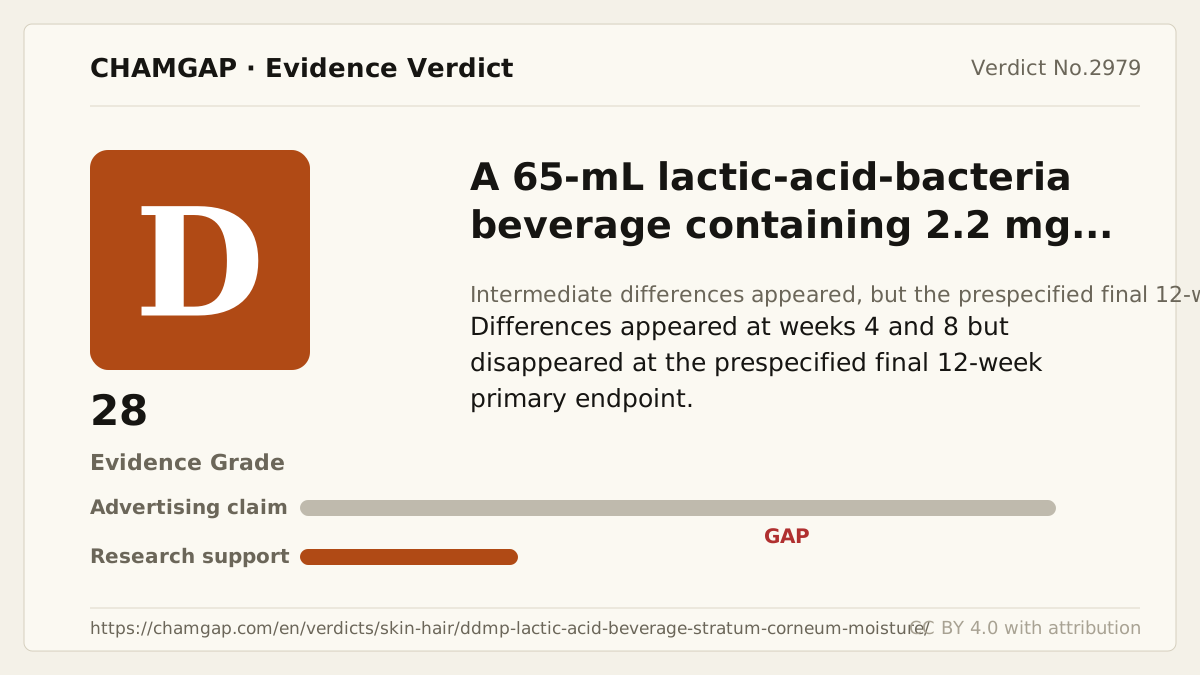
A 65-mL lactic-acid-bacteria beverage containing 2.2 mg DDMP,
does it really help with Increased stratum-corneum moisture at 12 weeks?
research showsGrade D. The prespecified 12-week primary endpoint was 29.7±7.67 versus 29.7±6.19 arbitrary units, P=.985. Change from baseline was also null, +8.05±6.85 versus +7.92±5.97, P=.877. No 95% confidence interval was reported, so a meaningful benefit cannot be excluded.
ads claimPositive intermediate visits cannot be translated into a sustained 12-week moisturizing effect. A difference that disappears at the final visit means durability was not established.
Useful facts when choosing a product
- The control beverage differed only by absence of DDMP.
- The primary endpoint was stratum-corneum moisture at week 12.
- The paper did not report a 95% confidence interval.
Chamgap Semantic Classification Code
Candidate index · review held
S.lactic-acid-bacteria-beverage-containing-ddmp.UNK.stratum-corneum-moisture-at.increase.placeboSupplements and nutraceuticals > lactic-acid-bacteria beverage containing DDMP > Unknown > stratum-corneum moisture at > Increase claim > Placebo
An automated migration candidate, not an issued permanent code; exact claim scope remains under review. This machine-generated migration candidate helps retrieval but is not a permanent assignment. The original verdict ID and URL remain authoritative.
What the research actually shows
The Japanese study randomized 220 healthy adults with dry skin to a 65-mL lactic-acid-bacteria beverage containing 2.2 mg DDMP or the identical beverage without DDMP for 12 weeks and analyzed 213 protocol-compliant participants. Nissin York supplied both beverages. T.S., M.T., and S.S. worked at the Nissin York Development Research Institute, while M.M. worked for contract organization M&I Science. No separate public funding, medical-writing, or publication support was reported. Registration was UMIN000052867.
Why this is classified as D (28)
The final 12-week primary endpoint was null and the analysis used 213 protocol-compliant participants, giving D with 28 points.
Counterpoint. Positive weeks 4 and 8 are disclosed but do not replace the final endpoint.
Rejudgment record. Cross-check applied — Null prespecified final 12-week primary endpoint, separation of intermediate positivity from final loss of effect, and 213-person per-protocol analysis
| Endpoint | S | Surrogate marker - laboratory or imaging measures |
| Replication | R1 | Single confirmatory trial |
| Independence | I0 | Evidence comes only from manufacturer studies |
| Effect size | E0 | Null |
| Precision | C0 | The confidence interval leaves room for benefit |
Stored derived and displayed grades match; this is not a current recalculation or validity check (D).
Sub-claim grades by effect
This ingredient is marketed for several effects. A single overall grade blends strong and weak claims together, so each effect is graded separately here. The overall grade reflects the strongest disconfirming or core claim.
| Effect (sub-claim) | Grade | Basis |
|---|---|---|
| Increased stratum-corneum moisture at 12 weeks | D | Values were 29.7 versus 29.7 a.u., P=.985. |
| Moisture change at weeks 4 and 8 | C | Intermediate visits were positive, but the difference disappeared by week 12. |
Cross-check — AI research and Codex final gate
Evidence Table
| Study | Design | Sample | Funding | Endpoint | Result | Weight |
|---|---|---|---|---|---|---|
| Sato T et al. 2025 | Double-blind randomized identical-beverage placebo-controlled parallel trial | 220 randomized; 213 protocol-compliant participants analyzed | Nissin York supplied study and placebo beverages; three company employee authors | Stratum-corneum moisture at 12 weeks | 29.7±7.67 vs 29.7±6.19 a.u., P=.985; change +8.05±6.85 vs +7.92±5.97, P=.877; no 95% CI reported | Prespecified final-visit primary endpoint |
Receipt — 1 References
All 1 cited sources were verified for existence at the original page (as of 2026-08-26).
Final verification and publication gate: Codex · Evidence date: 2026-08-26 · Corrections: none
Cite this verdict
[Chamgap] No Benefit of a DDMP Lactic-Acid-Bacteria Beverage for 12-Week Stratum-Corneum Moisture — Evidence Grade D·28. 1 cited sources checked. Source: https://chamgap.com/en/verdicts/skin-hair/ddmp-lactic-acid-beverage-stratum-corneum-moisture/ · CC BY 4.0CC BY 4.0 — free to use with attribution; do not distort grades, numbers, or verdict meaning.
What this document does and does not do
Chamgap is an information source. It reports what research has and has not confirmed; it does not tell readers what to take or buy. That decision belongs to readers and, when needed, medical or legal professionals. This verdict reflects literature available up to the search date and may change as new research appears. Nothing here is medical advice.