
Broad-spectrum sunscreen,
does it really help with Prevention of cutaneous squamous cell carcinoma through daily application?
research showsDaily broad-spectrum sunscreen is rated B because randomized evidence shows fewer cutaneous squamous cell carcinoma tumors on treated sites. In the 1,621-participant Nambour trial, the tumor-count incidence rate ratio over 4.5 years was 0.61 (95% CI 0.46 to 0.81). The difference in people developing a first SCC was not significant, and basal cell carcinoma was not prevented. A single unblinded trial in one Australian community using one SPF 16 formulation does not justify grade A.
ads claimMarketing can turn a reduction in skin cancer into protection against every skin cancer under every pattern of use. The direct randomized evidence applies to reduced SCC tumor burden on exposed sites with regular daily use, not certain prevention of BCC or of the first skin cancer in each person.
Useful facts when choosing a product
- The Nambour trial used an SPF 16 broad-spectrum formulation on the face, neck, arms, and backs of the hands every morning, with reapplication after heavy sweating, bathing, or prolonged sun exposure.
- Broad spectrum means coverage of both UVA and UVB, but real protection depends on adequate quantity, complete coverage, reapplication, and complementary shade and protective clothing.
- Control participants could use sunscreen at their usual discretion, so the trial compared assigned daily use with usual discretionary use rather than with complete nonuse.
- Sunscreen can cause contact dermatitis or eye irritation. Questions about vitamin D and systemic absorption are separate safety issues and neither erase nor broaden the demonstrated SCC efficacy.
Chamgap Semantic Classification Code
Candidate index · review held
UNK.broad-spectrum-sunscreen.UNK.cutaneous-squamous-cell-carcinoma-through-daily-application.prevent.factorialUnknown > Broad-spectrum sunscreen > Unknown > cutaneous squamous cell carcinoma through daily application > Occurrence-prevention claim > Defined factorial contrast
An automated migration candidate, not an issued permanent code; exact claim scope remains under review. This machine-generated migration candidate helps retrieval but is not a permanent assignment. The original verdict ID and URL remain authoritative.
What the research actually shows
The Nambour trial randomized 1,621 residents of Queensland, Australia, to daily SPF 15-plus broad-spectrum sunscreen or usual discretionary use. Over 4.5 years, SCC tumor counts were significantly lower with daily application, whereas the numbers of people with a first SCC and BCC person and tumor endpoints were not significantly reduced. The 2006 post-trial follow-up found an SCC tumor rate ratio of 0.62 (95% CI 0.38 to 0.99) across the full follow-up, while BCC still showed no clear reduction. An actinic keratosis analysis from the same trial found 24% less lesion accumulation during 1992 to 1994, but the difference in the next interval was not significant.
Why this is classified as B (75)
The trial showed a significant direct cancer benefit for SCC tumor counts, with a rate ratio of 0.61 and persistence during extended follow-up. First-person SCC incidence was not significant, BCC was not reduced, and evidence is concentrated in one unblinded high-UV Australian trial, supporting B with 75 points.
Counterpoint. Daily sunscreen does not replace shade, protective clothing, hats, or avoidance of intense midday ultraviolet exposure. A new, nonhealing, scaly, or bleeding lesion needs clinical assessment regardless of sunscreen use.
Rejudgment record. New verdict — Accepted the direct SCC tumor-count cancer benefit and its persistence in the Nambour randomized trial, while applying rule ⑤ and the evidence ceiling for nonsignificant first-person SCC incidence, no BCC benefit, and a single high-UV regional trial of one formulation
Sub-claim grades by effect
This ingredient is marketed for several effects. A single overall grade blends strong and weak claims together, so each effect is graded separately here. The overall grade reflects the strongest disconfirming or core claim.
| Effect (sub-claim) | Grade | Basis |
|---|---|---|
| Reduction in SCC tumor incidence with daily application | B | The Nambour randomized trial found a significant tumor-count rate ratio of 0.61, but first-person incidence was not significant. |
| Reduction in actinic keratosis development and accumulation | B | Lesion accumulation was significantly lower during the first 2.5 years, but the later interval was not significant. |
| Prevention of BCC or first-person skin cancer incidence | C | BCC endpoints and first-person SCC incidence were not significantly reduced. |
Cross-check — AI research and Codex final gate
Evidence Table
| Study | Design | Sample | Funding | Endpoint | Result | Weight |
|---|---|---|---|---|---|---|
| Green A et al. Nambour Trial 1999 | Community-based 2-by-2 factorial randomized controlled trial | 1,621 adults in Nambour, Australia; 4.5 years of follow-up | Australian public research support; study products were supplied by industry | First-person BCC and SCC incidence and tumor counts on exposed sites | The SCC tumor-count rate ratio was 0.61 (95% CI 0.46 to 0.81), while first-person SCC incidence at 0.88 (0.50 to 1.56) and BCC endpoints were not significant. | Key direct cancer-prevention randomized trial |
| van der Pols JC et al. Nambour extended follow-up 2006 | Eight-year observational follow-up after the randomized intervention | Original Nambour trial cohort of 1,621 participants | Public support from the Australian NHMRC and Department of Health and Ageing | BCC and SCC tumor incidence across the full follow-up | The SCC tumor rate was almost 40% lower, with a rate ratio of 0.62 (95% CI 0.38 to 0.99), while BCC showed no clear reduction. | Durability evidence |
| Darlington S et al. 2003 | Actinic keratosis analysis within the Nambour randomized trial | 1,621 randomized; 1,116 with complete skin examinations analyzed | Australian public research support; study products were supplied by industry | Interval change in actinic keratosis counts | The relative ratio for lesion accumulation was 0.76 (95% CI 0.62 to 0.94) in 1992 to 1994 but 0.95 (0.75 to 1.19) and nonsignificant in 1994 to 1996. | Supportive precancerous-lesion evidence |
Receipt — 3 References
Of 3 cited sources, 1 had limited original-page access (blocked or summary-only) and were verified via index/summary, marked partial; the rest were verified at the original page. As of 2026-07-23.
Final verification and publication gate: Codex · Evidence date: 2026-07-23 · Corrections: none
Cite this verdict
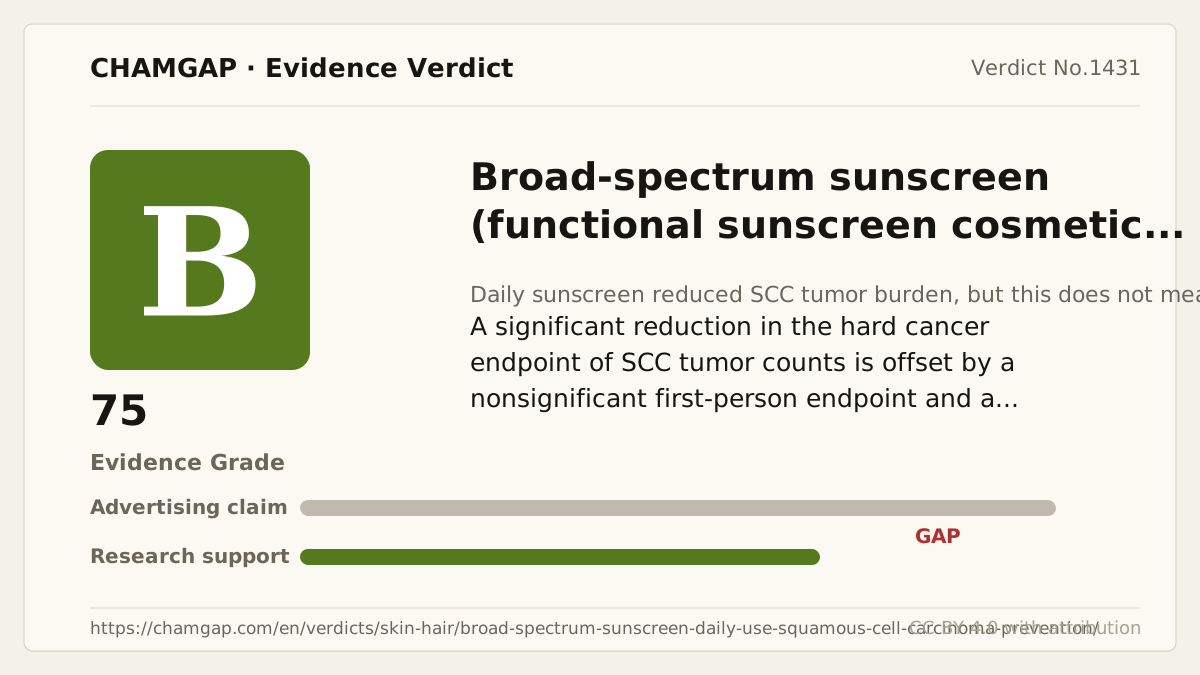
[Chamgap] Broad-spectrum sunscreen x prevention of cutaneous squamous cell carcinoma through daily application — Evidence Grade B·75. 3 cited sources checked. Source: https://chamgap.com/en/verdicts/skin-hair/broad-spectrum-sunscreen-daily-use-squamous-cell-carcinoma-prevention/ · CC BY 4.0CC BY 4.0 — free to use with attribution; do not distort grades, numbers, or verdict meaning.
What this document does and does not do
Chamgap is an information source. It reports what research has and has not confirmed; it does not tell readers what to take or buy. That decision belongs to readers and, when needed, medical or legal professionals. This verdict reflects literature available up to the search date and may change as new research appears. Nothing here is medical advice.