
Black sesame and sesamin,
does it really help with Improved androgenetic alopecia and hair regrowth after topical or oral use?
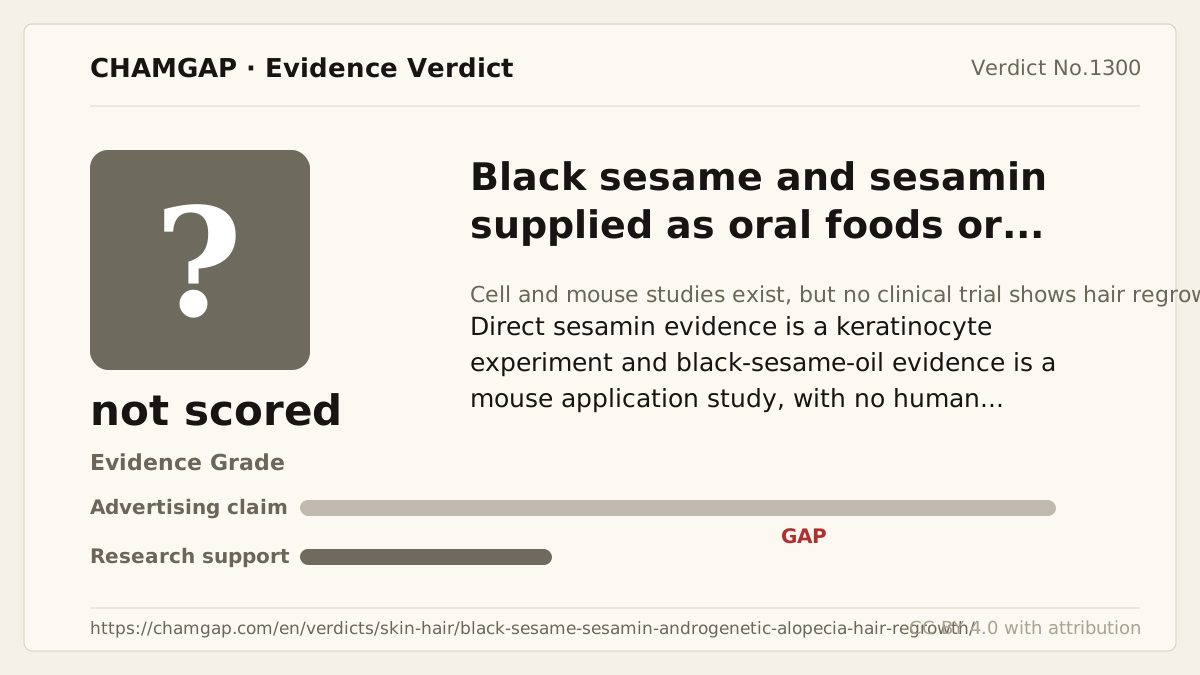
research showsNo human efficacy trial shows that eating black sesame or sesamin, or applying it to the scalp, improves androgenetic alopecia or regrows hair. The direct 2026 sesamin study was an in-vitro experiment measuring AR-MAPK-Wnt-related proteins in DHT-challenged HaCaT keratinocytes, and the paper itself stated that randomized clinical evidence was absent. A 2010 black-sesame-oil study applied the oil to shaved dorsal skin in C57BL/6 mice. Because no human androgenetic-alopecia study has tested oral or topical black sesame or sesamin, the verdict is ?.
ads claimThe traditional food association with hair health is combined with antioxidant properties, cellular signaling, and mouse regrowth to market DHT blockade or dark-hair regeneration. No human study establishes an oral dose, scalp concentration, hair-count increase, or durable effect in androgenetic alopecia.
Useful facts when choosing a product
- Black sesame is a food and sesamin is a sesame lignan, but a spoonful of food, a concentrated capsule, and a scalp oil create different exposures and cannot be treated as one therapy.
- The 2026 sesamin study measured protein signaling in HaCaT keratinocytes and did not measure human hair count, shaft diameter, density, standardized photographs, or patient satisfaction.
- The United States FDA classifies sesame as a major food allergen, so people with sesame allergy should avoid oral products and skin exposure and check labels carefully.
- Scalp oils can cause contact dermatitis, irritation, or folliculitis, and oral concentrate dose and purity vary by product, so progressive hair loss warrants dermatologic diagnosis and discussion of validated treatments.
Chamgap Semantic Classification Code
Candidate index · review held
S.black-sesame-and-sesamin-supplied.MULTI.androgenetic-alopecia-and-hair-regrowth-after-topical-or-oral-use.improve.UNKSupplements and nutraceuticals > Black sesame and sesamin supplied > Multiple: primary unresolved > androgenetic alopecia and hair regrowth after topical or oral use > Improvement claim > Unknown
An automated migration candidate, not an issued permanent code; exact claim scope remains under review. This machine-generated migration candidate helps retrieval but is not a permanent assignment. The original verdict ID and URL remain authoritative.
What the research actually shows
Kong and Kim 2010 assigned male C57BL/6 mice to saline, 3% minoxidil, or black sesame oil applied to shaved dorsal skin for three weeks and assessed gross and histologic regrowth plus IGF-1-related measures. Li 2026 computationally predicted androgenetic-alopecia targets and then treated DHT-challenged HaCaT keratinocytes with 10 or 80 micromolar sesamin to measure protein expression. Neither study administered an oral or topical intervention to human patients. A 2024 review of black sesame also identified inadequate clinical research on biological activity and toxicity as a central development gap.
Why this is classified as ?
Direct sesamin evidence in androgenetic alopecia consists of DHT-challenged keratinocyte experiments, while black sesame oil evidence comes from a shaved-mouse model. No clinical trial evaluates oral or topical use for human androgenetic alopecia or hair regrowth, so the verdict is ?.
Counterpoint. The cellular and animal signals could support dose finding and a randomized placebo-controlled human study of a standardized sesamin formulation. Traditional use cannot establish treatment efficacy before such a trial.
Rejudgment record. Cross-check applied — Applied the no-human-efficacy-literature rule because the direct sesamin evidence is a mechanistic experiment in DHT-challenged HaCaT cells and black sesame oil evidence is a topical shaved-mouse study, while no oral or topical clinical trial evaluates androgenetic-alopecia improvement or hair regrowth in humans
Sub-claim grades by effect
This ingredient is marketed for several effects. A single overall grade blends strong and weak claims together, so each effect is graded separately here. The overall grade reflects the strongest disconfirming or core claim.
| Effect (sub-claim) | Grade | Basis |
|---|---|---|
| Improvement of androgenetic alopecia | ? | No clinical trial has administered oral or topical black sesame or sesamin to patients with androgenetic alopecia. |
| Hair regrowth in patients with androgenetic alopecia | ? | Regrowth was reported only in shaved mice, with no hair-count, density, or shaft-diameter data from patients with androgenetic alopecia. |
| Slowing of hair-loss progression | ? | Sesamin-related DHT cellular signaling is a mechanistic hypothesis and does not test slower progression in patients. |
Cross-check — AI research and Codex final gate
Evidence Table
| Study | Design | Sample | Funding | Endpoint | Result | Weight |
|---|---|---|---|---|---|---|
| Li Y et al. 2026 | Network pharmacology, molecular docking, and in-vitro DHT-challenged keratinocyte study | HaCaT cell experiments; zero humans dosed | National Natural Science Foundation of China and Zhejiang traditional medicine research support; no competing interests reported | AR, p38 MAPK, BAX/BCL2, and WNT10B protein signaling | Sesamin altered relevant proteins in DHT-challenged HaCaT cells but did not measure hair regrowth or patient efficacy. | Direct mechanistic preclinical evidence, not human efficacy |
| Kong MK and Kim YC. 2010 | Topical animal experiment in a shaved C57BL/6 mouse model | Three groups of male mice; group size not stated in the abstract | Inadequately reported | Gross and histologic hair regrowth, ALP, gamma-GT, IGF-1, and SCF | Three weeks of black sesame oil accelerated regrowth versus saline, but the study involved neither humans nor an androgenetic-alopecia model. | Animal signal |
| Xu Z et al. 2024 | Review of black sesame nutrition and health effects | Preclinical and food-science literature | Not reported in the public abstract | Black sesame composition, biological activity, toxicity, and food applications | Identified inadequate clinical research on biological activities and toxicity as a major evidence gap. | Confirmation of the broader clinical evidence gap |
Receipt — 4 References
All 4 cited sources were verified for existence at the original page (as of 2026-07-24).
Final verification and publication gate: Codex · Evidence date: 2026-07-24 · Corrections: none
Cite this verdict
[Chamgap] Black sesame and sesamin x improved androgenetic alopecia and hair regrowth — Evidence Grade ?. 4 cited sources checked. Source: https://chamgap.com/en/verdicts/skin-hair/black-sesame-sesamin-androgenetic-alopecia-hair-regrowth/ · CC BY 4.0CC BY 4.0 — free to use with attribution; do not distort grades, numbers, or verdict meaning.
What this document does and does not do
Chamgap is an information source. It reports what research has and has not confirmed; it does not tell readers what to take or buy. That decision belongs to readers and, when needed, medical or legal professionals. This verdict reflects literature available up to the search date and may change as new research appears. Nothing here is medical advice.