
Black pepper plus canola-oil salad,
does it really help with Higher ten-hour plasma AUC and peak concentrations of total and individual carotenoids?
research showsThe grade is C with 46 points. Sixteen healthy young adults ate plain salad, black pepper 0.5 g, an emulsion containing 8 g canola oil, and their combination in a randomized crossover study. Ten-hour plasma carotenoid AUC and peak concentration were higher with the combination, but presenting relative multipliers without absolute AUC and dispersion would inflate the impression; standardized magnitude cannot be calculated.
ads claimThe narrow claim that pepper and oil together increase vegetable-carotenoid absorption more than either alone is directly supported. The result cannot be expanded into skin antioxidant or photoaging prevention.
Useful facts when choosing a product
- The study used 0.5 g ground black pepper and a specially formulated emulsion containing 8 g canola oil.
- The combination had higher total carotenoid AUC than control and either component alone, but condition-specific absolute AUC and dispersion were unavailable.
- Relative multipliers without absolute values inflate the apparent effect and were excluded from magnitude classification.
- The endpoint was ten-hour plasma exposure, not total fractional absorption, tissue concentration, or a skin outcome.
Chamgap Semantic Classification Code
Candidate index · review held
F.raw-vegetable-salad-with-black-pepper-plus-an-emulsion-containing-canola-oil.food.higher-plasma-auc-and-peak-concentrations-of-total-and-individual-carotenoids.increase.UNKFoods and beverages > Raw vegetable salad with black pepper plus an emulsion containing canola oil > Food consumption > Higher plasma AUC and peak concentrations of total and individual carotenoids > Increase claim > Unknown
An automated migration candidate, not an issued permanent code; exact claim scope remains under review. This machine-generated migration candidate helps retrieval but is not a permanent assignment. The original verdict ID and URL remain authoritative.
What the research actually shows
Sixteen healthy adults, eight men and eight women, ate plain salad, salad with an 8-g canola-oil emulsion, salad with 0.5 g black pepper, and the combination in randomized crossover order. NCT03490955 lists ten-hour postprandial plasma carotenoid AUC and peak concentration as the primary outcome. The combination exceeded control and either component alone, and interaction tests were significant for selected carotenoids, but absolute AUC and dispersion could not be confirmed, so relative multipliers were not used to classify magnitude. The design supports joint action but cannot assign the combination increase to pepper or oil alone. More absorption and better health are different questions, and no clinical trial was identified that measured skin erythema, wrinkles, or photoaging for this exact pairing.
Why this is classified as C (46)
The four-condition comparison found a combination signal, but missing absolute AUC and dispersion prevent magnitude classification; the one-meal sixteen-person study gives C with 46 points.
Counterpoint. Neither pepper nor oil alone explains the full combination multiplier, and real-world emulsification may alter the result.
Rejudgment record. Cross-check applied — No validated clinical threshold exists and condition-specific absolute AUC and dispersion were unavailable, so relative multipliers cannot establish standardized magnitude
| Endpoint | S | Surrogate marker - laboratory or imaging measures |
| Replication | R1 | Single confirmatory trial |
| Independence | I1 | Mixed funding sources |
| Effect size | EX | The clinical size of the effect could not be judged |
Stored derived and displayed grades match; this is not a current recalculation or validity check (C).
Sub-claim grades by effect
This ingredient is marketed for several effects. A single overall grade blends strong and weak claims together, so each effect is graded separately here. The overall grade reflects the strongest disconfirming or core claim.
| Effect (sub-claim) | Grade | Basis |
|---|---|---|
| Increased carotenoid absorption with black pepper plus canola-oil emulsion | C | The combination produced greater total AUC than control and either component alone. |
| Skin photoprotection or improved photoaging | ? | Skin clinical outcomes were not measured for this exact food pairing. |
Cross-check — AI research and Codex final gate
Evidence Table
| Study | Design | Sample | Funding | Endpoint | Result | Weight |
|---|---|---|---|---|---|---|
| Luo et al. 2022 | Four-condition randomized crossover single-meal study | Sixteen healthy adults, eight men and eight women | Funding source not confirmed in the accessible source | Plasma carotenoid AUC and Cmax over zero to ten hours | The combination exceeded control and either component, but absolute AUC and dispersion were unavailable | Core direct absorption evidence |
Receipt — 2 References
All 2 cited sources were verified for existence at the original page (as of 2026-08-04).
Final verification and publication gate: Codex · Evidence date: 2026-08-04 · Corrections: none
Cite this verdict
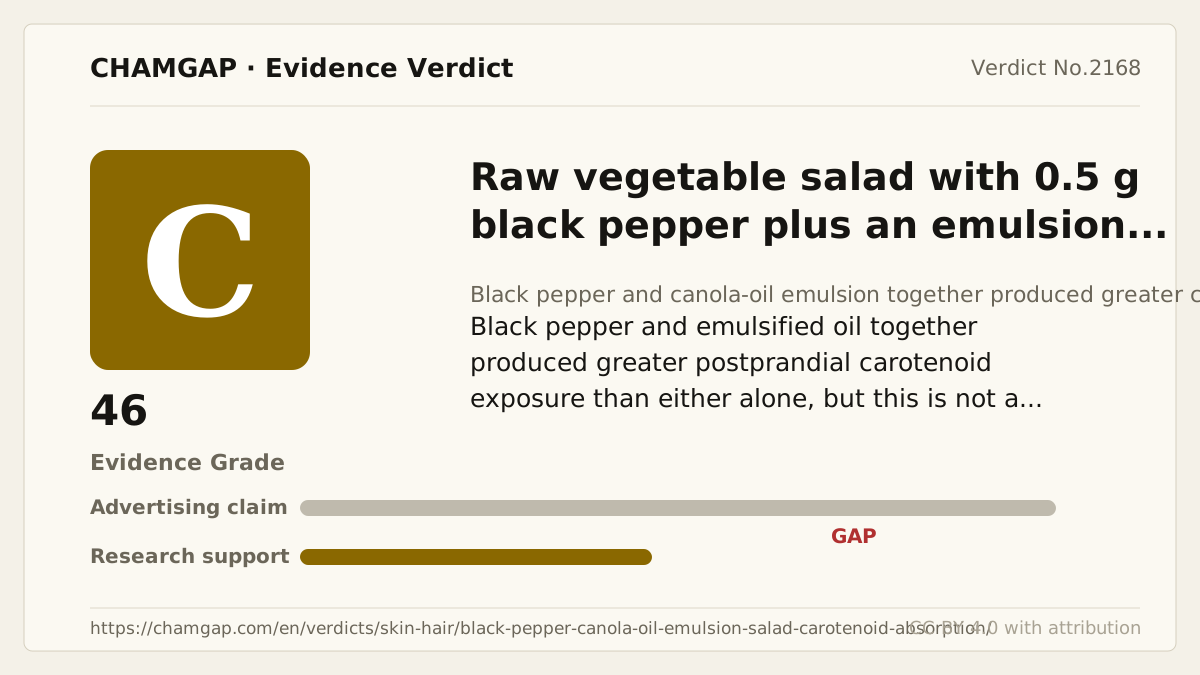
[Chamgap] Black pepper plus canola-oil salad x increased carotenoid absorption — Evidence Grade C·46. 2 cited sources checked. Source: https://chamgap.com/en/verdicts/skin-hair/black-pepper-canola-oil-emulsion-salad-carotenoid-absorption/ · CC BY 4.0CC BY 4.0 — free to use with attribution; do not distort grades, numbers, or verdict meaning.
What this document does and does not do
Chamgap is an information source. It reports what research has and has not confirmed; it does not tell readers what to take or buy. That decision belongs to readers and, when needed, medical or legal professionals. This verdict reflects literature available up to the search date and may change as new research appears. Nothing here is medical advice.