
Batana oil,
does it really help with Follicle reactivation, hair regrowth, and reversal of androgenetic alopecia?
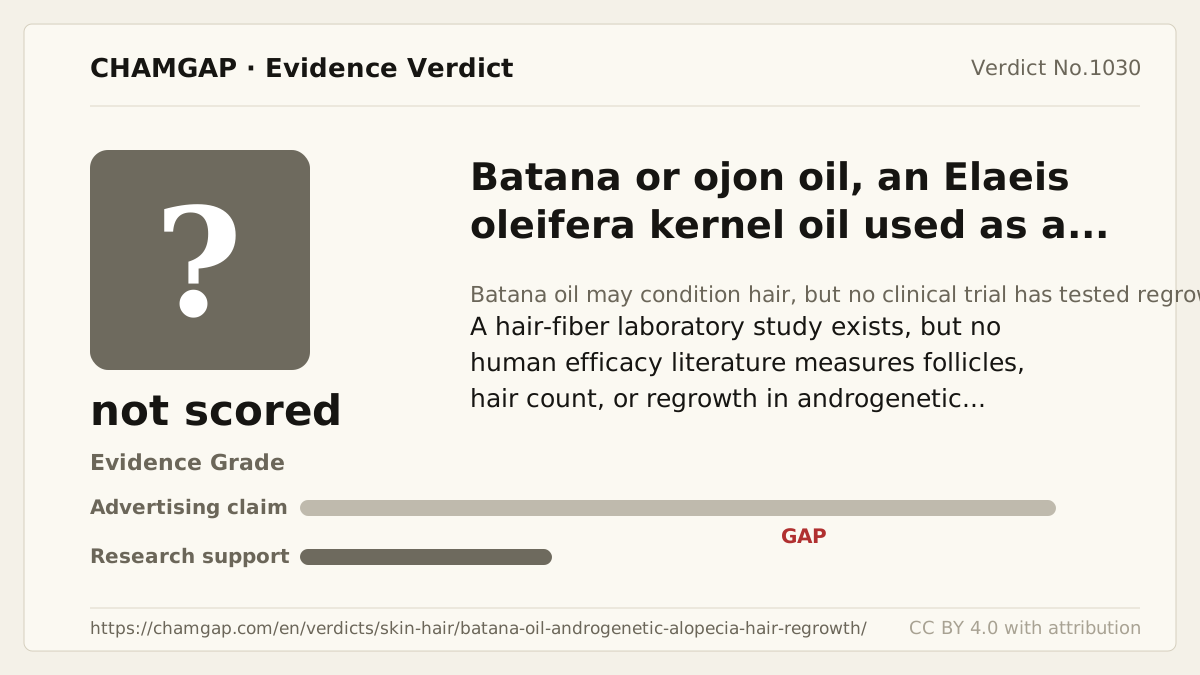
research showsBatana oil is rated ? because no human efficacy literature evaluates whether it reactivates follicles, regrows hair, or reverses androgenetic alopecia. Searches combining batana, ojon, and Elaeis oleifera kernel oil with androgenetic alopecia, hair growth, and regrowth found no matching randomized trial, prospective cohort, or case series. The identified ojon-oil study applied coconut- and ojon-oil nanoemulsions to chemically damaged human hair strands and measured microscopy, thermal behavior, and mechanical properties; it did not assess scalp, follicles, hair count, or people with hair loss. Systematic reviews and an evidence-based guideline for androgenetic alopecia include clinical evidence for treatments such as minoxidil and finasteride but no batana-oil clinical data. Conditioning, shine, and possible reduction in hair-fiber breakage were not transferred to regrowth, so the score is null. Direct safety evidence is also limited, with scalp irritation and contact allergy remaining separate concerns.
ads claimMarketing converts fatty acids, vitamin E, antioxidant constituents, traditional use, and cosmetic shine after application into claims that dead follicles are revived, baldness is completely reversed, or minoxidil is replaced. Presence of constituents and hair-fiber conditioning do not demonstrate modification of androgen signaling or reversal of follicular miniaturization.
Useful facts when choosing a product
- Batana or ojon oil is marketed as oil from kernels of the American oil palm Elaeis oleifera and is used primarily for cosmetic conditioning of hair and scalp.
- Products labeled batana may be pure oil or mixtures containing coconut oil, shea butter, rosemary oil, fragrance, and other ingredients, so the full ingredient list and actual Elaeis oleifera content should be checked.
- An oil coating can increase shine and softness and reduce breakage, making hair appear fuller, but this is not evidence of increased hair count, follicle reactivation, or reversal of androgenetic alopecia.
- Direct human safety studies are limited. A small patch test is prudent, and use should stop if redness, itching, burning, or bumps occur; inflamed scalp disease and known palm or fragrance allergy warrant particular caution.
Chamgap Semantic Classification Code
Candidate index · review held
UNK.batana-or-ojon-oil.UNK.follicle-reactivation-hair-regrowth-and-reversal-of-androgenetic-alopecia.assess.UNKUnknown > Batana or ojon oil > Unknown > Follicle reactivation, hair regrowth, and reversal of androgenetic alopecia > Association or change assessment > Unknown
An automated migration candidate, not an issued permanent code; exact claim scope remains under review. This machine-generated migration candidate helps retrieval but is not a permanent assignment. The original verdict ID and URL remain authoritative.
What the research actually shows
Rodrigues and colleagues prepared nanoemulsions with a surfactant and coconut or ojon oil, applying them to human hair strands previously damaged with sodium hydroxide. Electron microscopy, thermogravimetric analysis, and mechanical tests suggested improvement in some fiber properties, but there were no living participants, scalp biopsies, hair counts, shaft-diameter measurements, or standardized clinical photographs. The 2018 S3 guideline by Kanti and colleagues systematically searched MEDLINE, EMBASE, and the Cochrane Library through 2015 for androgenetic-alopecia treatments, while Adil and Godwin meta-analyzed good- or fair-quality randomized trials and found regrowth efficacy for minoxidil, finasteride, and low-level laser therapy. Neither synthesis presented a batana-oil efficacy trial; this contextualizes the evidence gap but is not a direct null test of batana oil.
Why this is classified as ?
The claim-matched search found zero human efficacy studies of batana oil measuring follicles, standardized photographs, hair count, shaft diameter, or regrowth in androgenetic alopecia. Ex vivo physical-property data from an ojon-oil nanoemulsion and randomized evidence for other treatments were not transferred across product and endpoint. The result is ? with a null score. Product mixtures and content variability and possible scalp irritation remain separate safety issues.
Counterpoint. Reassessment requires pure Elaeis oleifera kernel oil standardized for identity, oxidation, and contaminants in a randomized carrier- or placebo-controlled trial of people with diagnosed androgenetic alopecia. Target-area hair count and diameter, standardized photographs, discontinuation, and scalp adverse events should be prespecified over at least six to twelve months.
Rejudgment record. New verdict — Applied ? because a claim-matched search combining batana, ojon, and Elaeis oleifera kernel oil with androgenetic alopecia, hair growth, and regrowth found no completed published human efficacy literature measuring follicle reactivation, hair count, or regrowth. The identified ojon nanoemulsion study tested physical properties of excised damaged hair fibers, while the S3 guideline and randomized-trial meta-analysis concerned other validated treatments, so conditioning, shine, and fiber strength were kept separate from clinical regrowth
Sub-claim grades by effect
This ingredient is marketed for several effects. A single overall grade blends strong and weak claims together, so each effect is graded separately here. The overall grade reflects the strongest disconfirming or core claim.
| Effect (sub-claim) | Grade | Basis |
|---|---|---|
| Reactivation of follicles in androgenetic alopecia | ? | No human efficacy trial of batana oil has evaluated living scalp or follicles. |
| Hair regrowth in androgenetic alopecia | ? | No human literature has measured regrowth using target-area hair count, shaft diameter, or standardized photography. |
| Reversal of androgenetic alopecia | ? | Hair-fiber shine or strength is a different endpoint from reversal of follicular miniaturization, and no claim-matched human trial exists. |
Cross-check — AI research and Codex final gate
Evidence Table
| Study | Design | Sample | Funding | Endpoint | Result | Weight |
|---|---|---|---|---|---|---|
| Claim-matched literature search. 2026-07-21 | Search of PubMed and scholarly web literature | Zero human efficacy trials of batana oil for androgenetic alopecia | Not applicable | Follicle reactivation, target-area hair count and diameter, regrowth, and reversal of hair loss | No human efficacy literature matching the target was found with combinations of batana, ojon, Elaeis oleifera, alopecia, and hair growth. | Confirmation of absent human efficacy literature |
| Rodrigues LGF et al. 2021 | Laboratory study of excised damaged human hair fibers | Human hair strands; zero living participants or patients with hair loss | Funding information was inadequate on the article page | Electron microscopy, thermal analysis, and mechanical hair-fiber properties | A nanoemulsion containing ojon oil improved some hair-fiber properties but did not evaluate follicles or hair growth. | Indirect cosmetic-property evidence, not clinical regrowth |
| Kanti V et al. 2018 S3 guideline | Evidence-based androgenetic-alopecia guideline with systematic searches | Treatment literature in MEDLINE, EMBASE, and the Cochrane Library through October 2015 | European Dermatology Forum guideline project | Clinical regrowth efficacy and safety for androgenetic alopecia in women and men | Assessed evidence-based treatments but presented no human efficacy data for batana oil. | Disease-evidence context, not a direct null trial |
Receipt — 3 References
All 3 cited sources were verified for existence at the original page (as of 2026-07-21).
Final verification and publication gate: Codex · Evidence date: 2026-07-21 · Corrections: none
Cite this verdict
[Chamgap] Batana oil x hair regrowth and reversal of androgenetic alopecia — Evidence Grade ?. 3 cited sources checked. Source: https://chamgap.com/en/verdicts/skin-hair/batana-oil-androgenetic-alopecia-hair-regrowth/ · CC BY 4.0CC BY 4.0 — free to use with attribution; do not distort grades, numbers, or verdict meaning.
What this document does and does not do
Chamgap is an information source. It reports what research has and has not confirmed; it does not tell readers what to take or buy. That decision belongs to readers and, when needed, medical or legal professionals. This verdict reflects literature available up to the search date and may change as new research appears. Nothing here is medical advice.