
Twenty-four-hour perioperative antibiotic prophylaxis after open cystectomy and urinary diversion,
does it really help with Noninferior 90-day surgical-site infection versus prophylaxis continued until catheter removal?
research showsGrade C. Among 193 analyzed PAPRAC participants, 90-day SSI occurred in 8/95 (8.4%) versus 12/98 (12.2%), risk difference -3.8 points (90% CI -11.1 to 3.4), within the prespecified 10-point margin. Median exposure fell from 8 days to 1 day, a 7-day or 87.5% reduction.
ads claimThe practical benefit is 7 fewer antibiotic days, with less selection pressure and cost. The trial did not directly test individual resistance emergence or costs.
Useful facts when choosing a product
- Only open cystectomy with urinary diversion was studied.
- The short arm stopped prophylaxis after 24 hours.
- The extended arm continued until catheters and stents were removed.
Chamgap Semantic Classification Code
Candidate index · review held
M.perioperative-antibiotic-prophylaxis-after-open-cystectomy-and-urinary-diversion.UNK.surgical-site-infection.noninferior.UNKMedicinal interventions > perioperative antibiotic prophylaxis after open cystectomy and urinary diversion > Unknown > surgical-site infection > Noninferiority claim > Unknown
An automated migration candidate, not an issued permanent code; exact claim scope remains under review. This machine-generated migration candidate helps retrieval but is not a permanent assignment. The original verdict ID and URL remain authoritative.
What the research actually shows
PAPRAC randomized 196 and used a prespecified per-protocol primary analysis of 193 after three canceled surgeries. SSI was adjudicated using CDC criteria by infectious-disease and non-treating clinicians. The risk difference was -3.8 points, within the 10-point margin. Median prophylaxis was 1 day versus 8 days. No external grant or company in-kind support was reported; Insel Gruppe AG, University Hospital Bern sponsored and conducted the study.
Why this is classified as C (56)
The margin was met while exposure fell by 7 days, but noninferiority, small size, and completer analysis limit the verdict to C with 56 points.
Counterpoint. Antibiotic-stewardship value is not direct proof of less resistance in each patient.
Rejudgment record. Cross-check applied — The prespecified 10-point margin and 7-day exposure reduction were balanced against noninferiority, small size, and completer-analysis limitations
| Endpoint | H | Hard endpoint - actual events such as death |
| Replication | R1 | Single confirmatory trial |
| Independence | I2 | Decisive evidence is publicly or non-profit funded |
| Effect size | E+ | Meets the clinically important threshold |
Stored derived and displayed grades match; this is not a current recalculation or validity check (C).
Sub-claim grades by effect
This ingredient is marketed for several effects. A single overall grade blends strong and weak claims together, so each effect is graded separately here. The overall grade reflects the strongest disconfirming or core claim.
| Effect (sub-claim) | Grade | Basis |
|---|---|---|
| Noninferior 90-day surgical-site infection | C | The prespecified 10-point margin was met. |
| Reduced antibiotic exposure | C | Median exposure fell from 8 days to 1 day. |
Cross-check — AI research and Codex final gate
Evidence Table
| Study | Design | Sample | Funding | Endpoint | Result | Weight |
|---|---|---|---|---|---|---|
| PAPRAC | Single-center open-label noninferiority randomized trial | 196 randomized; 193 in per-protocol primary analysis | No external grant or company in-kind support reported; sponsored and conducted by Insel Gruppe AG, University Hospital Bern | CDC-defined surgical-site infection within 90 days | 8.4% vs 12.2%, risk difference -3.8 points (90% CI -11.1 to 3.4), margin 10 points; duration 1 vs 8 days | Pivotal noninferiority evidence |
Receipt — 1 References
All 1 cited sources were verified for existence at the original page (as of 2026-08-26).
Final verification and publication gate: Codex · Evidence date: 2026-08-26 · Corrections: none
Cite this verdict
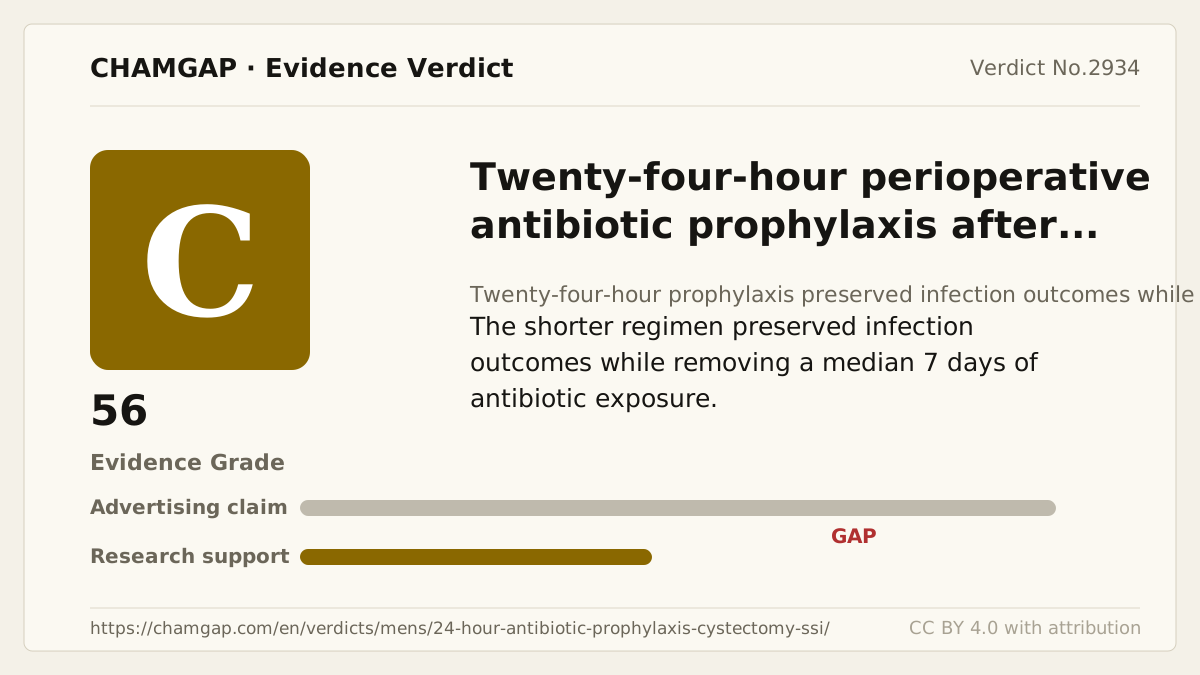
[Chamgap] Benefit of Twenty-Four-Hour Antibiotic Prophylaxis for Noninferior Surgical-Site Infection After Cystectomy — Evidence Grade C·56. 1 cited sources checked. Source: https://chamgap.com/en/verdicts/mens/24-hour-antibiotic-prophylaxis-cystectomy-ssi/ · CC BY 4.0CC BY 4.0 — free to use with attribution; do not distort grades, numbers, or verdict meaning.
What this document does and does not do
Chamgap is an information source. It reports what research has and has not confirmed; it does not tell readers what to take or buy. That decision belongs to readers and, when needed, medical or legal professionals. This verdict reflects literature available up to the search date and may change as new research appears. Nothing here is medical advice.