
Abiraterone acetate,
does it really help with Prolonged overall survival when combined with ADT and prednisolone in high-risk metastatic castration-sensitive prostate cancer?
research showsAdding abiraterone acetate to androgen-deprivation therapy and low-dose prednisone or prednisolone is rated A because it prolongs overall survival in newly diagnosed high-risk metastatic castration-sensitive prostate cancer. In the final analysis of the 1,199-participant phase 3 LATITUDE trial, median overall survival was 53.3 versus 36.5 months, with a death hazard ratio of 0.66 (95% CI 0.56 to 0.78). The initial analysis found radiographic progression-free survival of 33.0 versus 14.8 months, hazard ratio 0.47, and the separate randomized STAMPEDE platform replicated overall-survival benefit in its 1,002-participant metastatic subgroup, hazard ratio 0.61. Replication of a direct hard outcome in different large trials and long-term follow-up support A with 94 points. Hypertension, hypokalemia, fluid retention, hepatotoxicity, and required glucocorticoid coadministration are separate safety issues.
ads claimPromotion may imply that abiraterone alone cures cancer or produces the same survival benefit in every form of prostate cancer. The evidence concerns metastatic castration-sensitive disease treated with continuing ADT and a low-dose glucocorticoid; the numbers cannot be transferred unchanged to different stages, risk levels, or prior-treatment settings.
Useful facts when choosing a product
- Abiraterone acetate is an oral prescription anticancer drug converted to abiraterone, which inhibits CYP17 and reduces androgen synthesis in the testes, adrenal glands, and tumor tissue.
- LATITUDE used 1,000 mg once daily while fasting together with prednisone 5 mg/day and ADT. Food can greatly increase exposure, so fasting instructions for the specific tablet formulation must be followed strictly.
- Patients without surgical castration must continue ADT while taking abiraterone, and prednisone or prednisolone should not be stopped without clinical direction.
- Blood pressure, serum potassium, fluid retention, and liver tests should be checked before and during treatment. Severe liver impairment or treatment-emergent hepatotoxicity requires holding, reducing, or stopping treatment according to the prescription.
Chamgap Semantic Classification Code
Candidate index · review held
M.abiraterone-acetate.UNK.prolonged-overall-survival-when-combined-with-adt-and-prednisolone-in-high-risk-metastatic-castration-sensitive-prostate-cancer.assess.placeboMedicinal interventions > Abiraterone acetate > Unknown > Prolonged overall survival when combined with ADT and prednisolone in high-risk metastatic castration-sensitive prostate cancer > Association or change assessment > Placebo
An automated migration candidate, not an issued permanent code; exact claim scope remains under review. This machine-generated migration candidate helps retrieval but is not a permanent assignment. The original verdict ID and URL remain authoritative.
What the research actually shows
The initial LATITUDE report randomized 1,199 men with newly diagnosed high-risk metastatic castration-sensitive prostate cancer to ADT plus abiraterone 1,000 mg and prednisone 5 mg or ADT plus placebo. At a median 30.4-month follow-up, three-year survival was 66% versus 49%, the death hazard ratio was 0.62, and radiographic progression-free survival was 33.0 versus 14.8 months, hazard ratio 0.47. The final analysis at a median 51.8-month follow-up confirmed median overall survival of 53.3 versus 36.5 months, hazard ratio 0.66. STAMPEDE randomized 1,917 patients starting hormone therapy for high-risk localized or metastatic disease, and its 1,002-participant metastatic subgroup showed an overall-survival hazard ratio of 0.61 (95% CI 0.49 to 0.75), independently replicating LATITUDE. Although trial populations differed, the direction and magnitude of overall-survival benefit were consistent in metastatic castration-sensitive disease.
Why this is classified as A (94)
LATITUDE provides a large direct effect in 1,199 participants, with final overall survival of 53.3 versus 36.5 months, hazard ratio 0.66, and initial radiographic progression-free survival hazard ratio 0.47. STAMPEDE independently replicated overall-survival benefit in 1,002 metastatic participants with a hazard ratio of 0.61. Despite industry sponsorship, replication of the same hard outcome in a publicly supported platform trial satisfies the prescription-drug hard-outcome standard for A. Alignment with the A92 and A96 enzalutamide prostate-survival verdicts yields A with 94 points. Hypertension, hypokalemia, and hepatotoxicity remain separate safety issues.
Counterpoint. A large survival benefit does not mean identical absolute benefit for every patient. Comorbidities, liver function, cardiovascular risk, metastatic burden, and alternative intensification options should be compared with oncology and urology teams.
Rejudgment record. New verdict — Applied A based on final overall survival of 53.3 versus 36.5 months with a hazard ratio of 0.66 and radiographic progression-free survival hazard ratio of 0.47 in the 1,199-participant LATITUDE trial, plus independent replication of overall survival with a hazard ratio of 0.61 in the 1,002-participant metastatic STAMPEDE subgroup
Sub-claim grades by effect
This ingredient is marketed for several effects. A single overall grade blends strong and weak claims together, so each effect is graded separately here. The overall grade reflects the strongest disconfirming or core claim.
| Effect (sub-claim) | Grade | Basis |
|---|---|---|
| Prolonged overall survival in high-risk metastatic castration-sensitive prostate cancer | A | Final LATITUDE median overall survival was 53.3 versus 36.5 months, hazard ratio 0.66, replicated by a hazard ratio of 0.61 in the STAMPEDE metastatic subgroup. |
| Prolonged radiographic progression-free survival in high-risk metastatic castration-sensitive prostate cancer | A | The LATITUDE co-primary outcome was 33.0 versus 14.8 months, hazard ratio 0.47, a large direct effect. |
| Delayed pain progression and initiation of subsequent chemotherapy | B | Prespecified secondary outcomes in LATITUDE improved significantly, but the evidence hierarchy is lower than for the overall-survival co-primary outcome. |
Cross-check — AI research and Codex final gate
Evidence Table
| Study | Design | Sample | Funding | Endpoint | Result | Weight |
|---|---|---|---|---|---|---|
| Fizazi K et al. 2019 LATITUDE final analysis | Multinational randomized double-blind placebo-controlled phase 3 final overall-survival analysis | 1,199 patients with newly diagnosed high-risk metastatic castration-sensitive prostate cancer | Sponsored by Janssen Research and Development with employee coauthors | Final overall survival and long-term safety | Median overall survival was 53.3 versus 36.5 months, HR 0.66 (95% CI 0.56-0.78, P<.0001). | Pivotal large final analysis of a direct hard outcome |
| Fizazi K et al.; LATITUDE Investigators. 2017 | Multinational randomized double-blind placebo-controlled phase 3 interim analysis | 1,199 participants; 597 abiraterone and 602 placebo | Janssen Research and Development | Co-primary overall survival and radiographic progression-free survival | The death hazard ratio was 0.62, and radiographic progression-free survival was 33.0 versus 14.8 months, hazard ratio 0.47; both co-primary outcomes improved. | Direct phase 3 survival and progression evidence |
| James ND et al.; STAMPEDE Investigators. 2017 | Multicenter randomized open-label adaptive platform phase 3 comparison | 1,917 overall, including a 1,002-participant metastatic subgroup | Led by Cancer Research UK and the UK Medical Research Council with additional industry support including Janssen | Overall survival and failure-free survival, with analysis of the metastatic subgroup | In 1,002 metastatic participants, the overall-survival hazard ratio was 0.61 (95% CI 0.49-0.75), replicating LATITUDE. | Overall-survival replication in a separate large randomized trial |
Receipt — 3 References
All 3 cited sources were verified for existence at the original page (as of 2026-07-22).
Final verification and publication gate: Codex · Evidence date: 2026-07-22 · Corrections: none
Cite this verdict
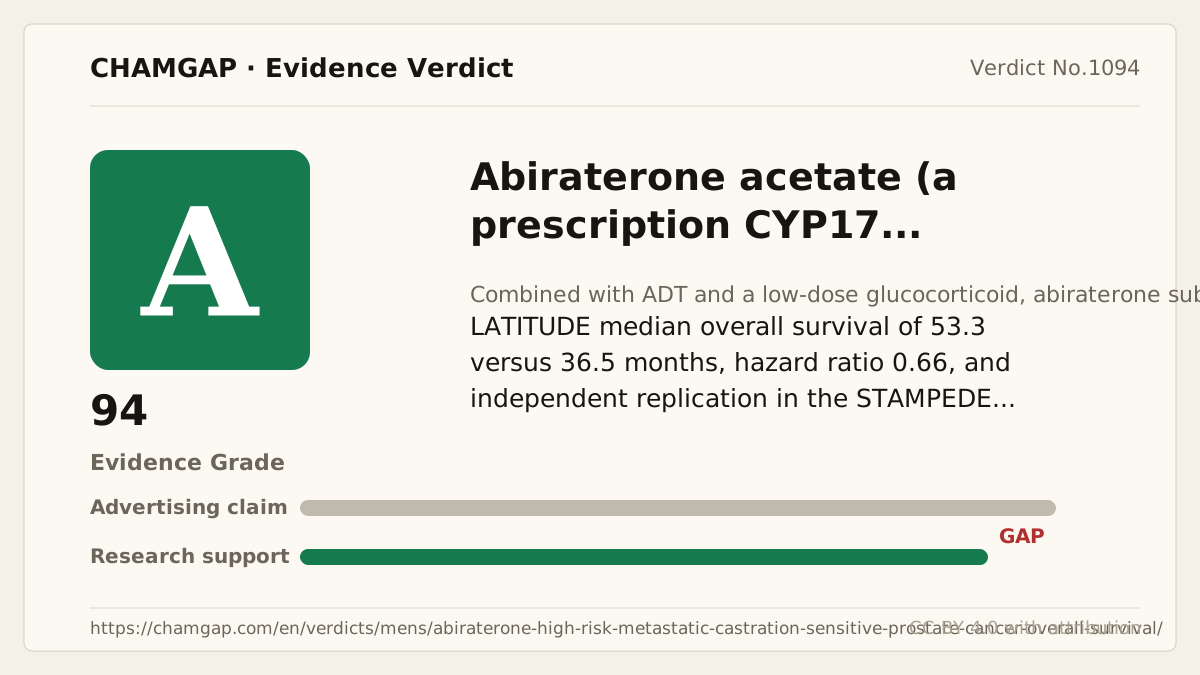
[Chamgap] Abiraterone acetate x prolonged overall survival in high-risk metastatic castration-sensitive prostate cancer — Evidence Grade A·94. 3 cited sources checked. Source: https://chamgap.com/en/verdicts/mens/abiraterone-high-risk-metastatic-castration-sensitive-prostate-cancer-overall-survival/ · CC BY 4.0CC BY 4.0 — free to use with attribution; do not distort grades, numbers, or verdict meaning.
What this document does and does not do
Chamgap is an information source. It reports what research has and has not confirmed; it does not tell readers what to take or buy. That decision belongs to readers and, when needed, medical or legal professionals. This verdict reflects literature available up to the search date and may change as new research appears. Nothing here is medical advice.