
Radium-223 dichloride,
does it really help with Prolonged overall survival and delayed symptomatic skeletal events in castration-resistant prostate cancer with symptomatic bone metastases and no visceral metastases?
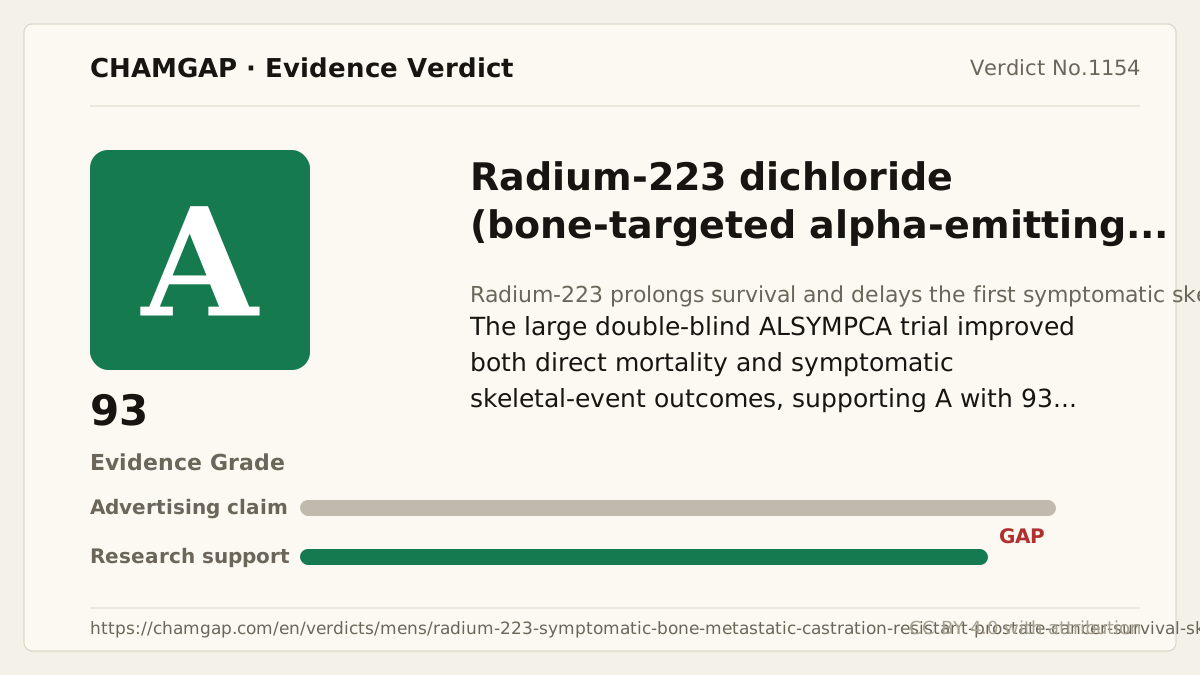
research showsRadium-223 is rated A because a large double-blind randomized trial showed prolonged overall survival and delayed the first symptomatic skeletal event in castration-resistant prostate cancer with symptomatic bone metastases and no visceral metastases. In the final analysis of 921 ALSYMPCA participants, median overall survival was 14.9 versus 11.3 months, with a death hazard ratio of 0.70; a prespecified follow-up analysis found 15.6 versus 9.8 months to the first symptomatic skeletal event, hazard ratio 0.66. Both mortality and clinically apparent skeletal events improved, supporting A with 93 points. Myelosuppression, gastrointestinal adverse effects, and fractures remain separate safety issues; concurrent initiation with abiraterone and prednisone or prednisolone increased fractures to 29% versus 11% without improving efficacy in the separate ERA 223 trial and should be avoided.
ads claimA 3.6-month difference in median survival does not mean every individual lives exactly 3.6 months longer, nor does targeting bone metastases mean cure. Although radium-223 emits alpha particles, it should not be presented as a general systemic radiotherapy for visceral or soft-tissue disease.
Useful facts when choosing a product
- Radium-223 is a prescription radiopharmaceutical that behaves similarly to calcium, localizes to areas of increased bone formation in metastases, and emits short-range alpha particles.
- The ALSYMPCA regimen used up to six intravenous injections at four-week intervals, while the administered activity should follow current calibrated product labeling and nuclear-medicine protocols.
- Blood counts should be checked before treatment and each dose, with treatment held or stopped when anemia, thrombocytopenia, or neutropenia does not recover adequately.
- Fracture risk and bone health should be assessed and bone-protecting therapy considered; concurrent initiation with abiraterone and prednisone or prednisolone is not recommended because of increased fractures.
Chamgap Semantic Classification Code
Candidate index · review held
M.radium-223-dichloride.UNK.prolonged-overall-survival-and-delayed-symptomatic-skeletal-events-in-castration-resistant-prostate-cancer-with-symptomatic-bone-metastases-and-no-visceral-metastases.reduce.placeboMedicinal interventions > Radium-223 dichloride > Unknown > Prolonged overall survival and delayed symptomatic skeletal events in castration-resistant prostate cancer with symptomatic bone metastases and no visceral metastases > Reduction claim > Placebo
An automated migration candidate, not an issued permanent code; exact claim scope remains under review. This machine-generated migration candidate helps retrieval but is not a permanent assignment. The original verdict ID and URL remain authoritative.
What the research actually shows
Parker and colleagues in ALSYMPCA administered six injections of radium-223 or placebo at four-week intervals to patients who had received docetaxel, were ineligible for it, or declined it. The trial stopped early for efficacy at a prespecified interim analysis, and the 921-participant updated analysis retained a death hazard ratio of 0.70 and a 3.6-month median survival difference. The follow-up analysis by Sartor and colleagues assessed clinically apparent symptomatic skeletal events, defined by external-beam radiation for bone pain, symptomatic pathologic fracture, spinal-cord compression, or tumor-related orthopedic surgery rather than periodic imaging alone, and found significant delay. The pathologic-fracture component alone was not confirmed, with a hazard ratio of 0.62 and 95% CI of 0.35 to 1.09. Separate ERA 223 findings in asymptomatic or mildly symptomatic patients showed that adding radium-223 concurrently to abiraterone and a steroid did not improve skeletal-event-free survival and increased fractures, making strict separation of population, regimen, efficacy, and safety essential.
Why this is classified as A (93)
In the 921-participant double-blind ALSYMPCA trial, median overall survival was 14.9 versus 11.3 months with a death hazard ratio of 0.70, and median time to the first symptomatic skeletal event was 15.6 versus 9.8 months with a hazard ratio of 0.66. Although evidence is concentrated in one program, the hard-mortality-endpoint exception to the manufacturer ceiling and corpus alignment with grade-A prostate-cancer survival evidence support A with 93 points. Myelosuppression, fracture, and combination risks remain separate safety issues.
Counterpoint. Benefit applies most directly to castration-resistant disease with symptomatic bone metastases and no known visceral metastases. Reduction of pathologic fractures alone was not confirmed, and the evidence should not be extended to asymptomatic disease, visceral metastases, or hazardous combinations.
Rejudgment record. New verdict — Applied grade A for median overall survival of 14.9 versus 11.3 months with a direct death hazard ratio of 0.70 in the 921-participant double-blind ALSYMPCA phase 3 trial and prespecified time to first symptomatic skeletal event of 15.6 versus 9.8 months with a hazard ratio of 0.66; applied the hard-endpoint exception to the manufacturer ceiling for a prescription radiopharmaceutical and corpus alignment with grade-A prostate-cancer survival evidence
Sub-claim grades by effect
This ingredient is marketed for several effects. A single overall grade blends strong and weak claims together, so each effect is graded separately here. The overall grade reflects the strongest disconfirming or core claim.
| Effect (sub-claim) | Grade | Basis |
|---|---|---|
| Prolonged overall survival in castration-resistant prostate cancer with symptomatic bone metastases and no visceral metastases | A | The final ALSYMPCA analysis showed a direct mortality benefit, with median survival of 14.9 versus 11.3 months and a death hazard ratio of 0.70. |
| Delayed first symptomatic skeletal event | A | Clinically apparent events rather than scheduled-imaging surrogates were delayed to 15.6 versus 9.8 months, with a hazard ratio of 0.66. |
| Reduction of symptomatic pathologic fracture alone | D | The ALSYMPCA component hazard ratio was 0.62 with a 95% CI of 0.35 to 1.09, so efficacy for pathologic fracture alone was not confirmed. |
Cross-check — AI research and Codex final gate
Evidence Table
| Study | Design | Sample | Funding | Endpoint | Result | Weight |
|---|---|---|---|---|---|---|
| Parker C et al.; ALSYMPCA Investigators. 2013 | International randomized double-blind placebo-controlled phase 3 trial | 921 participants with castration-resistant prostate cancer, symptomatic bone metastases, and no known visceral metastases | Algeta and Bayer HealthCare Pharmaceuticals | Primary overall survival and key secondary clinical outcomes | Final median overall survival was 14.9 versus 11.3 months, with a death hazard ratio of 0.70 (95% CI 0.58 to 0.83; P<0.001). | Pivotal large randomized trial with a direct mortality endpoint |
| Sartor O et al. 2014 ALSYMPCA symptomatic skeletal-event analysis | Prespecified secondary clinical-endpoint analysis of ALSYMPCA | 921 randomized participants; 614 assigned to radium-223 and 307 to placebo | Algeta and Bayer HealthCare Pharmaceuticals | Time to first symptomatic skeletal event and clinical components | Median time was 15.6 versus 9.8 months, hazard ratio 0.66 (95% CI 0.52 to 0.83); pathologic fracture alone had a hazard ratio of 0.62 (95% CI 0.35 to 1.09). | Direct clinical support for symptomatic skeletal events |
| Smith M et al. 2019 ERA 223 | Randomized double-blind placebo-controlled phase 3 trial of concurrent abiraterone and steroid therapy | 806 participants with asymptomatic or mildly symptomatic bone-metastatic castration-resistant prostate cancer | Bayer | Symptomatic skeletal-event-free survival and fracture safety | There was no benefit in symptomatic skeletal-event-free survival, hazard ratio 1.122, while fractures increased to 29% versus 11%. | Combination efficacy and safety limitation |
Receipt — 3 References
All 3 cited sources were verified for existence at the original page (as of 2026-07-22).
Final verification and publication gate: Codex · Evidence date: 2026-07-22 · Corrections: none
Cite this verdict
[Chamgap] Radium-223 dichloride x prolonged survival and delayed skeletal events in symptomatic bone-metastatic castration-resistant prostate cancer without visceral metastases — Evidence Grade A·93. 3 cited sources checked. Source: https://chamgap.com/en/verdicts/mens/radium-223-symptomatic-bone-metastatic-castration-resistant-prostate-cancer-survival-skeletal-events/ · CC BY 4.0CC BY 4.0 — free to use with attribution; do not distort grades, numbers, or verdict meaning.
What this document does and does not do
Chamgap is an information source. It reports what research has and has not confirmed; it does not tell readers what to take or buy. That decision belongs to readers and, when needed, medical or legal professionals. This verdict reflects literature available up to the search date and may change as new research appears. Nothing here is medical advice.