
Tenofovir disoproxil,
does it really help with Long-term viral suppression and reduction of fibrosis and disease progression in chronic hepatitis B?
research showsTDF is rated B because it produces potent sustained viral suppression and histologic improvement in chronic hepatitis B. In randomized 48-week trials it outperformed adefovir on HBV DNA suppression and histologic response. Among 348 participants with paired biopsies in the five-year open-label extension, 87% improved histologically, 51% had fibrosis regression, and 74% of 96 participants with baseline cirrhosis no longer met the cirrhosis threshold. Viral load and histology remain substantially surrogate outcomes, however, and evidence for reduced liver cancer or mortality relies heavily on observational data rather than randomized direct endpoints. Renal tubular toxicity, bone loss, and hepatitis flare after stopping are kept separate under safety.
ads claimPromotion can turn undetectable HBV DNA into cure, zero liver-cancer risk, or complete liver restoration. Treatment is long-term suppression, stopping can trigger reactivation and severe hepatitis, and liver-cancer surveillance may still be required.
Useful facts when choosing a product
- TDF is a nucleotide-analogue prodrug that inhibits HBV polymerase and is taken long term for chronic hepatitis B when prescribed.
- Viral suppression is not eradication, and unsupervised discontinuation can cause severe hepatitis exacerbation.
- Renal function, serum phosphate, urine protein or glucose, and bone risk should be assessed according to the patient’s risk profile during long-term use.
- For patients at high renal or bone risk, alternatives such as TAF or entecavir may be considered individually; products and formulations should not be switched without medical direction.
Chamgap Semantic Classification Code
Candidate index · review held
M.tenofovir-disoproxil-fumarate.UNK.long-term-viral-suppression-and-reduction-of-fibrosis-and-disease-progression-in-chronic-hepatitis-b.reduce.activeMedicinal interventions > Tenofovir disoproxil fumarate > Unknown > Long-term viral suppression and reduction of fibrosis and disease progression in chronic hepatitis B > Reduction claim > Active comparator
An automated migration candidate, not an issued permanent code; exact claim scope remains under review. This machine-generated migration candidate helps retrieval but is not a permanent assignment. The original verdict ID and URL remain authoritative.
What the research actually shows
Marcellin and colleagues randomized 375 HBeAg-negative and 266 HBeAg-positive patients two to one to TDF or adefovir. The 48-week composite endpoint combined viral suppression and histologic improvement, and TDF was superior in both populations. In the five-year open-label extension, 348 of the original 641 participants had both baseline and week-240 biopsies; 87% improved histologically and 51% had fibrosis regression. Seventy-one of 96 participants with baseline cirrhosis were no longer in the cirrhosis range at year five. Randomized comparisons of TAF and TDF found similar antiviral efficacy but less favorable hip and spine bone density and renal markers with TDF, supporting a separate safety distinction.
Why this is classified as B (73)
Randomized evidence for potent viral suppression and five-year paired-biopsy evidence for fibrosis and cirrhosis regression consistently support B. The long-term extension was open and selected, viral load and histology remain substantially surrogate, and cancer or mortality reduction is mainly observational, giving B with 73 points. Renal and bone toxicity and post-discontinuation flare are separate safety issues.
Counterpoint. For appropriately selected patients, TDF provides major benefit and lowers progression risk compared with untreated active hepatitis B. Initiation, discontinuation, and drug choice should integrate HBV DNA, ALT, fibrosis, renal and bone risk, and pregnancy considerations.
Rejudgment record. New verdict — Accepted potent randomized HBV DNA suppression and five-year paired-biopsy regression of fibrosis and cirrhosis, while accounting for open-extension selection, surrogate emphasis, and the lack of randomized direct cancer or mortality endpoints
Sub-claim grades by effect
This ingredient is marketed for several effects. A single overall grade blends strong and weak claims together, so each effect is graded separately here. The overall grade reflects the strongest disconfirming or core claim.
| Effect (sub-claim) | Grade | Basis |
|---|---|---|
| Long-term HBV DNA suppression and improvement of fibrosis and cirrhosis | B | Randomized comparisons and five-year paired biopsies support the claim, with surrogate emphasis and open-extension selection. |
| Reduction in liver cancer, liver failure, and mortality | ? | Biologic plausibility and observational data exist, but randomized TDF evidence does not establish this composite direct endpoint. |
| Absence of resistance and renal and bone safety | ? | Low resistance is well supported but is not an absolute guarantee, and renal and bone toxicity is a separate safety issue. |
Cross-check — AI research and Codex final gate
Evidence Table
| Study | Design | Sample | Funding | Endpoint | Result | Weight |
|---|---|---|---|---|---|---|
| Marcellin P et al. 2008 | Two randomized double-blind active-controlled phase 3 trials | 375 HBeAg-negative and 266 HBeAg-positive patients; 641 total | Gilead Sciences | Composite of HBV DNA below 400 copies/mL and histologic improvement at week 48 | TDF was superior to adefovir for the composite response and viral suppression in both populations. | Pivotal randomized antiviral and histologic evidence |
| Marcellin P et al. 2013 five-year extension | Open-label single-arm extension after randomized trials with prespecified repeat biopsy | Paired biopsies in 348 of the original 641 participants | Gilead Sciences | Histologic improvement and Ishak fibrosis regression at week 240 | Eighty-seven percent improved histologically and 51% had fibrosis regression; 71 of 96 with baseline cirrhosis were no longer in the cirrhosis range. | Long-term histologic evidence with open-extension and repeat-biopsy selection |
| Buti M et al. 2016, TAF versus TDF | Randomized double-blind phase 3 noninferiority trial | 426 patients with HBeAg-negative chronic hepatitis B | Gilead Sciences | Week-48 HBV DNA suppression and bone and renal safety | Antiviral efficacy was noninferior, but TDF caused larger hip and spine bone-density declines and less favorable renal changes. | Comparative safety evidence kept separate from efficacy |
Receipt — 3 References
All 3 cited sources were verified for existence at the original page (as of 2026-07-19).
Final verification and publication gate: Codex · Evidence date: 2026-07-19 · Corrections: none
Cite this verdict
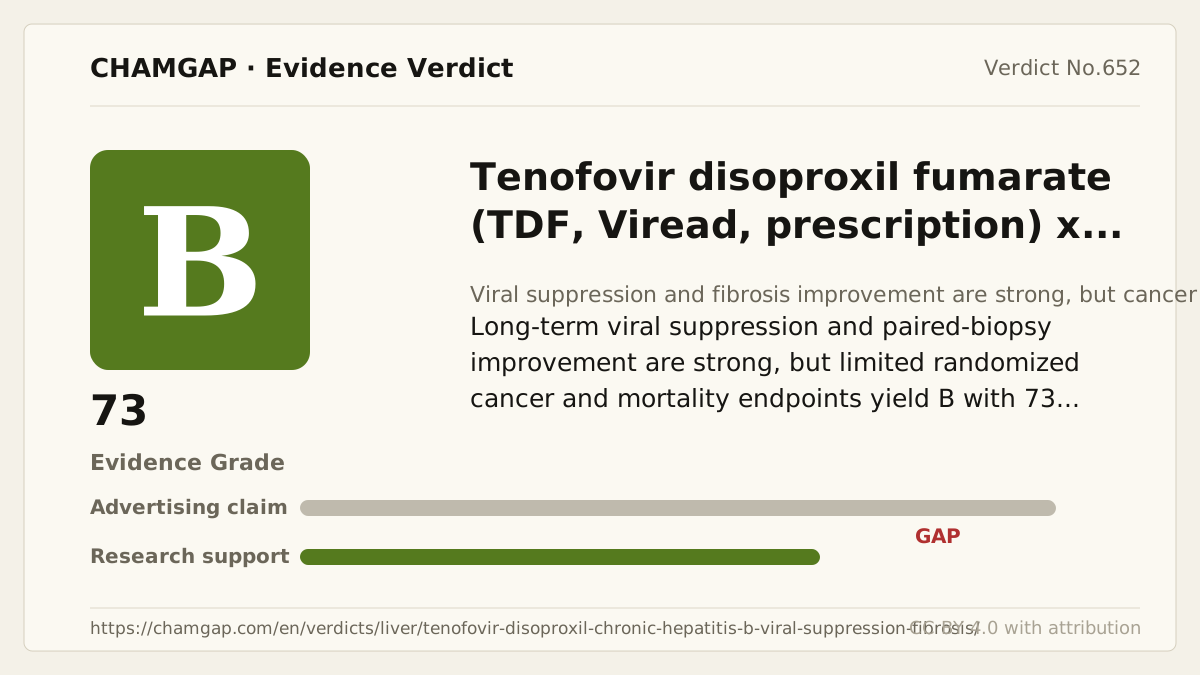
[Chamgap] Tenofovir disoproxil x viral suppression and fibrosis improvement in chronic hepatitis B — Evidence Grade B·73. 3 cited sources checked. Source: https://chamgap.com/en/verdicts/liver/tenofovir-disoproxil-chronic-hepatitis-b-viral-suppression-fibrosis/ · CC BY 4.0CC BY 4.0 — free to use with attribution; do not distort grades, numbers, or verdict meaning.
What this document does and does not do
Chamgap is an information source. It reports what research has and has not confirmed; it does not tell readers what to take or buy. That decision belongs to readers and, when needed, medical or legal professionals. This verdict reflects literature available up to the search date and may change as new research appears. Nothing here is medical advice.