
Pioglitazone,
does it really help with MASH/NASH resolution and improvement in liver fibrosis and histology?
research showsPioglitazone is rated C because repeated randomized trials and meta-analysis show biopsy-confirmed NASH resolution and histologic improvement, but the evidence remains surrogate-based. In PIVENS, the primary histology outcome was 34% versus 19% (P=0.04), missing the prespecified P<0.025 criterion, and fibrosis was nonsignificant. A single-center 101-person trial and a meta-analysis of eight randomized trials with 516 participants support NASH resolution and fibrosis improvement, but biopsy changes do not establish reduced liver failure, transplantation, or death. AASLD likewise notes no proven antifibrotic benefit. The ceiling is therefore C with 59 points, aligned with verdict 493 on vitamin E while remaining distinct from the failed repeated histology evidence for ursodeoxycholic acid in verdict 560.
ads claimMarketing can turn an improved biopsy score directly into prevention of cirrhosis and longer survival. The histologic benefit is real, but reduced liver failure, transplantation, and death have not been demonstrated, and patient selection must account for the harms of this diabetes drug.
Useful facts when choosing a product
- Pioglitazone is a prescription thiazolidinedione diabetes medicine sold as Actos and in combination products. Use for NASH depends on local authorization, guidance, and the presence of type 2 diabetes and should be decided by a specialist.
- The principal NASH trials used 30 to 45 mg daily for 18 to 96 weeks or longer and assessed tissue change with paired liver biopsies rather than blood tests alone.
- Weight gain and fluid retention or edema are common, and heart failure can worsen. Patients with heart-failure risk or substantial edema require careful assessment before and during treatment.
- Bone loss and fractures may increase, while the bladder-cancer signal remains debated. An efficacy grade of C does not remove these safety concerns, so monitoring and individualized benefit-risk assessment are required.
Chamgap Semantic Classification Code
Candidate index · review held
UNK.pioglitazone.UNK.mash-nash-resolution-and-improvement-in-liver-fibrosis-and-histology.improve.placeboUnknown > Pioglitazone > Unknown > MASH/NASH resolution and improvement in liver fibrosis and histology > Improvement claim > Placebo
An automated migration candidate, not an issued permanent code; exact claim scope remains under review. This machine-generated migration candidate helps retrieval but is not a permanent assignment. The original verdict ID and URL remain authoritative.
What the research actually shows
PIVENS randomized 247 nondiabetic adults with biopsy-proven NASH to pioglitazone 30 mg, vitamin E, or placebo for 96 weeks. Pioglitazone missed the primary outcome's prespecified P-value threshold but improved NASH resolution, steatosis, inflammation, and ballooning; fibrosis was not significant. Cusi 2016 randomized 101 patients with prediabetes or type 2 diabetes and biopsy-proven NASH to 45 mg or placebo for 18 months, reporting a 58% primary histology response, 51% NASH resolution, and improved fibrosis score. The 2017 Musso meta-analysis of randomized trials supported NASH resolution and fibrosis improvement. AASLD states that pioglitazone can be considered in NASH with type 2 diabetes while noting weight gain, heart-failure exacerbation, bone loss, and uncertain antifibrotic benefit.
Why this is classified as C (59)
A single-center 101-person randomized trial and a meta-analysis of eight trials with 516 participants support biopsy-confirmed NASH resolution, histologic improvement, and fibrosis benefit. PIVENS, however, reported 34% versus 19% (P=0.04) for the primary histology outcome, missing the prespecified P<0.025 criterion, with nonsignificant fibrosis. Biopsy is a surrogate for liver failure, transplantation, and death, and no definitive antifibrotic or hard-outcome benefit is established. This gives the same C ceiling and 59 points as verdict 493 on vitamin E. Weight gain, edema, worsening heart failure, and fractures remain separate safety issues.
Counterpoint. For patients with biopsy-proven NASH plus type 2 diabetes or prediabetes, it can be an option that addresses both hepatic and glycemic disease. It is not a weight-loss drug or an unsupervised general liver protector.
Rejudgment record. Reassessment (cross-check reflected) — Accepted NASH resolution, histologic, and fibrosis signals across repeated randomized trials and meta-analysis, but applied a C ceiling because the PIVENS primary outcome missed its prespecified criterion, fibrosis was nonsignificant, biopsy is a surrogate for hard clinical outcomes, and no definitive antifibrotic benefit or reduction in liver failure, transplantation, or death is established, aligned with verdict 493 on vitamin E
Sub-claim grades by effect
This ingredient is marketed for several effects. A single overall grade blends strong and weak claims together, so each effect is graded separately here. The overall grade reflects the strongest disconfirming or core claim.
| Effect (sub-claim) | Grade | Basis |
|---|---|---|
| MASH/NASH resolution and histologic and fibrosis improvement | C | Repeated randomized trials and meta-analysis are positive, but the PIVENS primary outcome missed its prespecified criterion and biopsy is a surrogate. |
| Reduced liver failure, transplantation, or death | ? | Improvement in hard clinical outcomes remains unestablished. |
| Safety including weight gain, edema, and fractures | ? | These harms require evaluation separately from efficacy. |
Cross-check — AI research and Codex final gate
Evidence Table
| Study | Design | Sample | Funding | Endpoint | Result | Weight |
|---|---|---|---|---|---|---|
| Sanyal AJ et al. 2010 PIVENS | Multicenter randomized double-blind placebo-controlled trial | 247 nondiabetic adults with biopsy-proven NASH; 80 received pioglitazone | Public funding from the United States NIDDK and NIH | Composite histologic improvement, NASH resolution, and fibrosis at 96 weeks | The primary histology outcome was 34% versus 19% (P=0.04), missing the prespecified P<0.025 criterion, and fibrosis was nonsignificant, although NASH resolution, steatosis, inflammation, and ballooning improved. | Key independent publicly funded randomized trial with mixed results |
| Cusi K et al. 2016 | Randomized double-blind placebo-controlled trial followed by open-label extension | 101 patients with biopsy-proven NASH and prediabetes or type 2 diabetes | Burroughs Wellcome Fund and American Diabetes Association | Composite histologic improvement, NASH resolution, and fibrosis score at 18 months | The primary outcome was achieved by 58%, NASH resolved in 51%, and fibrosis score improved, but the trial was single-center. | Key direct biopsy randomized trial |
| Musso G et al. 2017 | Meta-analysis of thiazolidinedione randomized trials in biopsy-proven NASH | Eight randomized trials with about 516 participants in the principal analysis | No conflicts of interest reported by the authors | Improvement in advanced fibrosis, fibrosis of any stage, and NASH resolution | Thiazolidinediones favored advanced fibrosis with OR 3.15, any-stage fibrosis with OR 1.66, and NASH resolution with OR 3.22. | Independent synthesis |
| Rinella ME et al. 2023 AASLD guidance | Evidence-based clinical practice guidance | Review of the NASH treatment literature | American Association for the Study of Liver Diseases | Histologic efficacy, clinical use, and safety | It may be considered in NASH with type 2 diabetes, while weight gain, heart-failure exacerbation, bone loss, and unproven antifibrotic benefit are noted. | Clinical-scope and safety boundary |
Receipt — 4 References
All 4 cited sources were verified for existence at the original page (as of 2026-07-19).
Final verification and publication gate: Codex · Evidence date: 2026-07-19 · Corrections: none
Cite this verdict
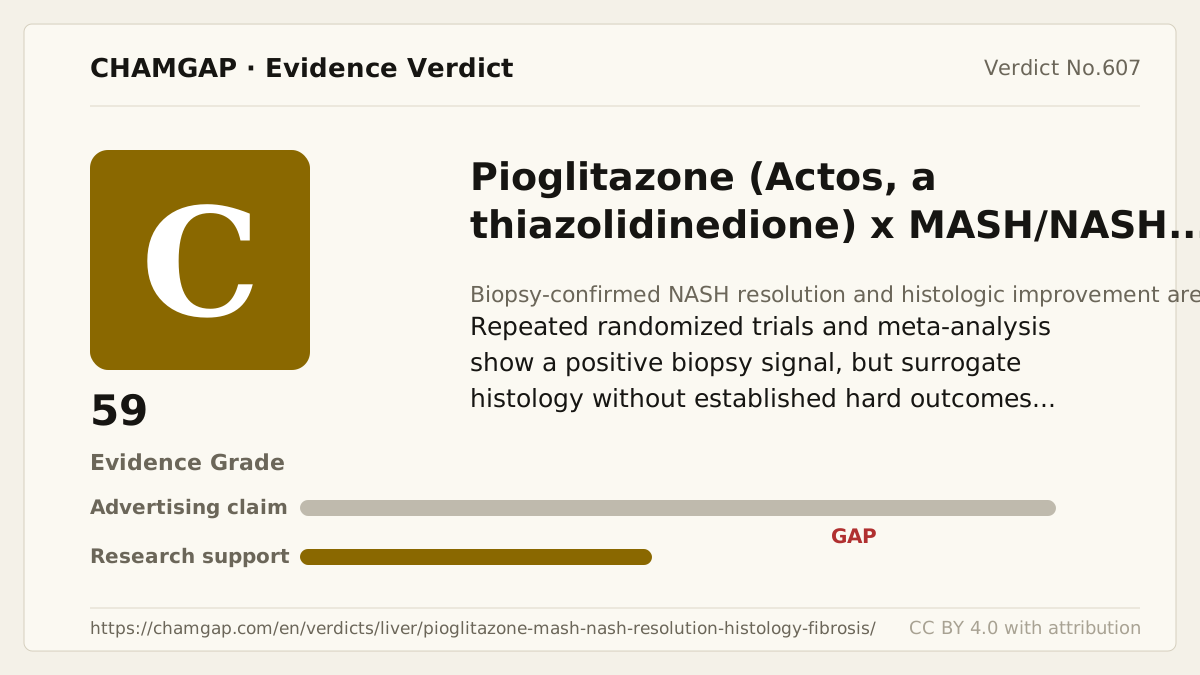
[Chamgap] Pioglitazone x MASH/NASH resolution and improved fibrosis and histology — Evidence Grade C·59. 4 cited sources checked. Source: https://chamgap.com/en/verdicts/liver/pioglitazone-mash-nash-resolution-histology-fibrosis/ · CC BY 4.0CC BY 4.0 — free to use with attribution; do not distort grades, numbers, or verdict meaning.
What this document does and does not do
Chamgap is an information source. It reports what research has and has not confirmed; it does not tell readers what to take or buy. That decision belongs to readers and, when needed, medical or legal professionals. This verdict reflects literature available up to the search date and may change as new research appears. Nothing here is medical advice.