
Metadoxine,
does it really help with Accelerated recovery of alcoholic fatty liver and normalization of liver enzymes?
research showsMetadoxine is rated C because short randomized trials suggest faster recovery of liver enzymes and ultrasonographic findings in alcoholic fatty liver. A double-blind trial of 136 participants found that 1,500 mg/day for three months accelerated normalization of liver-function tests and ultrasound changes, and a 254-person trial also reported improved enzymes over six weeks. These are surrogate outcomes, however, and there is no long-term evidence that the drug reduces cirrhosis, liver failure, transplantation, or death. Abstinence remains central to long-term prognosis, so metadoxine is not a substitute for stopping alcohol use.
ads claimMarketing can expand faster enzyme and ultrasound improvement into claims of complete liver recovery and protection despite continued drinking. The trials did not establish prevention of cirrhosis, liver failure, or death, and the drug does not replace abstinence.
Useful facts when choosing a product
- Metadoxine is a prescription medicine used for alcohol-associated liver disease, and Korean products are commonly supplied as 500-mg tablets. Dose and duration must follow the product label and prescriber's directions.
- The principal alcoholic fatty-liver trials used a total of 1,500 mg/day for six weeks to three months. A research dose is not an individualized self-treatment instruction.
- Lower liver enzymes or less steatosis on ultrasound does not mean that the risk of cirrhosis, liver failure, or death has disappeared. Abstinence, nutrition, and treatment of alcohol use disorder remain the priorities for long-term prognosis.
- Trial adverse-event rates were low, but gastrointestinal intolerance or hypersensitivity can occur, and long-term and special-population safety data are limited. It should not be used without medical supervision.
Chamgap Semantic Classification Code
Candidate index · review held
M.metadoxine.UNK.accelerated-recovery-of-alcoholic-fatty-liver-and-normalization-of-liver-enzymes.improve.placeboMedicinal interventions > Metadoxine > Unknown > Accelerated recovery of alcoholic fatty liver and normalization of liver enzymes > Improvement claim > Placebo
An automated migration candidate, not an issued permanent code; exact claim scope remains under review. This machine-generated migration candidate helps retrieval but is not a permanent assignment. The original verdict ID and URL remain authoritative.
What the research actually shows
The 1998 trial randomized 136 chronic active drinkers with fatty liver diagnosed clinically, biochemically, and by ultrasound to metadoxine 1,500 mg/day or placebo for three months and found faster normalization of liver tests and ultrasound steatosis. The 2009 Chinese multicenter trial randomized 254 participants to 500 mg three times daily or placebo; liver-enzyme improvement at six weeks favored metadoxine, but the between-group difference in the CT liver-to-spleen ratio was not significant. A 2017 Cochrane review highlighted bias and the lack of clinical-outcome evidence across pharmacologic trials in alcohol-related liver disease. ACG guidance identifies complete abstinence as the cornerstone of management across the disease spectrum.
Why this is classified as C (52)
Two randomized trials support faster short-term improvement in liver enzymes and ultrasonographic fatty liver, but both rely on surrogate outcomes and provide no evidence of reduced long-term cirrhosis, liver failure, or death. The surrogate-endpoint ceiling gives C with 52 points, while prescription-drug safety and the need for abstinence remain separate from efficacy.
Counterpoint. A clinician may consider it as short-term adjunctive treatment while abstinence is pursued and liver function is monitored. Improved laboratory values do not justify resuming alcohol or stopping liver follow-up.
Rejudgment record. New verdict — Accepted faster liver-enzyme and ultrasound recovery in randomized alcoholic fatty-liver trials but applied the rule ① ceiling of C because long-term cirrhosis, liver-failure, and mortality outcomes are absent
Sub-claim grades by effect
This ingredient is marketed for several effects. A single overall grade blends strong and weak claims together, so each effect is graded separately here. The overall grade reflects the strongest disconfirming or core claim.
| Effect (sub-claim) | Grade | Basis |
|---|---|---|
| Accelerated liver-enzyme and ultrasound recovery in alcoholic fatty liver | C | Randomized trials show short-term improvement, but only in surrogate outcomes. |
| Improved cirrhosis, liver-failure, or mortality outcomes | ? | No long-term human efficacy literature directly evaluates these outcomes. |
| Liver protection that substitutes for abstinence | F | Abstinence is central to prognosis, and data in continuing drinkers do not establish substitution. |
Cross-check — AI research and Codex final gate
Evidence Table
| Study | Design | Sample | Funding | Endpoint | Result | Weight |
|---|---|---|---|---|---|---|
| Caballería J et al. 1998 | Multicenter randomized double-blind placebo-controlled trial | 136 patients with alcoholic fatty liver | Detailed funding was not disclosed in the abstract | Normalization of liver-function tests and ultrasonographic fatty-liver changes | Metadoxine 1,500 mg/day for three months accelerated biochemical and ultrasonographic normalization versus placebo. | Key direct randomized trial with surrogate outcomes |
| Mao YM et al. 2009 | Multicenter randomized double-blind placebo-controlled trial | 254 patients with alcoholic liver disease | Detailed funding was not disclosed in the abstract | ALT, AST, and GGT at six weeks and CT liver-to-spleen ratio in a subset | Liver-enzyme improvement favored metadoxine, but the CT measure did not differ between groups and the response-rate difference was nonsignificant among continuing drinkers. | Supporting randomized trial with short-term surrogates |
| Pavlov CS et al. 2017 Cochrane review | Systematic review of pharmacologic interventions for alcohol-related liver disease | Randomized trials of multiple drugs, including metadoxine | Cochrane academic review | Mortality, liver complications, surrogate outcomes, and adverse events | Trial bias and sparse clinical-outcome data prevented firm long-term conclusions. | Assessment of long-term evidence limitations |
Receipt — 4 References
All 4 cited sources were verified for existence at the original page (as of 2026-07-19).
Final verification and publication gate: Codex · Evidence date: 2026-07-19 · Corrections: none
Cite this verdict
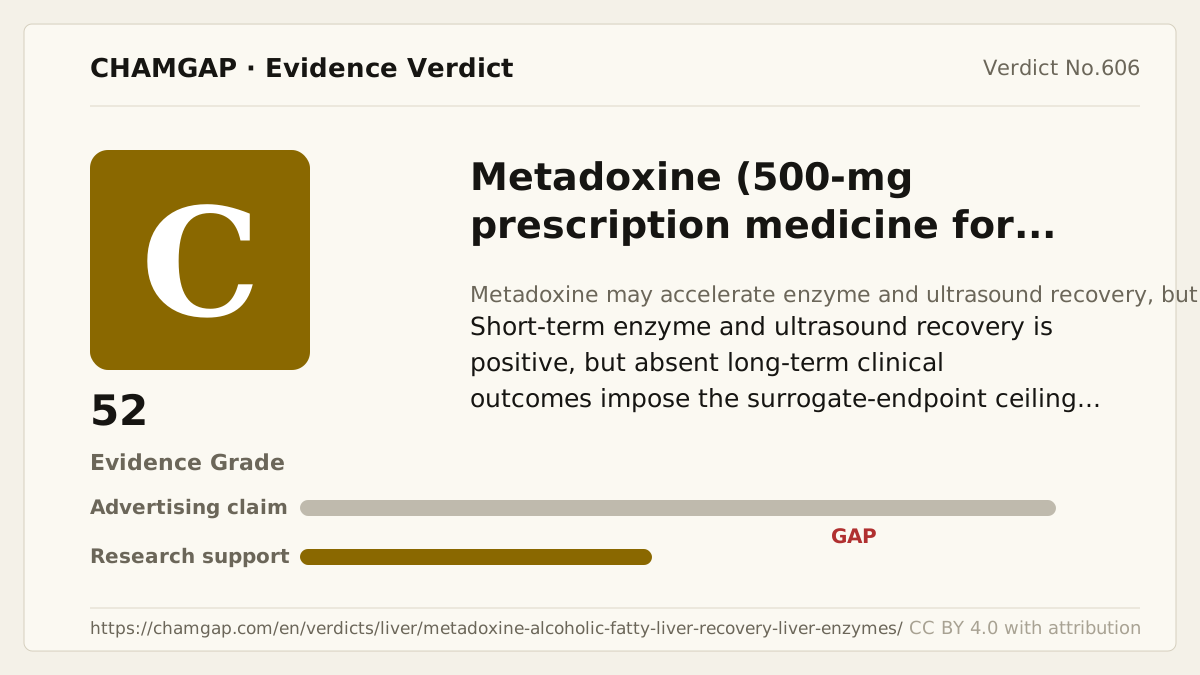
[Chamgap] Metadoxine x accelerated alcoholic fatty-liver recovery and liver-enzyme normalization — Evidence Grade C·52. 4 cited sources checked. Source: https://chamgap.com/en/verdicts/liver/metadoxine-alcoholic-fatty-liver-recovery-liver-enzymes/ · CC BY 4.0CC BY 4.0 — free to use with attribution; do not distort grades, numbers, or verdict meaning.
What this document does and does not do
Chamgap is an information source. It reports what research has and has not confirmed; it does not tell readers what to take or buy. That decision belongs to readers and, when needed, medical or legal professionals. This verdict reflects literature available up to the search date and may change as new research appears. Nothing here is medical advice.