
Yoga,
does it really help with Improved pain and function in chronic nonspecific low back pain?
research showsYoga is rated C because it produces small improvements in pain and function in chronic nonspecific low back pain. The Sherman trial randomized 229 people and analyzed 228. At 12 weeks, co-primary endpoints succeeded versus self-care with RDQ -2.48 points (95% CI -3.70 to -1.26) and a -1.07-point change (-1.75 to -0.41) on the 0-to-10 symptom bothersomeness scale, but both were null versus stretching. Ostelo and colleagues proposed RDQ 5 points and pain NRS 2/10 or about 30% improvement; the Cochrane yoga review adopted RMDQ 5/24 and pain 15/100. RDQ -2.48 falls below the 5-point threshold. Symptom bothersomeness is not a pain-intensity NRS and is not directly compared with the pain NRS threshold. The result is C with 48 points.
ads claimMarketing can claim that yoga realigns the spine or treats chronic low back pain better than other exercise. The supported claim is narrower: a back-adapted program led by experienced instructors provides a small average benefit compared with no exercise.
Useful facts when choosing a product
- The pivotal program used weekly 75-minute classes for 12 weeks plus home practice, adapted for low back pain.
- Evidence concerns adults with chronic nonspecific low back pain, not acute injury or progressive neurologic deficits.
- The studied programs used experienced instructors who modified poses and avoided movements that worsened pain.
- Temporary pain flares or musculoskeletal discomfort can occur; leg weakness, bladder or bowel dysfunction, fever, or weight loss requires medical assessment first.
Chamgap Semantic Classification Code
Candidate index · review held
X.yoga.behavioral.pain-and-function-in-chronic-nonspecific-low-back-pain.improve.UNKBehaviors, exposures and policies > Yoga > Behavioral delivery > pain and function in chronic nonspecific low back pain > Improvement claim > Unknown
An automated migration candidate, not an issued permanent code; exact claim scope remains under review. This machine-generated migration candidate helps retrieval but is not a permanent assignment. The original verdict ID and URL remain authoritative.
What the research actually shows
Sherman et al. 2011 randomized 229 people to yoga, intensive stretching, or a self-care book and analyzed 228. At 12 weeks, adjusted yoga-versus-self-care differences were RDQ -2.48 and -1.07 on the 0-to-10 symptom bothersomeness scale, so the co-primary endpoints succeeded. Yoga-versus-stretching differences were null: RDQ -0.30 and symptom bothersomeness -0.49. Ostelo and colleagues proposed RDQ 5 points and pain NRS 2/10 or about 30% improvement; the Cochrane yoga review adopted RMDQ 5/24 and pain 15/100. RDQ -2.48 falls below 5 points, while symptom bothersomeness is not a pain-intensity NRS.
Why this is classified as C (48)
After 229 people were randomized, 228 entered the actual analysis. The 12-week RDQ and 0-to-10 symptom bothersomeness co-primary endpoints succeeded versus self-care but were null versus active stretching. Ostelo and colleagues proposed RDQ 5 points and pain NRS 2/10 or about 30% improvement, while the Cochrane yoga review adopted RMDQ 5/24 and pain 15/100. RDQ -2.48 fell below 5 points. Symptom bothersomeness -1.07 is not a pain-intensity NRS and is not directly compared with its threshold. The score is C with 48 points.
Counterpoint. Yoga can be one option alongside other back-focused exercise, but special superiority and a large average effect have not been demonstrated.
Rejudgment record. Cross-check applied — Accepted success of the RDQ and 0-to-10 symptom bothersomeness co-primary endpoints but applied the null comparison with stretching and RDQ -2.48 falling below the 5-point threshold; did not compare symptom bothersomeness -1.07 directly with a pain-intensity NRS threshold
Sub-claim grades by effect
This ingredient is marketed for several effects. A single overall grade blends strong and weak claims together, so each effect is graded separately here. The overall grade reflects the strongest disconfirming or core claim.
| Effect (sub-claim) | Grade | Basis |
|---|---|---|
| Improved function in chronic nonspecific low back pain | C | The result was positive versus self-care, but pooled MD -1.69/24 fell below the 5-point MCID. |
| Reduced pain in chronic nonspecific low back pain | C | Pooled MD -4.53/100 fell below the 15-point MCID. |
| Superior function and pain outcomes versus other back exercise | D | There was no significant difference from intensive stretching, and Cochrane found little or no functional difference versus other exercise. |
Cross-check — AI research and Codex final gate
Evidence Table
| Study | Design | Sample | Funding | Endpoint | Result | Weight |
|---|---|---|---|---|---|---|
| Sherman KJ et al. 2011 | Three-arm randomized comparative-effectiveness trial with masked outcome assessors | 229 randomized; 228 actually analyzed after one ineligible exclusion (92/91/45) | Public funding from United States NCCAM cooperative agreement U01 AT003208; no commercial sponsor | Co-primary: 12-week RDQ function and symptom bothersomeness on a 0-to-10 scale | Co-primary endpoints succeeded versus self-care: RDQ -2.48 and symptom bothersomeness -1.07; both were null versus stretching. | Pivotal direct symptom and function trial |
| Wieland LS et al. 2022 | Cochrane systematic review and meta-analysis of randomized trials | 21 studies and 2,223 participants; 11 trials and 1,155 for three-month function, nine trials and 946 for pain | Public and academic support from United States NCCIH and Cochrane Complementary Medicine; no manufacturer sponsorship | Back-related function, pain, and quality of life | Statistically positive versus no exercise, but function -1.69/24 and pain -4.53/100 fell below MCIDs of 5 and 15. | Key synthesis for clinical-importance assessment |
Receipt — 2 References
All 2 cited sources were verified for existence at the original page (as of 2026-07-24).
Final verification and publication gate: Codex · Evidence date: 2026-07-24 · Corrections: none
Cite this verdict
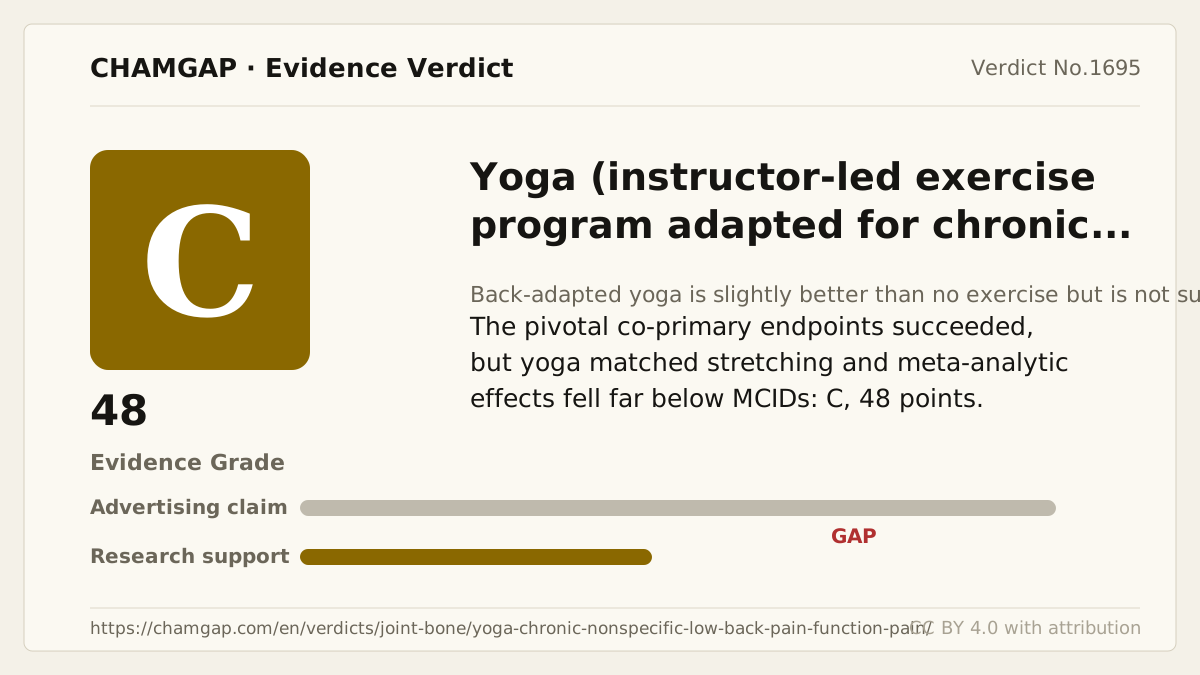
[Chamgap] Yoga x improved pain and function in chronic nonspecific low back pain — Evidence Grade C·48. 2 cited sources checked. Source: https://chamgap.com/en/verdicts/joint-bone/yoga-chronic-nonspecific-low-back-pain-function-pain/ · CC BY 4.0CC BY 4.0 — free to use with attribution; do not distort grades, numbers, or verdict meaning.
What this document does and does not do
Chamgap is an information source. It reports what research has and has not confirmed; it does not tell readers what to take or buy. That decision belongs to readers and, when needed, medical or legal professionals. This verdict reflects literature available up to the search date and may change as new research appears. Nothing here is medical advice.