
Vitamin D plus a fat-containing meal,
does it really help with Higher plasma vitamin D3 concentrations 10 to 14 hours after dosing?
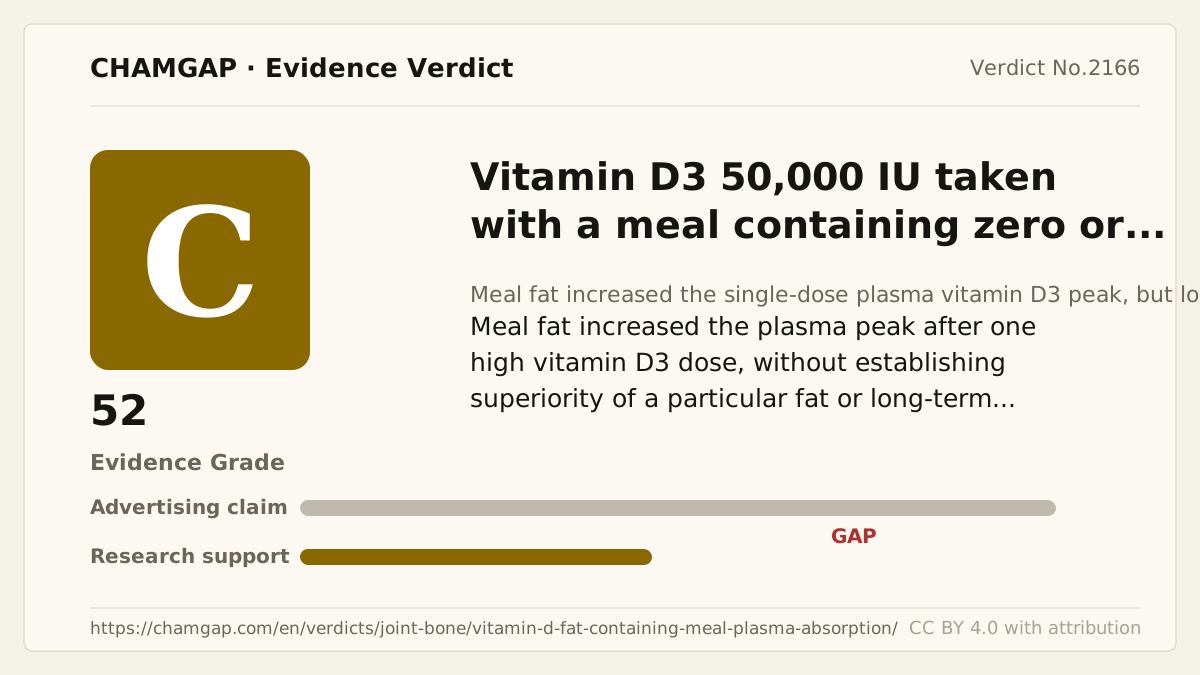
research showsThe grade is C with 50 points. In a randomized single-dose study of fifty healthy adults aged at least fifty, plasma vitamin D3 at twelve hours was 111.8±30.2 ng/mL with meals containing 30% of energy from fat versus 84.9±28.2 ng/mL with a fat-free meal, a 26.9 ng/mL or 32% difference. This one-day high-dose study did not establish better long-term vitamin D status or fewer fractures.
ads claimThe single-dose rise from 84.9 to 111.8 ng/mL at twelve hours, a 32% difference, cannot be converted into 32% better long-term status or fracture prevention.
Useful facts when choosing a product
- Both fat-containing meals supplied 30% of energy from fat; the comparison was not low-fat versus high-fat but two different fatty-acid ratios.
- At twelve hours, plasma vitamin D3 was 111.8±30.2 versus 84.9±28.2 ng/mL, a 26.9 ng/mL difference with a 95% CI of 9.6 to 44.1.
- The tablet assayed at 55,906 IU, and results from this powder formulation may not transfer to oil-filled capsules.
- Mean screening 25(OH)D was about 25 ng/mL; participants were not selected for severe deficiency.
Chamgap Semantic Classification Code
Candidate index · review held
S.vitamin-d3-50.UNK.higher-plasma-vitamin-d3-concentrations-after-dosing.increase.UNKSupplements and nutraceuticals > Vitamin D3 50 > Unknown > Higher plasma vitamin D3 concentrations after dosing > Increase claim > Unknown
An automated migration candidate, not an issued permanent code; exact claim scope remains under review. This machine-generated migration candidate helps retrieval but is not a permanent assignment. The original verdict ID and URL remain authoritative.
What the research actually shows
Fifty-one people enrolled and one did not return after the morning visit, leaving fifty analyzed: nineteen fat-free, twenty low-MUFA:PUFA, and eleven high-MUFA:PUFA. All took a tablet assayed at 55,906 IU after a twelve-hour fast. Plasma vitamin D3 with fat versus no fat was 107.3±31.2 versus 76.8±20.2 ng/mL at ten hours, 111.8±30.2 versus 84.9±28.2 at twelve hours, and 108.7±28.9 versus 87.4±27.7 at fourteen hours. Participants had screening 25(OH)D of 20 to 29.5 ng/mL and were not severely deficient. The paper cites NCT01500845. NCT01268176 in the target report is a separate sixty-two-person three-month study by the same team; its day-one absorption differed by meal condition, but thirty- and ninety-day 25(OH)D changes did not. More absorption and better health are different questions, and evidence was not identified that this dosing condition reduces fractures. Verdict 353 is B with 70 points and concerns calcium plus vitamin D and bone outcomes, a different intervention and endpoint.
Why this is classified as C (50)
The acute plasma difference was conventionally large, but it came from a fifty-person one-day high-dose surrogate study with mixed funding, giving C with 50 points.
Counterpoint. Taking a supplement with an ordinary mixed meal may be practical, but more fat and a specific fat type were not shown to be better.
Rejudgment record. Cross-check applied — The fifty-person source table and correct registry number were checked, separating acute parent-vitamin-D3 concentration from long-term 25(OH)D and fractures
| Endpoint | S | Surrogate marker - laboratory or imaging measures |
| Replication | R1 | Single confirmatory trial |
| Independence | I1 | Mixed funding sources |
| Effect size | E+ | Meets the clinically important threshold |
Stored derived and displayed grades match; this is not a current recalculation or validity check (C).
Sub-claim grades by effect
This ingredient is marketed for several effects. A single overall grade blends strong and weak claims together, so each effect is graded separately here. The overall grade reflects the strongest disconfirming or core claim.
| Effect (sub-claim) | Grade | Basis |
|---|---|---|
| Higher plasma vitamin D3 after a single dose with a fat-containing meal | C | Concentrations were higher from ten to fourteen hours in a fifty-person study. |
| Improved long-term 25(OH)D or fewer fractures | ? | No fracture trial of this dosing condition was found, and a separate three-month study found no between-group 25(OH)D difference. |
Cross-check — AI research and Codex final gate
Evidence Table
| Study | Design | Sample | Funding | Endpoint | Result | Weight |
|---|---|---|---|---|---|---|
| Dawson-Hughes et al. 2015 | Three-group randomized open single-dose absorption study | Fifty-one enrolled and fifty analyzed: nineteen fat-free and thirty-one fat-containing | Pfizer investigator-initiated grant plus USDA/Tufts support | Plasma vitamin D3 at baseline and ten, twelve, and fourteen hours | At twelve hours, 111.8±30.2 versus 84.9±28.2 ng/mL; difference 26.9, 95% CI 9.6 to 44.1, P=0.003 | Core direct absorption evidence |
| Dawson-Hughes et al. 2013 | Three-group randomized three-month meal-condition study | Sixty-two healthy adults aged fifty to sixty-nine completed | Public USDA support | Day-one absorption and thirty- and ninety-day 25(OH)D change | Day-one absorption was higher with the low-fat meal, but thirty- and ninety-day 25(OH)D changes did not differ | Direct longer-term biomarker context |
Receipt — 3 References
All 3 cited sources were verified for existence at the original page (as of 2026-08-04).
Final verification and publication gate: Codex · Evidence date: 2026-08-04 · Corrections: none
Cite this verdict
[Chamgap] Vitamin D plus a fat-containing meal x higher plasma vitamin D3 response — Evidence Grade C·50. 3 cited sources checked. Source: https://chamgap.com/en/verdicts/joint-bone/vitamin-d-fat-containing-meal-plasma-absorption/ · CC BY 4.0CC BY 4.0 — free to use with attribution; do not distort grades, numbers, or verdict meaning.
What this document does and does not do
Chamgap is an information source. It reports what research has and has not confirmed; it does not tell readers what to take or buy. That decision belongs to readers and, when needed, medical or legal professionals. This verdict reflects literature available up to the search date and may change as new research appears. Nothing here is medical advice.