
An eight-week upper-body yoga regimen of 11 strengthening, stretching, balancing, and relaxation postures,
does it really help with Improved grip strength and pain in carpal tunnel syndrome?
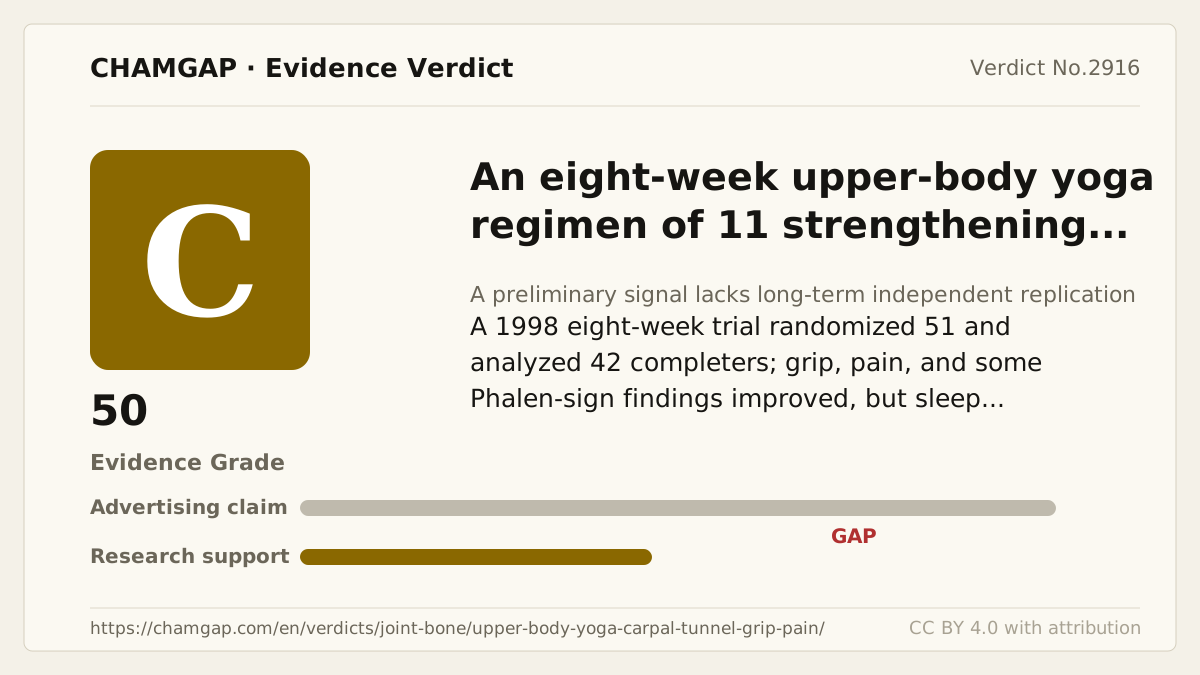
research showsGrade C, 50 points. In a 1998 eight-week trial, 51 people were randomized and 42 completed analysis. Grip strength, pain, and some Phalen-sign findings improved, while sleep, Tinel sign, and nerve-conduction tests were null. No confirmatory replication followed.
ads claimYoga and stretching are used as self-management in Korea, but this preliminary supervised regimen does not establish all yoga classes or long-term disease modification.
Useful facts when choosing a product
- Higher pain scores mean worse pain; the yoga-group mean fell from 5.0 to 2.9.
- The analyzed sample was 42 and treatment lasted eight weeks.
Chamgap Semantic Classification Code
Candidate index · review held
X.upper-body-yoga-regimen-of-11-strengthening.behavioral.grip-strength-and-pain-in-carpal-tunnel-syndrome.improve.activeBehaviors, exposures and policies > upper-body yoga regimen of 11 strengthening > Behavioral delivery > grip strength and pain in carpal tunnel syndrome > Improvement claim > Active comparator
An automated migration candidate, not an issued permanent code; exact claim scope remains under review. This machine-generated migration candidate helps retrieval but is not a permanent assignment. The original verdict ID and URL remain authoritative.
What the research actually shows
Fifty-one participants were randomized and nine dropped out or were excluded, leaving 42 analyzed. ① Defects: completer analysis, at least 15% attrition, fewer than 200 participants, under 12 weeks, and active control only. ② Each is on the specified list. ③ The report states 51 randomized, nine excluded or withdrawn, 42 analyzed, eight weeks, and wrist-splint control. ④ Larger, longer, all-randomized analysis and an attention or wait-list arm were feasible. One blinded physician performed assessments. Independent funding was not established from a Funding section in the article.
Why this is classified as C (50)
A 1998 eight-week patient-centered RCT randomized 51 and analyzed 42 completers, produced only partly positive results, and lacks confirmatory replication, giving C, 50.
Counterpoint. Nerve conduction and several symptoms did not improve.
Rejudgment record. Primary-source cross-check — One small 1998 eight-week active-control completer trial
| Endpoint | P | Symptom or function itself is the target - including patient reports and performance tests |
| Replication | R1 | Single confirmatory trial |
| Independence | I1 | Mixed funding sources |
| Effect size | E+ | Meets the clinically important threshold |
Stored derived and displayed grades match; this is not a current recalculation or validity check (C).
Sub-claim grades by effect
This ingredient is marketed for several effects. A single overall grade blends strong and weak claims together, so each effect is graded separately here. The overall grade reflects the strongest disconfirming or core claim.
| Effect (sub-claim) | Grade | Basis |
|---|---|---|
| Improved grip strength | B | Positive in one small trial. |
| Reduced pain | B | Positive in one small trial. |
Cross-check — AI research and Codex final gate
Evidence Table
| Study | Design | Sample | Funding | Endpoint | Result | Weight |
|---|---|---|---|---|---|---|
| Garfinkel et al. 1998 randomized trial | Randomized single-blind active-control trial | 51 randomized, 42 analyzed | Independent funding not established | Grip, pain, and several symptoms and tests at eight weeks | Grip 162 to 187 mmHg, pain 5.0 to 2.9, and some Phalen-sign improvement; sleep, Tinel sign, and nerve-conduction tests were null | Only small confirmatory trial |
Receipt — 1 References
All 1 cited sources were verified for existence at the original page (as of 2026-08-26).
Final verification and publication gate: Codex · Evidence date: 2026-08-26 · Corrections: none
Cite this verdict
[Chamgap] Benefit of Upper-Body Yoga for Grip Strength and Pain in Carpal Tunnel Syndrome — Evidence Grade C·50. 1 cited sources checked. Source: https://chamgap.com/en/verdicts/joint-bone/upper-body-yoga-carpal-tunnel-grip-pain/ · CC BY 4.0CC BY 4.0 — free to use with attribution; do not distort grades, numbers, or verdict meaning.
What this document does and does not do
Chamgap is an information source. It reports what research has and has not confirmed; it does not tell readers what to take or buy. That decision belongs to readers and, when needed, medical or legal professionals. This verdict reflects literature available up to the search date and may change as new research appears. Nothing here is medical advice.