
Transdermal testosterone gel,
does it really help with Prevention of clinical fractures in middle-aged and older men with low testosterone?
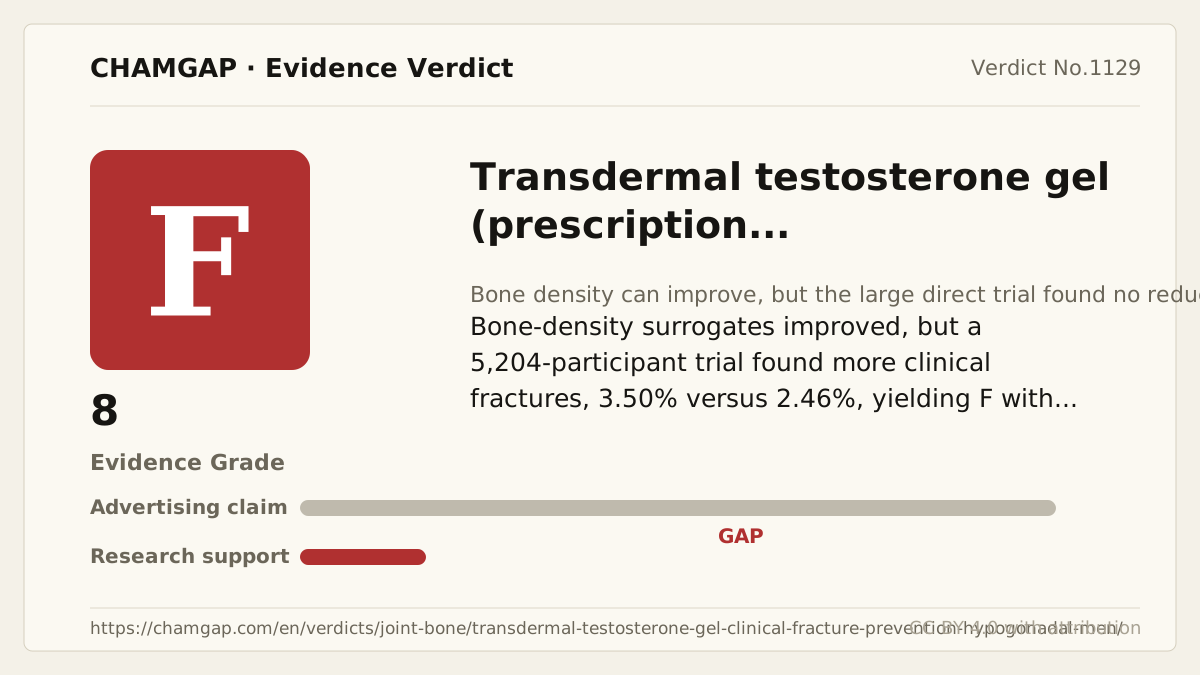
research showsThe claim that transdermal testosterone gel prevents clinical fractures in middle-aged and older men with low testosterone is rated F. The TRAVERSE fracture subtrial followed 5,204 men for a median of 3.19 years and found clinical fractures in 91 of 2,601 testosterone recipients (3.50%) versus 64 of 2,603 placebo recipients (2.46%), for a hazard ratio of 1.43 (95% CI 1.04 to 1.97). Earlier smaller trials improved spine bone density and estimated strength, but this surrogate did not translate into fewer fractures. Fracture-prevention efficacy is therefore F with 8 points despite possible bone-density improvement. Other indicated benefits and the overall safety assessment of prescribed testosterone remain separate questions.
ads claimMarketing converts stronger bones or increased bone density into prevention of falls and fractures. The large direct trial showed that this inference failed and that clinical fractures instead increased.
Useful facts when choosing a product
- Testosterone gel is a hormone prescribed and dose-adjusted after clinical assessment and repeated low testosterone measurements; it is not an osteoporosis fracture-prevention medicine.
- Skin contact before the gel has dried can transfer testosterone to women or children, so the application site must be washed or covered according to the product instructions.
- Monitoring can include serum testosterone, hematocrit or hemoglobin, blood pressure, and prostate assessment. Erythrocytosis, acne, edema, and suppression of sperm production can occur.
- TRAVERSE did not increase overall major cardiovascular events, but atrial fibrillation, acute kidney injury, pulmonary embolism, and fractures were more frequent. Cardiovascular, thrombotic, prostate, and sleep-apnea risks require clinical review.
Chamgap Semantic Classification Code
Candidate index · review held
M.transdermal-testosterone-gel.transdermal.clinical-fractures-in-middle-aged-and-older-men-with-low-testosterone.prevent.placeboMedicinal interventions > Transdermal testosterone gel > Transdermal > clinical fractures in middle-aged and older men with low testosterone > Occurrence-prevention claim > Placebo
An automated migration candidate, not an issued permanent code; exact claim scope remains under review. This machine-generated migration candidate helps retrieval but is not a permanent assignment. The original verdict ID and URL remain authoritative.
What the research actually shows
Snyder and colleagues analyzed 5,204 TRAVERSE participants, asking about fractures at each visit and adjudicating medical records. Clinical fractures excluding the sternum, fingers, toes, facial bones, and skull occurred in 91 testosterone recipients and 64 placebo recipients, while other fracture definitions also generally favored placebo. The earlier 2017 bone study used 12-month computed-tomography data from 211 older men and found greater spine trabecular volumetric density and estimated strength, but it was not sized for fractures. The main TRAVERSE trial found noninferior major cardiovascular-event risk, while atrial fibrillation, acute kidney injury, and pulmonary embolism were more frequent and warrant individualized assessment.
Why this is classified as F (8)
A 5,204-participant randomized double-blind trial with a median 3.19-year follow-up found no fracture reduction and an increase, 3.50% versus 2.46%, with a hazard ratio of 1.43. Earlier density and strength improvements are surrogates that cannot override this direct outcome, so direct refutation and harm yield F with 8 points. Other indications and safety are separate.
Counterpoint. High fracture risk calls for assessment of bone density, fall risks, vitamin D and calcium status, secondary osteoporosis, and therapies proven to reduce fractures. Current testosterone users should not stop abruptly solely because of this verdict but should review the indication and risks with the prescriber.
Rejudgment record. New verdict — Prioritized the direct clinical endpoint in the 5,204-participant double-blind TRAVERSE fracture subtrial, which found failed prevention and significantly increased fractures with a hazard ratio of 1.43, over earlier favorable bone-density surrogates and therefore applied F
Sub-claim grades by effect
This ingredient is marketed for several effects. A single overall grade blends strong and weak claims together, so each effect is graded separately here. The overall grade reflects the strongest disconfirming or core claim.
| Effect (sub-claim) | Grade | Basis |
|---|---|---|
| Prevention of clinical fractures | F | The large trial found an increase, 3.50% versus 2.46%, with a hazard ratio of 1.43. |
| Prevention of non-high-impact fractures | F | Other TRAVERSE fracture definitions showed no preventive signal and generally more events with testosterone. |
| Improvement of volumetric bone density and estimated bone strength | C | A 211-person computed-tomography subtrial improved these measures, but they were surrogates that did not translate into fewer fractures. |
Cross-check — AI research and Codex final gate
Evidence Table
| Study | Design | Sample | Funding | Endpoint | Result | Weight |
|---|---|---|---|---|---|---|
| Snyder PJ et al. 2024; TRAVERSE fracture subtrial | Prespecified multicenter randomized double-blind placebo-controlled fracture subtrial | 5,204 hypogonadal men aged 45 to 80 years | Funded by AbbVie and a consortium of testosterone manufacturers | Medical-record-adjudicated clinical fracture over a median of 3.19 years | 91 of 2,601 (3.50%) versus 64 of 2,603 (2.46%); hazard ratio 1.43 (95% CI 1.04 to 1.97). | Decisive large direct refutation with harm direction |
| Snyder PJ et al. 2017; Testosterone Trials Bone Trial | Randomized placebo-controlled 12-month bone-surrogate subtrial | Computed-tomography analysis of 211 men aged 65 years or older with low testosterone | Supported by the United States NIH with industry provision and involvement | Spine and hip volumetric bone density and finite-element estimated strength | Volumetric density and estimated strength improved versus placebo, especially in trabecular spine bone. | Positive surrogate, not a fracture endpoint |
| Lincoff AM et al.; TRAVERSE Study Investigators. 2023 | Multicenter randomized double-blind placebo-controlled cardiovascular noninferiority trial | 5,246 hypogonadal men with cardiovascular disease or high risk | Funded by a consortium of testosterone manufacturers | Composite cardiovascular death, nonfatal myocardial infarction, or nonfatal stroke | Major cardiovascular events met noninferiority, while atrial fibrillation, acute kidney injury, and pulmonary embolism were more frequent with testosterone. | Safety context separate from fracture efficacy |
Receipt — 4 References
All 4 cited sources were verified for existence at the original page (as of 2026-07-22).
Final verification and publication gate: Codex · Evidence date: 2026-07-22 · Corrections: none
Cite this verdict
[Chamgap] Transdermal testosterone gel x prevention of clinical fractures in men with low testosterone — Evidence Grade F·8. 4 cited sources checked. Source: https://chamgap.com/en/verdicts/joint-bone/transdermal-testosterone-gel-clinical-fracture-prevention-hypogonadal-men/ · CC BY 4.0CC BY 4.0 — free to use with attribution; do not distort grades, numbers, or verdict meaning.
What this document does and does not do
Chamgap is an information source. It reports what research has and has not confirmed; it does not tell readers what to take or buy. That decision belongs to readers and, when needed, medical or legal professionals. This verdict reflects literature available up to the search date and may change as new research appears. Nothing here is medical advice.