
Tight leg-extension swaddling,
does it really help with Increased developmental dysplasia of the hip in infants with physiologically immature hips?
research showsThe grade is C. A Mongolian randomized trial assigned 80 newborns with Graf type 2a hips on birth ultrasound to one month of swaddling or no swaddling. A non-normal Graf type during follow-up occurred in 16/40 (40%) versus 3/40 (7.5%), adjusted OR 8.65 (95% CI 2.23 to 33.57), and clinical DDH occurred in eight versus zero.
ads claimThis is a harm verdict about a specific traditional hip position. It does not show that arm-only wrapping or products that permit hip flexion and abduction carry the same risk.
Useful facts when choosing a product
- The tested wrap extended and adducted the hips for at least 20 hours daily.
- Non-normal Graf findings were 40% versus 7.5%, and clinical DDH was eight versus zero.
- A sleep review found objective increases in quiet sleep and fewer state transitions, but this hip trial did not measure sleep or crying benefit.
Chamgap Semantic Classification Code
Candidate index · review held
UNK.traditional-tight-swaddling-with-the-legs-extended-and-adducted.UNK.developmental-dysplasia-of-the-hip-with-physiologically-immature-hips.increase.UNKUnknown > Traditional tight swaddling with the legs extended and adducted > Unknown > developmental dysplasia of the hip with physiologically immature hips > Increase claim > Unknown
An automated migration candidate, not an issued permanent code; exact claim scope remains under review. This machine-generated migration candidate helps retrieval but is not a permanent assignment. The original verdict ID and URL remain authoritative.
What the research actually shows
At a tertiary hospital in Ulaanbaatar, 80 newborns with at least one Graf type 2a hip were randomized, 40 to swaddling and 40 to no swaddling, and all were followed. The swaddling group used provided wraps for at least 20 hours daily for about one month with the legs in extension and adduction; the control group received warm clothing. Parents and field staff knew allocation, while the registry states that the ultrasound assessor was blinded. Registration occurred after trial initiation.
Why this is classified as C (56)
Both the primary ultrasound abnormality and clinical dysplasia increased markedly, but one short trial of 80 high-risk Graf type 2a infants gives C with 56 points.
Counterpoint. A separate sleep review found objective benefits of increased quiet sleep and fewer state transitions, while parent-report evidence for crying and sleep duration was inconsistent. Those benefits should be acknowledged but assessed separately from the hip harm of extended-and-adducted leg positioning.
Rejudgment record. Cross-check applied — Increased ultrasound abnormality and clinical dysplasia in an 80-infant randomized trial of high-risk Graf type 2a newborns, limited by size and duration
| Endpoint | H | Hard endpoint - actual events such as death |
| Replication | R1 | Single confirmatory trial |
| Independence | I2 | Decisive evidence is publicly or non-profit funded |
| Effect size | E+ | Meets the clinically important threshold |
Stored derived and displayed grades match; this is not a current recalculation or validity check (C).
Sub-claim grades by effect
This ingredient is marketed for several effects. A single overall grade blends strong and weak claims together, so each effect is graded separately here. The overall grade reflects the strongest disconfirming or core claim.
| Effect (sub-claim) | Grade | Basis |
|---|---|---|
| Increased abnormal hip ultrasound findings | C | Findings increased from 7.5% to 40%. |
| Increased clinical developmental hip dysplasia | C | There were eight cases versus zero, but this was secondary. |
Cross-check — AI research and Codex final gate
Evidence Table
| Study | Design | Sample | Funding | Endpoint | Result | Weight |
|---|---|---|---|---|---|---|
| Ulziibat M et al. 2021 | Outcome-assessor-blinded randomized trial | 80 randomized and all followed, 40 per group | Nonprofit support from the Swiss Mongolian Pediatric Project | Primary non-normal Graf type; secondary clinical DDH and time to normalization | Non-normal Graf type 16/40 versus 3/40, adjusted OR 8.65 (95% CI 2.23 to 33.57); DDH eight versus zero | Definitive but small and short harm evidence |
Receipt — 3 References
All 3 cited sources were verified for existence at the original page (as of 2026-08-04).
Final verification and publication gate: Codex · Evidence date: 2026-08-04 · Corrections: none
Cite this verdict
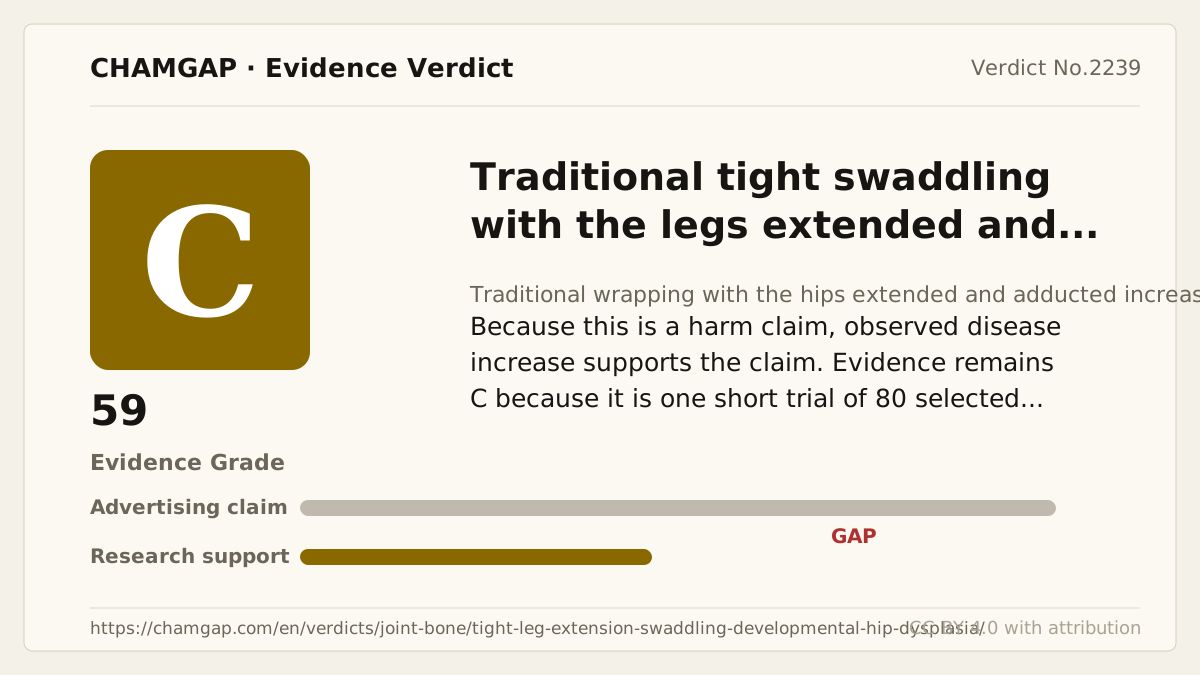
[Chamgap] Tight leg-extension swaddling x developmental dysplasia of the hip — Evidence Grade C·56. 3 cited sources checked. Source: https://chamgap.com/en/verdicts/joint-bone/tight-leg-extension-swaddling-developmental-hip-dysplasia/ · CC BY 4.0CC BY 4.0 — free to use with attribution; do not distort grades, numbers, or verdict meaning.
What this document does and does not do
Chamgap is an information source. It reports what research has and has not confirmed; it does not tell readers what to take or buy. That decision belongs to readers and, when needed, medical or legal professionals. This verdict reflects literature available up to the search date and may change as new research appears. Nothing here is medical advice.