
Therapeutic ultrasound,
does it really help with Improvement of pain and function in knee osteoarthritis?
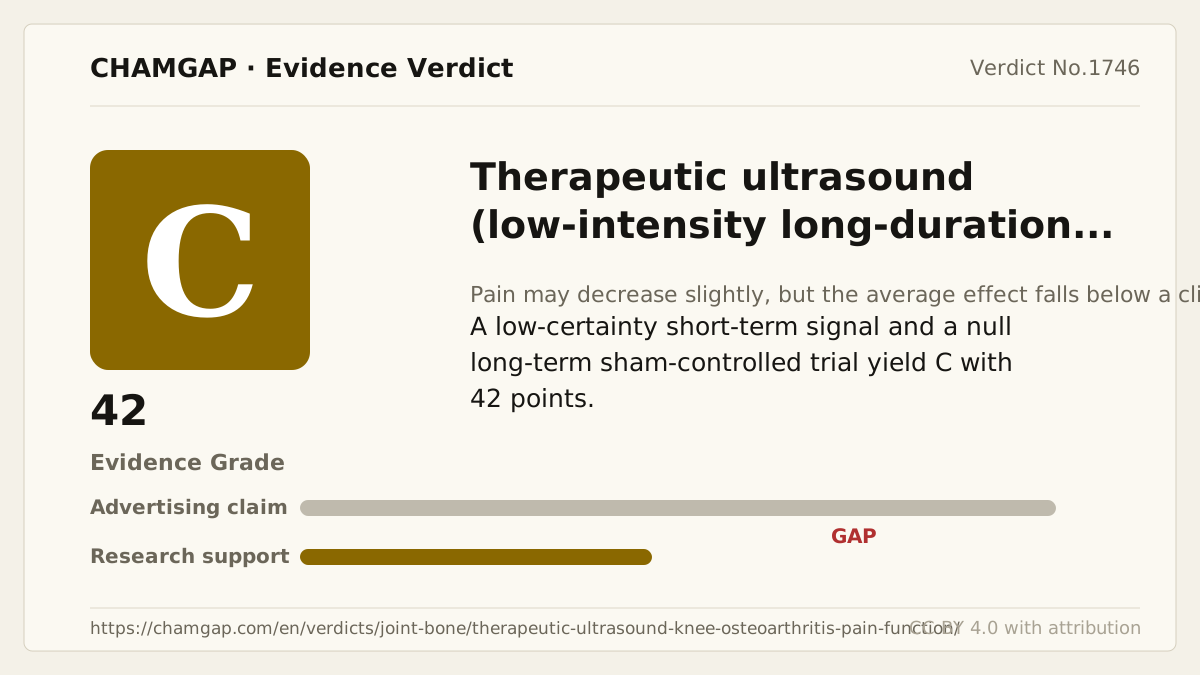
research showsTherapeutic ultrasound is rated C because knee-osteoarthritis evidence shows only a low-certainty short-term signal. Cochrane included five trials and 341 participants. A 2022 sham-controlled randomized trial of 132 participants over 48 weeks found symptom response in 70.4% versus 67.3%, P=.84, and failed to preserve cartilage thickness. Human evidence therefore exists for long-term joint function, but it is null and receives D; the overall verdict is C with 42 points.
ads claimMarketing expands micromassage or tissue-recovery mechanisms into pain resolution and restored joint function. The evidence supports only a small mean change over six weeks, not structural repair or prevention of surgery.
Useful facts when choosing a product
- Therapeutic ultrasound differs from diagnostic imaging ultrasound by delivering acoustic energy to tissue; continuous or pulsed mode, intensity, frequency, and treatment time vary by device.
- The SAM device in the Draper trial delivered daily low-intensity long-duration ultrasound, so its result cannot automatically be assigned to brief clinic-based ultrasound.
- Exercise, weight management, education, and indicated medicines remain core knee-osteoarthritis care; ultrasound is not a disease-modifying replacement.
Chamgap Semantic Classification Code
Candidate index · review held
P.therapeutic-ultrasound.device.pain-and-function-in-knee-osteoarthritis.improve.shamProcedures, devices and tests > Therapeutic ultrasound > Device delivered > pain and function in knee osteoarthritis > Improvement claim > Sham procedure or device
An automated migration candidate, not an issued permanent code; exact claim scope remains under review. This machine-generated migration candidate helps retrieval but is not a permanent assignment. The original verdict ID and URL remain authoritative.
What the research actually shows
Draper and colleagues randomized 90 people with knee osteoarthritis and found a statistically positive but sub-MCID pain difference among 84 completers. The 2022 Cochrane review included five trials and 341 participants and found only a low-certainty short-term pain signal. A separate 2022 sham-controlled randomized trial of 132 participants over 48 weeks found symptom response in 70.4% versus 67.3%, P=.84, and failed to preserve cartilage thickness, so the long-term joint-function claim receives D. verdict 1728, which is D with 28 points, concerns continuous therapeutic ultrasound for chronic low back pain, a different body site; that evidence was not repurposed for knee osteoarthritis.
Why this is classified as C (42)
Five trials with 341 participants provide only a low-certainty short-term signal, while a 132-person, 48-week sham-controlled trial failed on symptoms and cartilage preservation. These limitations yield C with 42 points.
Counterpoint. Some individuals may perceive short-term adjunctive relief, but the average effect is small and the optimal device, dose, and duration remain unsettled.
Rejudgment record. Cross-check applied — Accepted statistical success of the primary pain endpoint but applied rule ①-ⓒ and the sub-MCID ceiling because the difference missed clinical importance and evidence is concentrated in a small completer analysis with manufacturer support and low certainty
Sub-claim grades by effect
This ingredient is marketed for several effects. A single overall grade blends strong and weak claims together, so each effect is graded separately here. The overall grade reflects the strongest disconfirming or core claim.
| Effect (sub-claim) | Grade | Basis |
|---|---|---|
| Reduction in activity pain at six weeks | C | The primary endpoint was statistically positive, but the -1.11-point difference missed the MCID. |
| Improvement in knee function | C | The functional effect in small-trial synthesis is low-certainty and may be due to chance. |
| Maintenance of long-term joint function | D | A 2022 sham-controlled trial of 132 participants over 48 weeks found symptom response of 70.4% versus 67.3%, P=.84, and failed to preserve cartilage thickness. |
Cross-check — AI research and Codex final gate
Evidence Table
| Study | Design | Sample | Funding | Endpoint | Result | Weight |
|---|---|---|---|---|---|---|
| Draper DO et al. 2018 | Randomized double-blind sham-device-controlled trial | 90 randomized; 84 completers in the primary analysis | Supported by ZetrOZ Systems, the study-device manufacturer | Primary endpoint of change in activity-pain NRS at six weeks | Primary endpoint succeeded: -1.96 versus -0.85, between-group -1.11 of 10 points (95% CI -2.20 to -0.02; P=.04), but below the MCID. | Direct symptom endpoint but a small manufacturer-supported completer analysis |
| Rutjes AWS et al. 2022 | Cochrane systematic review and meta-analysis of randomized trials | Five small trials with 341 participants with knee osteoarthritis | Academic Cochrane synthesis; funding was incompletely reported across included trials | Pain and function | Possible pain difference of about -1.2 on a 0-to-10 scale; function uncertain and evidence low-certainty. | Independent synthesis of small heterogeneous evidence |
Receipt — 2 References
All 2 cited sources were verified for existence at the original page (as of 2026-07-24).
Final verification and publication gate: Codex · Evidence date: 2026-07-24 · Corrections: none
Cite this verdict
[Chamgap] Therapeutic ultrasound x pain and function in knee osteoarthritis — Evidence Grade C·42. 2 cited sources checked. Source: https://chamgap.com/en/verdicts/joint-bone/therapeutic-ultrasound-knee-osteoarthritis-pain-function/ · CC BY 4.0CC BY 4.0 — free to use with attribution; do not distort grades, numbers, or verdict meaning.
What this document does and does not do
Chamgap is an information source. It reports what research has and has not confirmed; it does not tell readers what to take or buy. That decision belongs to readers and, when needed, medical or legal professionals. This verdict reflects literature available up to the search date and may change as new research appears. Nothing here is medical advice.