
Therapeutic ultrasound,
does it really help with Improving chronic nonspecific low back pain and disability?
research showsTherapeutic ultrasound is rated D for chronic nonspecific low back pain and disability. Ebadi 2012 randomized 50 people, analyzed all 50 by last-observation-carried-forward intention to treat, and had 48 completers; the prespecified primary FRI and pain VAS outcomes both failed. The Cochrane placebo comparison for pain included three trials and 121 participants, MD -7.12 (95% CI -17.99 to 3.75), with very low certainty. This therapeutic use differs from diagnostic or screening ultrasound.
ads claimMechanistic claims about deep heat, blood flow, and tissue repair are presented as certain improvements in pain and daily function, although patient-important outcomes were null or small.
Useful facts when choosing a product
- The key trial used 1-MHz continuous ultrasound at 1.5 W/cm2 for ten sessions over four weeks alongside exercise.
- Diagnostic imaging, screening ultrasound, and high-intensity focused ultrasound are different technologies and uses.
- Suspected tumor, infection, fracture, impaired sensation, and treatment near a pregnant uterus require professional contraindication screening.
Chamgap Semantic Classification Code
Candidate index · review held
P.continuous-therapeutic-ultrasound.device.improving-chronic-nonspecific-low-back-pain-and-disability.improve.MULTIProcedures, devices and tests > Continuous therapeutic ultrasound > Device delivered > Improving chronic nonspecific low back pain and disability > Improvement claim > Multiple: primary unresolved
An automated migration candidate, not an issued permanent code; exact claim scope remains under review. This machine-generated migration candidate helps retrieval but is not a permanent assignment. The original verdict ID and URL remain authoritative.
What the research actually shows
Ebadi 2012 randomized 50 people to continuous ultrasound plus exercise or sham ultrasound plus exercise, analyzed all 50 by last-observation-carried-forward intention to treat, and had 48 completers. Primary FRI and VAS interactions failed with P=.31 and P=.48. In the 2020 Cochrane review, the placebo comparison for pain included three trials and 121 participants, MD -7.12 (95% CI -17.99 to 3.75), with very low certainty.
Why this is classified as D (28)
Fifty randomized participants were included in the last-observation-carried-forward analysis, and both primary FRI and pain outcomes failed. Ten-trial synthesis showed null pain and a small functional effect, giving D with 28 points.
Counterpoint. It should not replace exercise and education-based rehabilitation and, if used, should remain an adjunct with reassessment.
Rejudgment record. Cross-check applied — The trial randomized 50, analyzed all 50 by LOCF intention to treat, and had 48 completers with failed primary function and pain outcomes; the Cochrane placebo pain analysis of three trials and 121 participants was null with very low certainty
Sub-claim grades by effect
This ingredient is marketed for several effects. A single overall grade blends strong and weak claims together, so each effect is graded separately here. The overall grade reflects the strongest disconfirming or core claim.
| Effect (sub-claim) | Grade | Basis |
|---|---|---|
| Short-term reduction in low back pain intensity | D | The key trial and placebo meta-analysis were null. |
| Improvement in back-specific functional disability | D | The key FRI outcome failed and the pooled small effect was not clinically important. |
| Improvement in overall recovery or satisfaction | D | Two studies found little to no difference with low certainty. |
Cross-check — AI research and Codex final gate
Evidence Table
| Study | Design | Sample | Funding | Endpoint | Result | Weight |
|---|---|---|---|---|---|---|
| Ebadi S et al. 2012 | Single-blind randomized sham-controlled trial | 50 randomized and 50 in the LOCF intention-to-treat analysis; 48 completed ten sessions | Supported by the Research Deputy of Tehran University of Medical Sciences; not device-manufacturer-led | Primary FRI function and VAS pain | Group-by-time effects failed for FRI (P=.31) and VAS (P=.48). | Key direct evidence |
| Ebadi S et al. 2020 | Cochrane systematic review and meta-analysis | Ten randomized trials and 1,025 participants overall; three trials and 121 participants in the placebo pain analysis | Academic Cochrane review; no manufacturer funding reported | Pain, back-specific function, and overall improvement | Pain versus placebo was null, MD -7.12 (95% CI -17.99 to 3.75), with very low certainty. | Key synthesis |
Receipt — 2 References
All 2 cited sources were verified for existence at the original page (as of 2026-07-24).
Final verification and publication gate: Codex · Evidence date: 2026-07-24 · Corrections: none
Cite this verdict
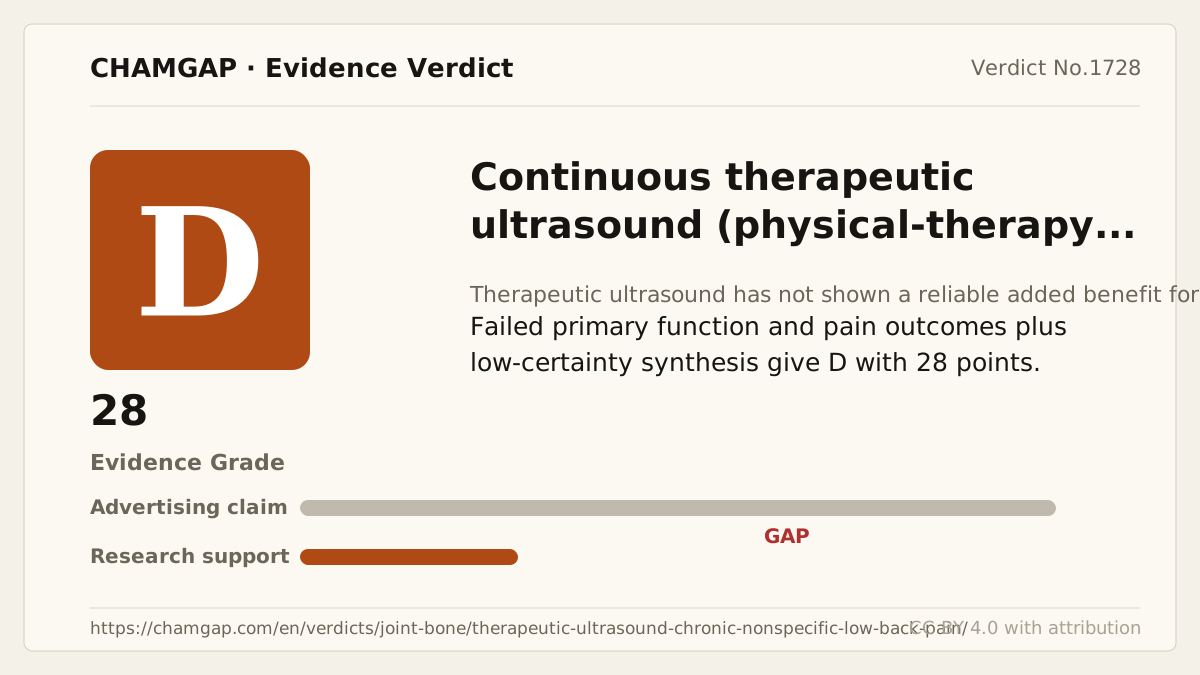
[Chamgap] Therapeutic ultrasound x chronic nonspecific low back pain and disability — Evidence Grade D·28. 2 cited sources checked. Source: https://chamgap.com/en/verdicts/joint-bone/therapeutic-ultrasound-chronic-nonspecific-low-back-pain/ · CC BY 4.0CC BY 4.0 — free to use with attribution; do not distort grades, numbers, or verdict meaning.
What this document does and does not do
Chamgap is an information source. It reports what research has and has not confirmed; it does not tell readers what to take or buy. That decision belongs to readers and, when needed, medical or legal professionals. This verdict reflects literature available up to the search date and may change as new research appears. Nothing here is medical advice.