
TENS,
does it really help with Improved persistent pain and disability in chronic nonspecific low back pain?
research showsTENS is rated D because evidence for sustained pain and disability improvement in chronic nonspecific low back pain is conflicting and of very low certainty. Small trials in a Cochrane review produced conflicting pain results and did not establish functional improvement. The 2023 WHO evidence review also found little to no benefit for pain or function and conditionally recommended against routine use.
ads claimMarketing expands sensation or short-term analgesia during use into sustained pain reduction, restored back function, and treatment of the cause. Long-term functional benefit is not established.
Useful facts when choosing a product
- TENS is a noninvasive device that delivers low-voltage electrical stimulation through skin electrodes; waveforms, intensity, and electrode placement vary by product.
- Common problems include electrode-site irritation, redness, and discomfort, and caution is needed on damaged or insensate skin.
- People with pacemakers, implantable defibrillators, or other electronic implants should not use it without clinical advice, and electrodes should not cross the chest or be placed on the front of the neck or head.
Chamgap Semantic Classification Code
Candidate index · review held
P.transcutaneous-electrical-nerve-stimulation.transdermal.persistent-pain-and-disability-in-chronic-nonspecific-low-back-pain.improve.MULTIProcedures, devices and tests > Transcutaneous electrical nerve stimulation > Transdermal > persistent pain and disability in chronic nonspecific low back pain > Improvement claim > Multiple: primary unresolved
An automated migration candidate, not an issued permanent code; exact claim scope remains under review. This machine-generated migration candidate helps retrieval but is not a permanent assignment. The original verdict ID and URL remain authoritative.
What the research actually shows
The Cochrane review by Khadilkar and colleagues included two eligible trials with 175 participants that differed in design, stimulation, and duration; one favored TENS for pain while the other found no difference across multiple outcomes. Consistent functional improvement was not established. The 2023 WHO evidence review by Verville and colleagues found no clinically important difference in pain or function for chronic primary low back pain, with very low certainty. WHO consequently issued a conditional recommendation against including TENS in routine care for adults.
Why this is classified as D (30)
Small heterogeneous trials produced conflicting pain findings and no functional benefit, while the current WHO review conditionally recommended against routine use with very low certainty, yielding D with 30 points.
Counterpoint. Brief adjunctive comfort is possible for an individual, but TENS should not replace evidence-based exercise, education, and broader management.
Rejudgment record. Cross-check applied — Applied D based on conflicting Cochrane pain findings, absent functional benefit, and the WHO very-low-certainty conditional recommendation against routine use
Sub-claim grades by effect
This ingredient is marketed for several effects. A single overall grade blends strong and weak claims together, so each effect is graded separately here. The overall grade reflects the strongest disconfirming or core claim.
| Effect (sub-claim) | Grade | Basis |
|---|---|---|
| Sustained pain improvement in chronic nonspecific low back pain | D | Trial results conflict, and the WHO review found no clinically important difference. |
| Disability improvement in chronic nonspecific low back pain | D | Functional benefit was not consistently established. |
| Long-term low-back-pain improvement after repeated use | D | Reliable evidence supporting benefit beyond 12 weeks is inadequate. |
Cross-check — AI research and Codex final gate
Evidence Table
| Study | Design | Sample | Funding | Endpoint | Result | Weight |
|---|---|---|---|---|---|---|
| Khadilkar A et al. Cochrane review. 2005 | Systematic review of randomized trials in chronic low back pain | Two randomized trials, 175 participants | Cochrane academic review | Pain relief and functional outcomes | One trial was positive while the other was null across multiple outcomes, producing inconsistent evidence | Key conflicting evidence |
| Verville L et al. WHO-commissioned systematic review. 2023 | Systematic review and evidence assessment | Synthesis of TENS trials in chronic primary low back pain | WHO guideline evidence review | Pain, function, and harms | No clinically important pain or function difference versus placebo or no intervention; very low certainty | Key current guideline evidence |
Receipt — 3 References
All 3 cited sources were verified for existence at the original page (as of 2026-07-23).
Final verification and publication gate: Codex · Evidence date: 2026-07-23 · Corrections: none
Cite this verdict
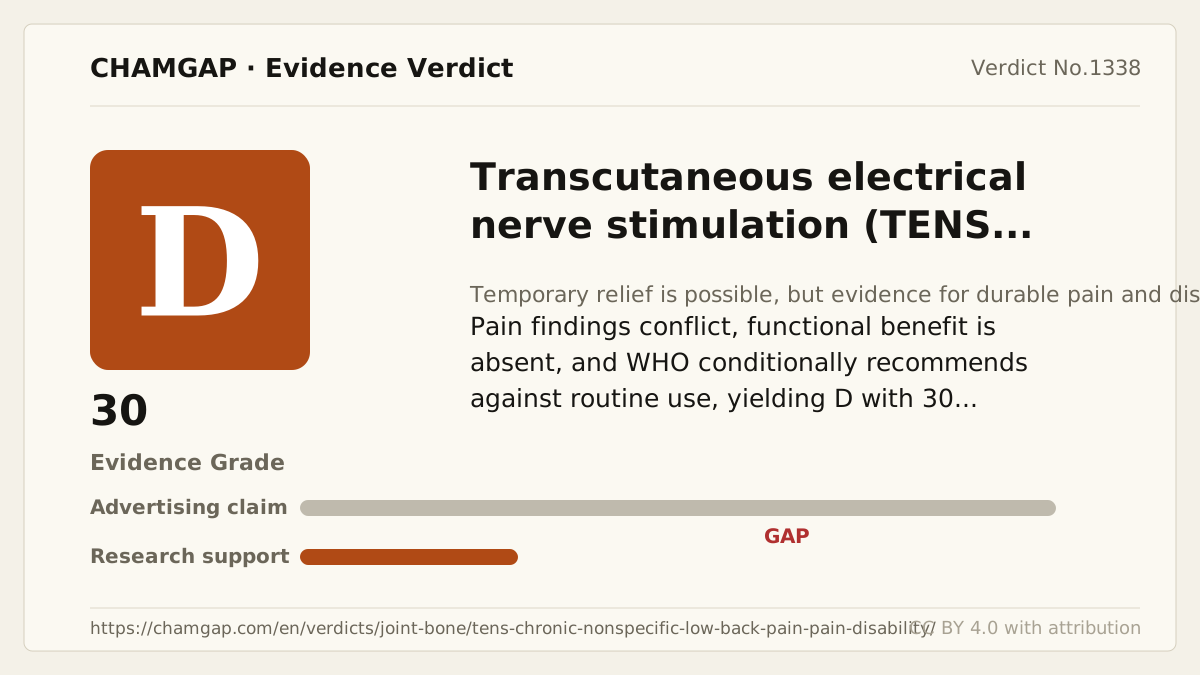
[Chamgap] TENS x persistent pain and disability in chronic nonspecific low back pain — Evidence Grade D·30. 3 cited sources checked. Source: https://chamgap.com/en/verdicts/joint-bone/tens-chronic-nonspecific-low-back-pain-pain-disability/ · CC BY 4.0CC BY 4.0 — free to use with attribution; do not distort grades, numbers, or verdict meaning.
What this document does and does not do
Chamgap is an information source. It reports what research has and has not confirmed; it does not tell readers what to take or buy. That decision belongs to readers and, when needed, medical or legal professionals. This verdict reflects literature available up to the search date and may change as new research appears. Nothing here is medical advice.