
Subacromial corticosteroid injection,
does it really help with Long-term improvement in rotator cuff-related shoulder pain and disability?
research showsThe grade is D. Publicly funded GRASP randomized 708 participants, and its repeated-measures model used 1,869 observations. The 12-month SPADI difference was -1.11 points (99% CI -4.47 to 2.26), below the prespecified eight-point threshold, while pooled placebo-controlled benefit was not significant at 8 to 12 weeks.
ads claimBrief pain relief is expanded into long-term recovery and functional restoration of rotator cuff disease.
Useful facts when choosing a product
- GRASP compared adding one subacromial corticosteroid injection with no injection and randomized 708 people. Its repeated-measures model used 1,869 observations.
- Observed data were available for 638 at eight weeks, 615 at six months, and 617 at 12 months; the paper did not state one unique analyzed-participant count.
- Verdict 1830 is F with 12 points because lateral epicondylalgia showed harm, not merely a null long-term result: recovery was 83% versus 96% and recurrence 54% versus 12%. Here, short-term benefit exists and comparable harm was not shown, which separates the grades.
Chamgap Semantic Classification Code
Candidate index · review held
M.subacromial-corticosteroid-injection.UNK.rotator-cuff-related-shoulder-pain-and-disability.improve.MULTIMedicinal interventions > Subacromial corticosteroid injection > Unknown > rotator cuff-related shoulder pain and disability > Improvement claim > Multiple: primary unresolved
An automated migration candidate, not an issued permanent code; exact claim scope remains under review. This machine-generated migration candidate helps retrieval but is not a permanent assignment. The original verdict ID and URL remain authoritative.
What the research actually shows
GRASP randomized 708 people. Its primary analysis used participants with at least one SPADI assessment and the required baseline covariates. Observed data were available for 638 at eight weeks, 615 at six months, and 617 at 12 months, contributing 1,869 observations to the repeated-measures model. The paper did not report one unique analyzed-participant count. The 12-month SPADI difference was -1.11 points (99% CI -4.47 to 2.26); the eight-point clinically important difference was prespecified in the GRASP statistical analysis plan. Mohamadi reported g 0.52 (95% CI 0.27 to 0.78) at four to eight weeks and, across eight studies and 564 participants, g 0.23 (95% CI -0.09 to 0.56), P=0.162, at eight to 12 weeks.
Why this is classified as D (30)
The 12-month patient-important result and 8-to-12-week synthesis were null, but a four-to-eight-week effect was real and the later interval leaves moderate benefit possible. Unlike verdict 1830, F with 10 points, no long-term efficacy harm was demonstrated, so this is D with 30 points.
Counterpoint. A short-term injection can be considered for selected patients whose pain prevents exercise. It should not be presented as a substitute for long-term recovery management.
Rejudgment record. Cross-check applied — Failed 12-month primary endpoint and null 8-to-12-week synthesis, balanced against real short-term benefit and an interval that leaves moderate benefit possible
| Endpoint | P | Symptom or function itself is the target - including patient reports and performance tests |
| Replication | RX | Repeatedly refuted in the same indication |
| Independence | I2 | Decisive evidence is publicly or non-profit funded |
| Effect size | E0 | Null |
| Precision | C0 | The confidence interval leaves room for benefit |
Stored derived and displayed grades match; this is not a current recalculation or validity check (D).
Sub-claim grades by effect
This ingredient is marketed for several effects. A single overall grade blends strong and weak claims together, so each effect is graded separately here. The overall grade reflects the strongest disconfirming or core claim.
| Effect (sub-claim) | Grade | Basis |
|---|---|---|
| Improved shoulder pain and function over 12 months | D | The 12-month SPADI result failed in the 708-person randomized trial. |
| Short-term pain relief at four to eight weeks | C | A small positive signal exists, but the GRASP difference missed the eight-point MCID. |
| Pain relief sustained for at least three months | D | The placebo-injection meta-analysis found no benefit at three months. |
Cross-check — AI research and Codex final gate
Evidence Table
| Study | Design | Sample | Funding | Endpoint | Result | Weight |
|---|---|---|---|---|---|---|
| Hopewell S et al. 2021 GRASP | Multicenter 2-by-2 factorial pragmatic randomized trial with intention-to-treat mixed modeling | 708 randomized; 1,869 observations in the repeated-measures model | Public funding from the UK NIHR Health Technology Assessment Programme | Mean SPADI pain and function over 12 months | -1.11 points (99% CI -4.47 to 2.26), failed primary endpoint; -5.64 points at eight weeks also missed the prespecified eight-point MCID. | Key large independent trial |
| Mohamadi A et al. 2017 | Systematic review and meta-analysis of placebo-injection randomized trials | 11 trials and 726 participants | Authors reported no external funding or commercial associations | Pain at four to eight weeks and three months | No benefit at three months; small transient four-to-eight-week benefit, SMD 0.52, NNT about 5. | Placebo-controlled replication synthesis |
Receipt — 2 References
All 2 cited sources were verified for existence at the original page (as of 2026-07-24).
Final verification and publication gate: Codex · Evidence date: 2026-07-24 · Corrections: none
Cite this verdict
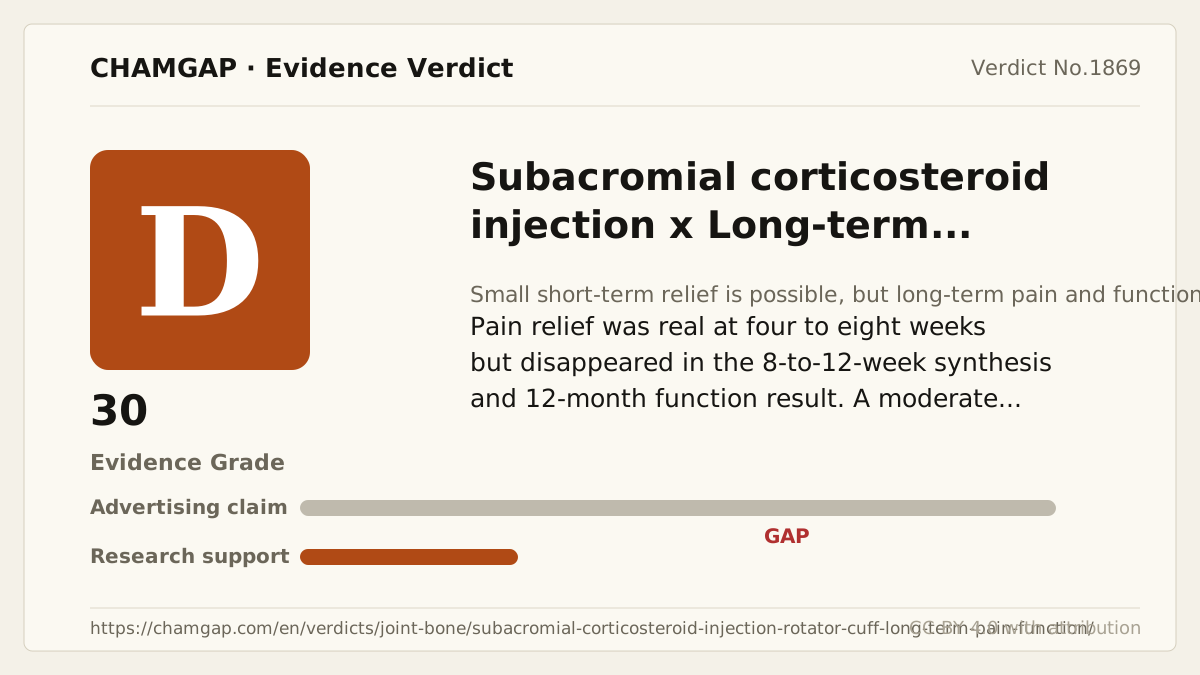
[Chamgap] Subacromial corticosteroid injection x long-term improvement in rotator cuff pain — Evidence Grade D·30. 2 cited sources checked. Source: https://chamgap.com/en/verdicts/joint-bone/subacromial-corticosteroid-injection-rotator-cuff-long-term-pain-function/ · CC BY 4.0CC BY 4.0 — free to use with attribution; do not distort grades, numbers, or verdict meaning.
What this document does and does not do
Chamgap is an information source. It reports what research has and has not confirmed; it does not tell readers what to take or buy. That decision belongs to readers and, when needed, medical or legal professionals. This verdict reflects literature available up to the search date and may change as new research appears. Nothing here is medical advice.