
Semaglutide,
does it really help with Improved pain and physical function in moderate knee osteoarthritis with obesity?
research showsOnce-weekly semaglutide 2.4 mg improved pain and physical function in adults with obesity and moderate knee osteoarthritis but is rated C. STEP 9 randomized 407 participants for 68 weeks. Change in the 0-to-100 WOMAC pain score was -41.7 with semaglutide versus -27.5 with placebo, a 14.2-point between-group difference, P<0.001. This exceeded the approximate 12-point minimal important difference, and pain is the treated symptom rather than a surrogate. The problem is the evidence structure: osteoarthritis efficacy rests on one manufacturer-funded trial. Weight fell by 13.7% versus 3.2%, and no active weight-loss comparator or mediation analysis separated a joint-specific effect from weight-mediated benefit. A single sponsor-funded non-hard symptom trial supports the top of grade C, C with 59 points.
ads claimPromotion can expand the result into a knee-arthritis drug or a GLP-1 treatment that restores cartilage. STEP 9 established 68-week pain and function improvement when semaglutide was added to lifestyle counseling in people with both obesity and moderate knee osteoarthritis. It did not establish cartilage preservation on imaging, fewer joint replacements, efficacy without obesity, or a joint-specific effect independent of weight loss.
Useful facts when choosing a product
- STEP 9 used semaglutide 2.4 mg by subcutaneous injection once weekly, with physical-activity and reduced-calorie-diet counseling provided to all participants.
- Knee-osteoarthritis pain is not a separate approved indication, and a clinician should determine obesity-treatment eligibility, dose escalation, and concurrent-medicine management.
- Gastrointestinal adverse effects such as nausea, vomiting, diarrhea, constipation, and abdominal pain are common. Gallbladder disease, pancreatitis, and volume-depletion-related kidney injury also require assessment.
- This verdict addresses a different population and endpoint from type 2 diabetes in verdict 615, which is A with 84 points, obesity with established cardiovascular disease in verdict 1191, which is A with 90 points, and diabetic chronic kidney disease in verdict 1587, which is B with 79 points.
Chamgap Semantic Classification Code
Candidate index · review held
M.semaglutide.subcutaneous.pain-and-physical-function-in-moderate-knee-osteoarthritis-with-obesity.improve.placeboMedicinal interventions > Semaglutide > Subcutaneous > pain and physical function in moderate knee osteoarthritis with obesity > Improvement claim > Placebo
An automated migration candidate, not an issued permanent code; exact claim scope remains under review. This machine-generated migration candidate helps retrieval but is not a permanent assignment. The original verdict ID and URL remain authoritative.
What the research actually shows
STEP 9 by Bliddal and colleagues randomized 407 adults at 61 sites in 11 countries who had obesity, clinical and radiographic moderate knee osteoarthritis, and at least moderate pain to semaglutide 2.4 mg once weekly or placebo in a 2:1 ratio. Both groups received counseling on physical activity and a reduced-calorie diet. At 68 weeks, weight changed by -13.7% versus -3.2%, WOMAC pain by -41.7 versus -27.5 points, and SF-36 physical function by 12.0 versus 6.5 points. Serious adverse-event incidence was similar, but permanent discontinuation occurred in 6.7% versus 3.0%, most commonly because of gastrointestinal disorders. The separate noncommercial IDEA trial in 454 adults with overweight or obesity and knee osteoarthritis showed that intensive diet-induced weight loss with exercise can improve clinical outcomes including pain and function, supporting weight-loss mediation of the STEP 9 symptom effect.
Why this is classified as C (59)
STEP 9 found a 14.2-point greater reduction in WOMAC pain, exceeding the approximate 12-point minimal important difference, and a 5.5-point greater improvement in SF-36 physical function over 68 weeks. Pain and function are direct patient-important targets, not surrogates. However, osteoarthritis efficacy rests on one manufacturer-funded trial, and weight change of -13.7% versus -3.2% cannot be separated from a joint-specific effect without an active weight-loss comparator or mediation analysis. With no independent replication and no hard-outcome exception, rules ②-b and ①-ⓒ support the top of grade C, C with 59 points.
Counterpoint. For a patient eligible for obesity treatment who also has substantial knee-osteoarthritis pain, weight, cardiometabolic, and joint-symptom benefits can be considered together. The drug does not replace exercise, physical therapy, strengthening, or analgesic strategies, and gastrointestinal tolerability and contraindications require review.
Rejudgment record. Cross-check applied — WOMAC pain is a patient-important treatment target, and the 14.2-point difference exceeded the approximate 12-point minimal important difference, so the limitation is not a surrogate endpoint. Osteoarthritis efficacy nevertheless comes from one 407-patient manufacturer-funded trial, and the -13.7% versus -3.2% weight change cannot be separated from a joint-specific effect without an active weight-loss comparator or mediation analysis. Rules ②-b and ①-ⓒ therefore cap this non-hard symptom evidence at C.
Sub-claim grades by effect
This ingredient is marketed for several effects. A single overall grade blends strong and weak claims together, so each effect is graded separately here. The overall grade reflects the strongest disconfirming or core claim.
| Effect (sub-claim) | Grade | Basis |
|---|---|---|
| Improved pain in moderate knee osteoarthritis with obesity | C | The 14.2-point WOMAC benefit exceeded the approximate 12-point minimal important difference, but one manufacturer-funded trial did not establish a joint-specific effect independent of weight loss. |
| Improved physical function in moderate knee osteoarthritis with obesity | C | SF-36 physical function improved by 12.0 versus 6.5 points, but one manufacturer-funded trial did not establish a joint-specific effect independent of weight loss. |
| A semaglutide-specific knee-joint effect independent of weight loss | ? | Weight changed by -13.7% versus -3.2%, and no mediation analysis or active weight-loss comparator establishes an independent effect. |
Cross-check — AI research and Codex final gate
Evidence Table
| Study | Design | Sample | Funding | Endpoint | Result | Weight |
|---|---|---|---|---|---|---|
| Bliddal H et al.; STEP 9 Study Group. 2024 | Multinational randomized double-blind placebo-controlled trial | 407 adults with obesity, moderate knee osteoarthritis, and at least moderate pain | Funded by Novo Nordisk | Weight change and WOMAC pain at 68 weeks, with confirmatory SF-36 physical function | Weight changed by -13.7% versus -3.2%, WOMAC pain by -41.7 versus -27.5 points, and SF-36 physical function by 12.0 versus 6.5 points, all favoring semaglutide. | Key direct symptom and function trial |
| Messier SP et al. 2013 IDEA trial | Single-blind 18-month randomized diet and exercise trial | 454 older adults with overweight or obesity and knee osteoarthritis | United States NIH public research support and academic trial | Weight, knee load, inflammation, pain, function, and mobility | Intensive diet-induced weight loss with exercise improved weight, inflammation, joint load, and clinical symptoms, showing that weight loss can mediate knee-symptom improvement. | Independent contextual evidence for weight-loss mediation |
| United States Food and Drug Administration WEGOVY label. 2026 | Prescribing information and integrated safety review | Integrated obesity, cardiovascular, and metabolic indication development trials | United States FDA regulatory document | Dosing, contraindications, gastrointestinal effects, and serious adverse reactions | Describes the 2.4-mg injection regimen and key warnings for gastrointestinal disorders, gallbladder disease, pancreatitis, and acute kidney injury due to volume depletion. | Dosing and safety evidence |
Receipt — 3 References
All 3 cited sources were verified for existence at the original page (as of 2026-07-24).
Final verification and publication gate: Codex · Evidence date: 2026-07-24 · Corrections: none
Cite this verdict
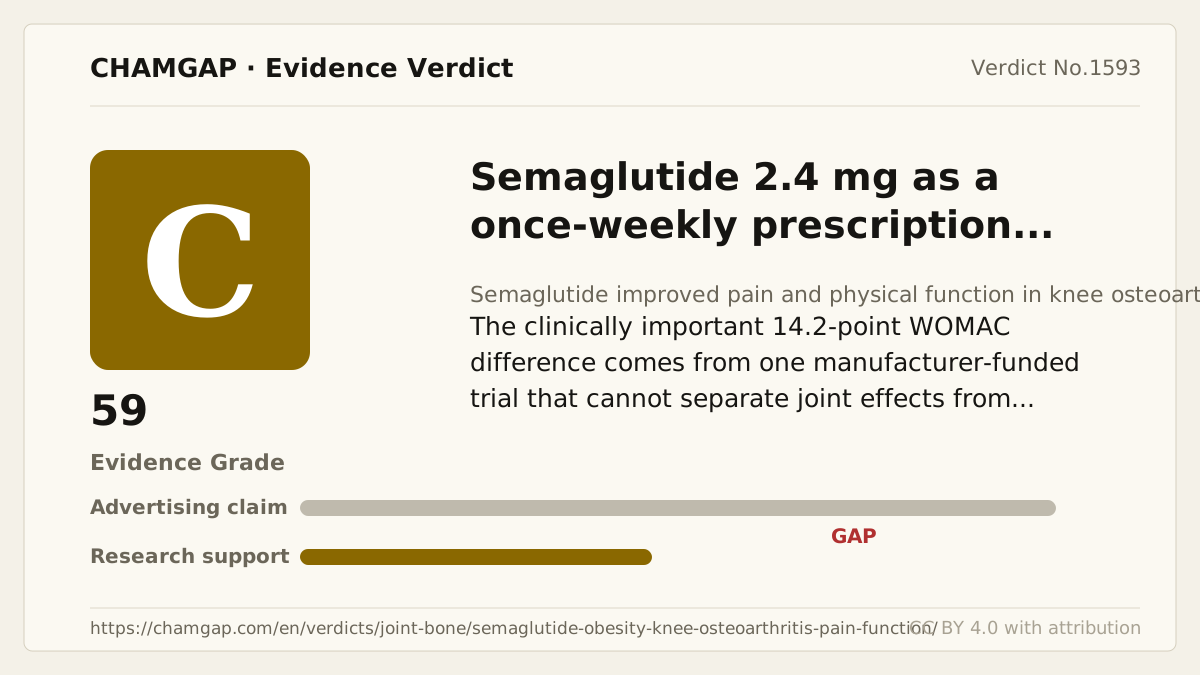
[Chamgap] Semaglutide x improved pain and physical function in knee osteoarthritis with obesity — Evidence Grade C·59. 3 cited sources checked. Source: https://chamgap.com/en/verdicts/joint-bone/semaglutide-obesity-knee-osteoarthritis-pain-function/ · CC BY 4.0CC BY 4.0 — free to use with attribution; do not distort grades, numbers, or verdict meaning.
What this document does and does not do
Chamgap is an information source. It reports what research has and has not confirmed; it does not tell readers what to take or buy. That decision belongs to readers and, when needed, medical or legal professionals. This verdict reflects literature available up to the search date and may change as new research appears. Nothing here is medical advice.