
Romosozumab,
does it really help with Prevention of vertebral, hip, and clinical fractures in postmenopausal women at high fracture risk?
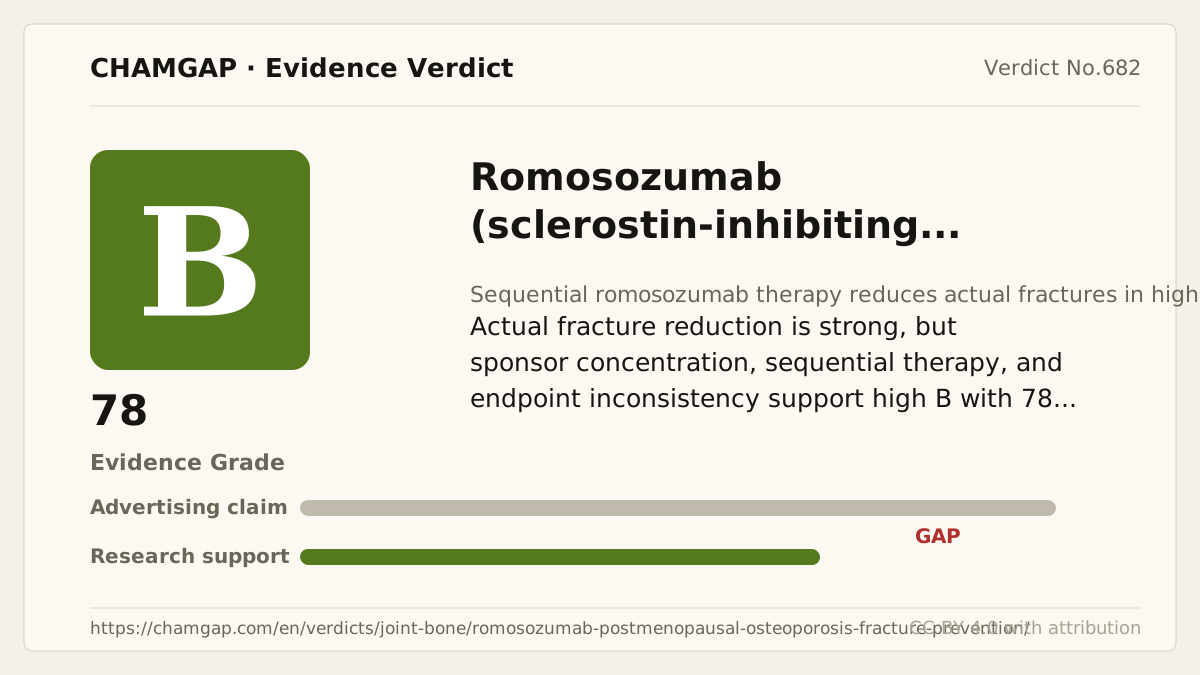
research showsRomosozumab is rated high B because it reduces actual vertebral, clinical, and hip fractures in postmenopausal women at high fracture risk. In ARCH, with 4,093 participants, 12 months of romosozumab followed by alendronate produced relative reductions of 48% in new vertebral fracture, 27% in clinical fracture, and 38% in hip fracture over 24 months compared with alendronate alone. FRAME, with 7,180 participants, replicated vertebral-fracture reduction at 12 months, although its nonvertebral-fracture analysis was not significant. Because both pivotal trials were led by Amgen and UCB, used sequential treatment, and left an unresolved cardiovascular safety signal, the evidence supports B with 78 points rather than A.
ads claimPromotion can turn increased bone mineral density into a claim that bone is fully restored or that 12 months of injections provides permanent protection. The trials used sequential antiresorptive therapy after romosozumab, and cardiovascular risk selection remains necessary.
Useful facts when choosing a product
- Romosozumab is a prescription monoclonal antibody that inhibits sclerostin, increasing bone formation and decreasing bone resorption; it is mechanistically distinct from denosumab and alendronate. A typical regimen is two subcutaneous injections totaling 210 mg once monthly for 12 months.
- An antiresorptive medicine is generally continued after the 12-month course to preserve bone-density and fracture benefits. Sequential-trial results should not be interpreted as permanent protection from romosozumab alone.
- Labeling warns against initiation in a patient who has had myocardial infarction or stroke within the preceding year, and a cardiovascular event during therapy requires prompt reassessment. Hypocalcemia should be corrected before treatment, with adequate calcium and vitamin D intake.
- Arthralgia, headache, and injection-site reactions can occur, while osteonecrosis of the jaw and atypical femoral fracture are rare reported harms. Dental status, kidney function, and hypocalcemia risk are safety assessments separate from fracture-prevention efficacy.
Chamgap Semantic Classification Code
Candidate index · review held
M.romosozumab.UNK.vertebral-hip-and-clinical-fractures-at-high-fracture-risk.prevent.MULTIMedicinal interventions > Romosozumab > Unknown > vertebral, hip, and clinical fractures at high fracture risk > Occurrence-prevention claim > Multiple: primary unresolved
An automated migration candidate, not an issued permanent code; exact claim scope remains under review. This machine-generated migration candidate helps retrieval but is not a permanent assignment. The original verdict ID and URL remain authoritative.
What the research actually shows
ARCH randomized 4,093 women, with a mean age of 74 years and previous fragility fracture, to romosozumab or alendronate for 12 months before both groups received alendronate. At 24 months, new vertebral fractures occurred in 6.2% versus 11.9%, clinical fractures in 9.7% versus 13.0%, and hip fractures in 2.0% versus 3.2%. FRAME randomized 7,180 postmenopausal women with osteoporosis to romosozumab or placebo for 12 months before both groups received denosumab; new vertebral fractures at 12 months occurred in 0.5% versus 1.8%, while the nonvertebral-fracture difference was not significant. Bone-density gain supports the mechanism, but the grade rests on actual fractures.
Why this is classified as B (78)
Large randomized trials, ARCH and FRAME, measured actual vertebral, clinical, and hip fractures and provide high directness. Evidence is nevertheless concentrated in sponsor-led development trials, treatment was sequential with an antiresorptive, the FRAME nonvertebral endpoint was not significant, and a cardiovascular-event imbalance remains. Sponsor concentration, sequential design, and partial inconsistency support high B with 78 points rather than A.
Counterpoint. For women at very high fracture risk, one year of rapid bone formation followed by an antiresorptive can be useful. Recent myocardial infarction or stroke, hypocalcemia, dental risk, and alternative osteoporosis medicines must still be reviewed.
Rejudgment record. New verdict — Accepted reductions in actual vertebral, clinical, and hip fractures in the large ARCH and FRAME randomized trials, but assigned high B rather than A because evidence is concentrated in Amgen and UCB trials, treatment was sequential with antiresorptives, the FRAME nonvertebral endpoint was not significant, and a cardiovascular signal remains
Sub-claim grades by effect
This ingredient is marketed for several effects. A single overall grade blends strong and weak claims together, so each effect is graded separately here. The overall grade reflects the strongest disconfirming or core claim.
| Effect (sub-claim) | Grade | Basis |
|---|---|---|
| Prevention of vertebral, clinical, and hip fractures in high-risk postmenopausal osteoporosis | B | Actual fracture outcomes in ARCH and FRAME were positive, but sponsor leadership, sequential design, and partial inconsistency remain. |
| Sponsor-led evidence for antiresorptive therapy after romosozumab | ? | This describes the design and funding context of the pivotal trials rather than a separate efficacy claim. |
| Increased bone mineral density | B | This is a consistent surrogate, while the efficacy grade rests on actual fracture reduction. |
Cross-check — AI research and Codex final gate
Evidence Table
| Study | Design | Sample | Funding | Endpoint | Result | Weight |
|---|---|---|---|---|---|---|
| Saag KG et al. ARCH. 2017 | Multicenter randomized double-blind active-controlled phase 3 trial followed by open-label sequential therapy | 4,093 postmenopausal women with osteoporosis and previous fracture | Amgen and UCB Pharma | New vertebral, clinical, nonvertebral, and hip fractures | At 24 months, new vertebral fractures were 6.2% versus 11.9%, clinical fractures 9.7% versus 13.0%, and hip fractures 2.0% versus 3.2%. | Key direct fracture evidence with sequential-treatment attribution limits |
| Cosman F et al. FRAME. 2016 | Multicenter randomized double-blind placebo-controlled phase 3 trial followed by denosumab | 7,180 postmenopausal women with osteoporosis | Amgen and UCB Pharma | New vertebral, clinical, and nonvertebral fractures at 12 months | New vertebral fractures fell to 0.5% versus 1.8%, but the nonvertebral-fracture difference was not significant. | Large replication evidence with partial endpoint inconsistency |
Receipt — 2 References
All 2 cited sources were verified for existence at the original page (as of 2026-07-19).
Final verification and publication gate: Codex · Evidence date: 2026-07-19 · Corrections: none
Cite this verdict
[Chamgap] Romosozumab x fracture prevention in high-risk postmenopausal osteoporosis — Evidence Grade B·78. 2 cited sources checked. Source: https://chamgap.com/en/verdicts/joint-bone/romosozumab-postmenopausal-osteoporosis-fracture-prevention/ · CC BY 4.0CC BY 4.0 — free to use with attribution; do not distort grades, numbers, or verdict meaning.
What this document does and does not do
Chamgap is an information source. It reports what research has and has not confirmed; it does not tell readers what to take or buy. That decision belongs to readers and, when needed, medical or legal professionals. This verdict reflects literature available up to the search date and may change as new research appears. Nothing here is medical advice.