
Denosumab,
does it really help with Reduction of vertebral, hip, and nonvertebral fractures in postmenopausal women with osteoporosis?
research showsThe claim that denosumab reduces vertebral, hip, and nonvertebral fractures in postmenopausal women with osteoporosis is rated B. The 7,868-participant FREEDOM randomized trial followed women for three years and found relative reductions of 68% in new radiographic vertebral fractures, 40% in hip fractures, and 20% in nonvertebral fractures. These are strong direct fracture outcomes rather than bone-density surrogates, but pivotal efficacy depends heavily on a single trial funded and designed by Amgen, so the verdict is high B with 79 points rather than A. Rapid bone loss and multiple vertebral fractures after discontinuation, hypocalcemia, osteonecrosis of the jaw, and atypical femoral fractures remain separate safety issues.
ads claimPromotion can turn increased bone density into a promise of fully restored bone or freely stoppable treatment. The demonstrated benefit is fracture reduction in high-risk postmenopausal osteoporosis, with calcium status, dental and kidney risk, and sequential antiresorptive therapy assessed before treatment and discontinuation.
Useful facts when choosing a product
- Prolia is a prescription monoclonal antibody that blocks RANKL and suppresses osteoclast formation and activity; for postmenopausal osteoporosis it is generally injected subcutaneously at 60 mg every six months. Calcium and vitamin D supplementation and label-directed monitoring are required.
- Denosumab represents a RANKL-inhibition fracture-prevention pathway that differs from the bone-density-centered calcium, vitamin D, or prune pathways. Results from one pathway cannot be transferred to another ingredient or food.
- Delaying injections or stopping without a plan can trigger rebound bone turnover and multiple vertebral fractures. Sequential antiresorptive treatment should be planned with the prescriber before discontinuation.
- Hypocalcemia, osteonecrosis of the jaw, atypical femoral fractures, infection, and skin reactions are reported. Advanced chronic kidney disease markedly increases the risk of severe hypocalcemia and requires careful assessment.
Chamgap Semantic Classification Code
Candidate index · review held
M.denosumab.UNK.vertebral-hip-and-nonvertebral-fractures-with-osteoporosis.reduce.placeboMedicinal interventions > Denosumab > Unknown > vertebral, hip, and nonvertebral fractures with osteoporosis > Reduction claim > Placebo
An automated migration candidate, not an issued permanent code; exact claim scope remains under review. This machine-generated migration candidate helps retrieval but is not a permanent assignment. The original verdict ID and URL remain authoritative.
What the research actually shows
FREEDOM randomized 7,868 postmenopausal women aged 60 to 90 years with bone-mineral-density T scores below -2.5 to denosumab 60 mg subcutaneously every six months or placebo. At 36 months, relative risk fell by 68% for new vertebral fracture, 40% for hip fracture, and 20% for nonvertebral fracture. In a discontinuation analysis, the vertebral-fracture rate among 1,001 former denosumab recipients rose from 1.2 per 100 participant-years on treatment to 7.1 after stopping, with multiple vertebral fractures documented. The FDA label also warns about multiple vertebral fractures after discontinuation, severe hypocalcemia, osteonecrosis of the jaw, and atypical femoral fractures.
Why this is classified as B (79)
A 7,868-participant trial directly reduced vertebral, hip, and nonvertebral fractures rather than only a bone-density surrogate. Pivotal positive evidence is concentrated in a single Amgen registration trial without repeated independent large fracture trials, so not every A criterion is met and the verdict is B with 79 points. Rebound fractures and other serious adverse effects remain safety findings separate from the efficacy score.
Counterpoint. Planned treatment can offer substantial absolute benefit to patients at sufficiently high fracture risk. For lower-risk patients or those unable to receive sequential therapy, long-term dosing and discontinuation strategy require particular scrutiny before starting.
Rejudgment record. New verdict — Gave strong weight to direct reductions in vertebral, hip, and nonvertebral fractures in the 7,868-participant FREEDOM trial, but assigned high B rather than A because pivotal positive evidence is concentrated in one Amgen registration trial without repeated independent large fracture trials
Sub-claim grades by effect
This ingredient is marketed for several effects. A single overall grade blends strong and weak claims together, so each effect is graded separately here. The overall grade reflects the strongest disconfirming or core claim.
| Effect (sub-claim) | Grade | Basis |
|---|---|---|
| Reduction of vertebral, hip, and nonvertebral fractures in postmenopausal osteoporosis | B | Direct fracture outcomes in a large trial are strong, but pivotal positive evidence is concentrated in one manufacturer trial. |
| Rebound multiple vertebral fractures after discontinuation | B | Discontinuation analyses and official labeling support this separate safety outcome; it is not mixed into on-treatment efficacy grading. |
| Increase in bone mineral density | C | Bone density is a positive surrogate, whereas the B verdict rests on reductions in actual fractures. |
Cross-check — AI research and Codex final gate
Evidence Table
| Study | Design | Sample | Funding | Endpoint | Result | Weight |
|---|---|---|---|---|---|---|
| Cummings SR et al., FREEDOM 2009 | Multicenter randomized double-blind placebo-controlled trial | 7,868 postmenopausal women with osteoporosis followed for 36 months | Funded by Amgen, which participated in trial design | New radiographic vertebral fracture; hip and nonvertebral fractures | Relative reductions of 68% in vertebral, 40% in hip, and 20% in nonvertebral fractures | Pivotal large direct fracture evidence from one manufacturer trial |
| Cummings SR et al., FREEDOM discontinuation analysis 2018 | Post hoc discontinuation cohort analysis of a randomized trial and extension | 1,001 participants stopping denosumab and 470 stopping placebo | Amgen-supported research program | Vertebral and multiple vertebral fractures after discontinuation | The vertebral-fracture rate rose to 7.1 per 100 participant-years after stopping, with multiple fractures documented. | Discontinuation safety and persistence boundary |
Receipt — 3 References
All 3 cited sources were verified for existence at the original page (as of 2026-07-19).
Final verification and publication gate: Codex · Evidence date: 2026-07-19 · Corrections: none
Cite this verdict
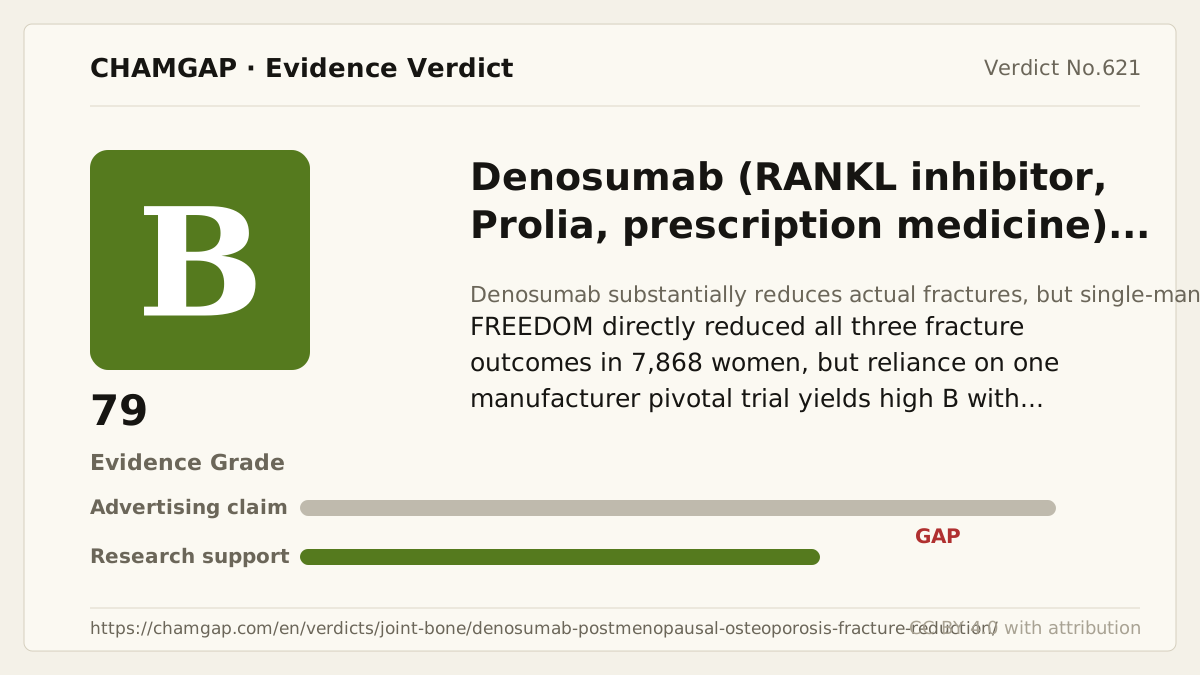
[Chamgap] Denosumab x fracture reduction in postmenopausal osteoporosis — Evidence Grade B·79. 3 cited sources checked. Source: https://chamgap.com/en/verdicts/joint-bone/denosumab-postmenopausal-osteoporosis-fracture-reduction/ · CC BY 4.0CC BY 4.0 — free to use with attribution; do not distort grades, numbers, or verdict meaning.
What this document does and does not do
Chamgap is an information source. It reports what research has and has not confirmed; it does not tell readers what to take or buy. That decision belongs to readers and, when needed, medical or legal professionals. This verdict reflects literature available up to the search date and may change as new research appears. Nothing here is medical advice.