
Physical therapy vs intra-articular glucocorticoid injection,
does it really help with Reduced pain and functional disability in knee osteoarthritis?
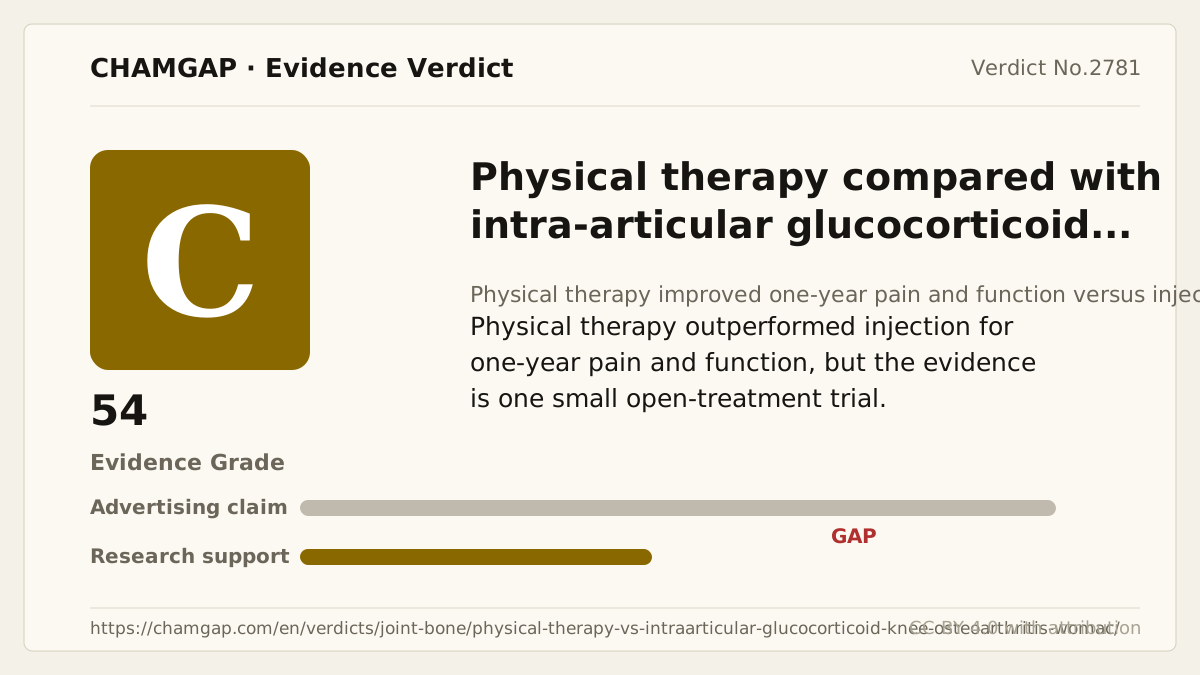
research showsThe grade is C. In a 156-person randomized trial, one-year WOMAC was 37.0 with physical therapy and 55.8 with injection, adjusted difference -18.8 points (95% CI -32.6 to -5.0; P=.008). The difference exceeded the prespecified 12% threshold relative to a baseline near 108, but this was one small trial with unmasked patients reporting subjective symptoms, giving C with 54 points.
ads claimThis directly compares two one-year treatment strategies. It does not establish physical therapy against no treatment or superiority over every injection regimen.
Useful facts when choosing a product
- Physical therapy included up to eight individualized manual-therapy and exercise sessions plus home exercise.
- The injection strategy allowed up to three injections during one year as clinically indicated.
- The intervention was a care strategy; WOMAC and performance tests were assessment tools.
Chamgap Semantic Classification Code
Candidate index · review held
M.physical-therapy-compared-with-intra-articular-glucocorticoid-injection.intraarticular.pain-and-functional-disability-in-knee-osteoarthritis.reduce.UNKMedicinal interventions > Physical therapy compared with intra-articular glucocorticoid injection > Intra-articular > pain and functional disability in knee osteoarthritis > Reduction claim > Unknown
An automated migration candidate, not an issued permanent code; exact claim scope remains under review. This machine-generated migration candidate helps retrieval but is not a permanent assignment. The original verdict ID and URL remain authoritative.
What the research actually shows
Two U.S. Military Health System hospitals randomized 78 participants per arm. The article states, "Assignment to treatment group was determined according to sequentially numbered labels prepared with the use of an electronic random number generator. These labels were placed inside corresponding numbered opaque envelopes." Outcome assessors were unaware of assignment, but participants and clinicians could not be masked and WOMAC was patient-reported. Small size below 200 and an unmasked subjective endpoint are two avoidable limitations. Planned and actual enrollment were both 156, with no planned interim analysis, so the trial was not stopped early. The protocol reported partial support from the Orthopaedic Physical Therapy Products Grant and "None declared" for competing interests; no company supply of trial treatment materials was identified.
Why this is classified as C (54)
The patient-centered difference exceeded the prespecified threshold, but lack of replication plus small size and an unmasked patient-reported endpoint give C with 54 points.
Counterpoint. Treatment crossover and a Military Health System population limit interpretation outside this setting.
Rejudgment record. Cross-check applied — Cross-checked the article and protocol for the 156-person intention-to-treat analysis, one-year WOMAC estimate, prespecified 12% threshold, unmasked patient-reported outcome, funding, and crossover
| Endpoint | P | Symptom or function itself is the target - including patient reports and performance tests |
| Replication | R1 | Single confirmatory trial |
| Independence | I2 | Decisive evidence is publicly or non-profit funded |
| Effect size | E+ | Meets the clinically important threshold |
Stored derived and displayed grades match; this is not a current recalculation or validity check (C).
Sub-claim grades by effect
This ingredient is marketed for several effects. A single overall grade blends strong and weak claims together, so each effect is graded separately here. The overall grade reflects the strongest disconfirming or core claim.
| Effect (sub-claim) | Grade | Basis |
|---|---|---|
| Reduced pain and functional disability at one year | C | The adjusted WOMAC difference was -18.8 points. |
Cross-check — AI research and Codex final gate
Evidence Table
| Study | Design | Sample | Funding | Endpoint | Result | Weight |
|---|---|---|---|---|---|---|
| Deyle GD et al. 2020 | Two-center U.S. pragmatic randomized trial with masked outcome assessors | 156 randomized and analyzed by intention to treat, 78 per arm | Partial AAOMPT Orthopaedic Physical Therapy Products Grant support; no competing interests; no identified company supply of trial treatment materials | Total WOMAC score at one year | 37.0 versus 55.8, adjusted difference -18.8 points (95% CI -32.6 to -5.0; P=.008) | Single small open-treatment trial exceeding its prespecified effect threshold |
Receipt — 1 References
All 1 cited sources were verified for existence at the original page (as of 2026-08-18).
Final verification and publication gate: Codex · Evidence date: 2026-08-18 · Corrections: none
Cite this verdict
[Chamgap] Physical therapy vs intra-articular glucocorticoid injection x knee osteoarthritis — Evidence Grade C·54. 1 cited sources checked. Source: https://chamgap.com/en/verdicts/joint-bone/physical-therapy-vs-intraarticular-glucocorticoid-knee-osteoarthritis-womac/ · CC BY 4.0CC BY 4.0 — free to use with attribution; do not distort grades, numbers, or verdict meaning.
What this document does and does not do
Chamgap is an information source. It reports what research has and has not confirmed; it does not tell readers what to take or buy. That decision belongs to readers and, when needed, medical or legal professionals. This verdict reflects literature available up to the search date and may change as new research appears. Nothing here is medical advice.