
Pulsed electromagnetic field device,
does it really help with Improved pain, stiffness, and physical function in knee osteoarthritis?
research showsPEMF is rated D because findings for subjective knee-osteoarthritis symptoms conflict across systematic reviews and the trials are small and heterogeneous in device, frequency, and dose. A 2019 meta-analysis of eight trials and 421 participants found a significant benefit only for function, not pain or stiffness, while a 2006 review concluded that there was no clinical benefit for pain or function. A 2020 meta-analysis was positive for short-term pain, stiffness, and function, but the same heterogeneous small-study base does not constitute firm replication.
ads claimMarketing bundles noninvasive electromagnetic exposure with cartilage repair and simultaneous improvement in pain, stiffness, and function. The clinical evidence concerns short-term subjective symptoms and does not establish structural cartilage regeneration or replacement of exercise and weight management.
Useful facts when choosing a product
- PEMF devices generate time-varying electromagnetic fields, but waveform, frequency, intensity, and treatment duration differ among consumer products, limiting transfer of trial results.
- Core knee-osteoarthritis care includes exercise, weight management, education, and validated analgesic options when needed; PEMF does not replace them.
- Short-term tolerability is generally acceptable, but people with implanted pacemakers, defibrillators, or other electronic medical devices should check for interference before use, and device-specific precautions for metal implants and pregnancy must be reviewed.
Chamgap Semantic Classification Code
Candidate index · review held
P.pulsed-electromagnetic-field-device.device.pain-stiffness-and-physical-function-in-knee-osteoarthritis.improve.placeboProcedures, devices and tests > Pulsed electromagnetic field device > Device delivered > pain, stiffness, and physical function in knee osteoarthritis > Improvement claim > Placebo
An automated migration candidate, not an issued permanent code; exact claim scope remains under review. This machine-generated migration candidate helps retrieval but is not a permanent assignment. The original verdict ID and URL remain authoritative.
What the research actually shows
Chen 2019 pooled eight knee-osteoarthritis trials with 421 participants and found a significant result only for function, not pain or stiffness. Yang 2020 reviewed 16 placebo-controlled osteoarthritis trials and reported short-term benefits for pain, stiffness, and function, but not quality of life, with limited long-term evidence. McCarthy 2006 found that pain and function effects across five papers were small and their 95% confidence intervals included the null.
Why this is classified as D (34)
A null review, a 2019 meta-analysis with function positive but pain and stiffness null, and a 2020 positive synthesis coexist. Small studies, short-term subjective outcomes, and major stimulation heterogeneity leave low certainty and replication, giving D with 34 points.
Counterpoint. An individual may perceive short-term relief, but that differs from established average efficacy. Any trial use should track symptoms and function, stop if ineffective, and not delay standard rehabilitation.
Rejudgment record. New verdict — Applied rule ② and grade D because reviews of small sham-controlled trials with short-term subjective outcomes conflict among null, partially positive, and positive conclusions, with substantial device and stimulation heterogeneity
Sub-claim grades by effect
This ingredient is marketed for several effects. A single overall grade blends strong and weak claims together, so each effect is graded separately here. The overall grade reflects the strongest disconfirming or core claim.
| Effect (sub-claim) | Grade | Basis |
|---|---|---|
| Improved knee-osteoarthritis pain | D | Meta-analyses alternate between positive and null findings, with substantial heterogeneity in short-term subjective pain outcomes. |
| Improved knee-osteoarthritis stiffness | D | The 2019 synthesis was null, while positive findings in another synthesis remain small and heterogeneous. |
| Improved physical function in knee osteoarthritis | D | Some positive signals exist, but differences in device, dose, and concomitant care prevent establishment of a reproducible effect. |
Cross-check — AI research and Codex final gate
Evidence Table
| Study | Design | Sample | Funding | Endpoint | Result | Weight |
|---|---|---|---|---|---|---|
| Chen L et al. 2019 | Systematic review and meta-analysis of knee-osteoarthritis randomized trials | Eight randomized trials and 421 participants | Limited reporting at article level | WOMAC and visual-analogue pain, stiffness, and physical function | Function improved significantly by WMD -5.28, but WOMAC pain, visual-analogue pain, and stiffness were not significant. | Key synthesis demonstrating inconsistency |
| Yang X et al. 2020 | Systematic review and meta-analysis of randomized placebo-controlled trials | Sixteen studies; 15 in meta-analysis | Academic research | Pain, stiffness, function, and quality of life | Short-term pain, stiffness, and function were positive, but quality of life was not significant and long-term evidence was limited. | Positive but heterogeneous synthesis |
| McCarthy CJ et al. 2006 | Systematic review | Five clinical papers | Academic research | Knee pain and function | Effects were small with confidence intervals crossing the null, leading to a conclusion of no clinical benefit. | Null conclusion confirming conflict |
Receipt — 3 References
All 3 cited sources were verified for existence at the original page (as of 2026-07-23).
Final verification and publication gate: Codex · Evidence date: 2026-07-23 · Corrections: none
Cite this verdict
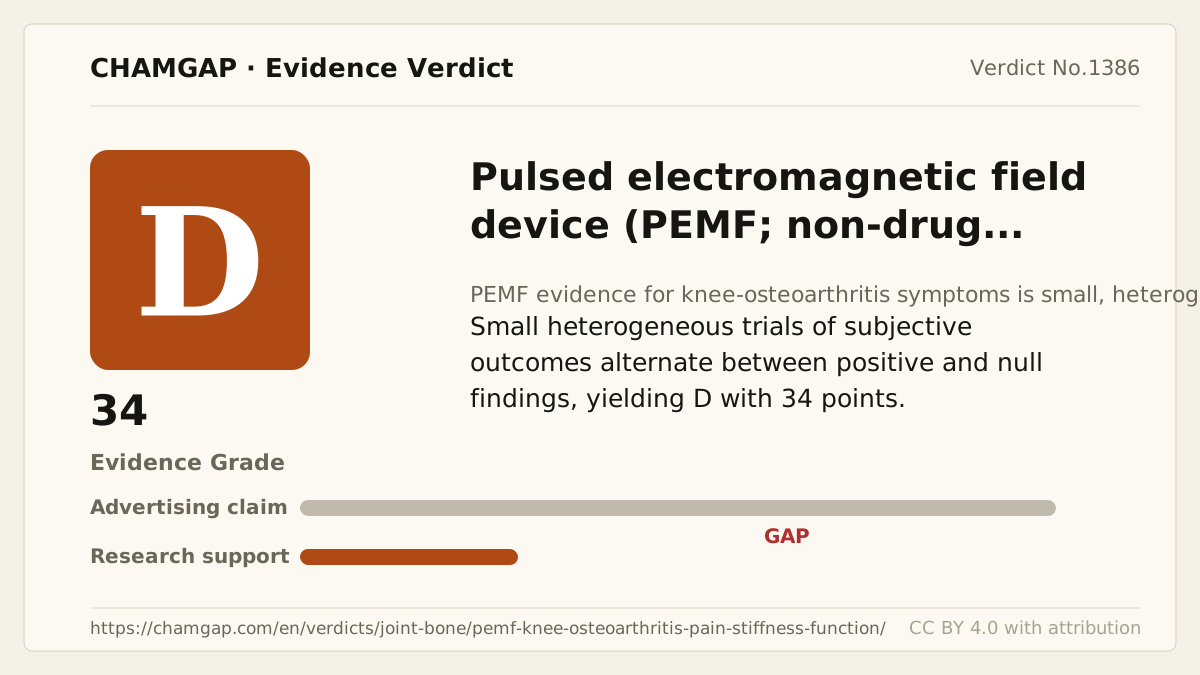
[Chamgap] Pulsed electromagnetic field device x improved pain, stiffness, and physical function in knee osteoarthritis — Evidence Grade D·34. 3 cited sources checked. Source: https://chamgap.com/en/verdicts/joint-bone/pemf-knee-osteoarthritis-pain-stiffness-function/ · CC BY 4.0CC BY 4.0 — free to use with attribution; do not distort grades, numbers, or verdict meaning.
What this document does and does not do
Chamgap is an information source. It reports what research has and has not confirmed; it does not tell readers what to take or buy. That decision belongs to readers and, when needed, medical or legal professionals. This verdict reflects literature available up to the search date and may change as new research appears. Nothing here is medical advice.