
Methotrexate,
does it really help with First-line disease control and inhibition of joint-damage progression in disease-modifying-antirheumatic-drug-naive moderate-to-high-activity rheumatoid arthritis?
research showsMethotrexate is the anchor first-line conventional synthetic disease-modifying antirheumatic drug for moderate-to-high-activity rheumatoid arthritis, but this exact composite claim is rated B with 79 points. Across seven placebo-controlled trials and 732 participants in a Cochrane review, the 52-week American College of Rheumatology 50 response had a risk ratio of 3.0 and number needed to treat of 7, while the defined radiographic-progression outcome had a risk ratio of 0.31 and number needed to treat of 13. Those older placebo trials mostly enrolled patients with longstanding disease who had failed previous disease-modifying drugs, so they are not fully direct for drug-naive early rheumatoid arthritis, and mean radiographic score differences were not significant. The 2021 American College of Rheumatology guideline treats methotrexate as the preferred initial drug and strongly recommends it over hydroxychloroquine, sulfasalazine, and biologic or targeted synthetic monotherapy, while recommendations over leflunomide or dual or triple conventional therapy are conditional. The 2025 European Alliance of Associations for Rheumatology update retains methotrexate in the first treatment strategy. Strong clinical effectiveness but population-indirect and radiographic-surrogate limitations support B rather than A.
ads claimMethotrexate is a prescription medicine rather than a consumer wellness product, but the term gold standard can still be overstated as guaranteed remission or complete prevention of joint damage. Monotherapy response can be incomplete, radiographic progression requires separate monitoring, and treatment is adjusted when target is not reached.
Useful facts when choosing a product
- Methotrexate for rheumatoid arthritis is a once-weekly prescription medicine, not a daily medicine. Accidental daily dosing can cause fatal toxicity, so the day, formulation, and exact dose must be verified.
- The 2026 United States tablet label starts rheumatoid-arthritis treatment at 7.5 mg orally once weekly with escalation according to response. Higher weekly doses or subcutaneous treatment may be used in rheumatology practice, but patients must not alter the prescription themselves.
- Folic or folinic acid reduces gastrointestinal and hepatic adverse effects. Blood counts, hepatic and renal function, pregnancy status, and infection risk require assessment before and during therapy.
- Potential harms include hepatotoxicity, myelosuppression, serious infection, mucosal and gastrointestinal toxicity, pneumonitis or interstitial-lung-disease presentations, renal toxicity, severe skin reactions, and fetal harm. Fever, breathlessness, dry cough, mouth ulcers, bruising, or jaundice needs prompt assessment.
Chamgap Semantic Classification Code
Candidate index · review held
M.methotrexate.UNK.first-line-disease-control-and-inhibition-of-joint-damage-progression-in-disease-modifying-antirheumatic-drug-naive-moderate-to-high-activity-rheumatoid-arthritis.assess.placeboMedicinal interventions > Methotrexate > Unknown > First-line disease control and inhibition of joint-damage progression in disease-modifying-antirheumatic-drug-naive moderate-to-high-activity rheumatoid arthritis > Association or change assessment > Placebo
An automated migration candidate, not an issued permanent code; exact claim scope remains under review. This machine-generated migration candidate helps retrieval but is not a permanent assignment. The original verdict ID and URL remain authoritative.
What the research actually shows
The 2014 Cochrane review synthesized seven placebo-controlled trials lasting 12 to 52 weeks and found improvements in pain, function, American College of Rheumatology 50 response, and a defined radiographic-progression threshold. Participants, however, had mean disease durations of one to 14 years and usually had failed previous disease-modifying therapy. The 2016 Cochrane network meta-analysis of 158 trials compared methotrexate monotherapy with multiple combinations and biologic drugs; some combinations were superior for American College of Rheumatology 50 response and radiographic progression. Methotrexate is therefore an effective reference treatment that may need escalation after inadequate response. For drug-naive moderate-to-high-activity disease, the 2021 American guideline treats methotrexate as the preferred initial drug and strongly recommends methotrexate monotherapy over hydroxychloroquine, sulfasalazine, and biologic or targeted synthetic monotherapy. It prefers monotherapy over starting combination treatment, but strength varies by comparator: the recommendation is strong over combination with a non-tumor-necrosis-factor biologic or targeted synthetic drug and conditional over leflunomide, dual or triple conventional therapy, or combination with a tumor-necrosis-factor inhibitor. The 2025 European update keeps methotrexate in the first strategy. Under rule ④, guidelines integrate a treatment strategy but do not themselves constitute new randomized efficacy trials.
Why this is classified as B (79)
Across seven placebo-controlled trials and 732 participants, the American College of Rheumatology 50 risk ratio was 3.0 with a number needed to treat of 7, and defined radiographic progression had a risk ratio of 0.31 with a number needed to treat of 13. A 158-trial network and the 2021 American and 2025 European first-strategy recommendations form a strong positive evidence axis. Placebo trials nevertheless mostly enrolled patients with longstanding disease and previous drug failure, and continuous radiographic scores were not significant, limiting directness for the exact drug-naive composite claim. This supports B with 79 points; serious toxicity is a separate safety matter.
Counterpoint. First-line status does not mean persisting indefinitely with monotherapy. Failure to reach target requires prompt dose or route optimization and possibly combination or switching therapy.
Rejudgment record. Cross-check incorporated — Applied B because placebo-controlled synthesis improved clinical response and defined radiographic progression and current American and European guidance places methotrexate in the first strategy, while direct placebo trials mostly enrolled patients with longstanding disease and previous drug failure and continuous radiographic scores were not significant, limiting directness and hard endpoints for the exact drug-naive composite claim
Sub-claim grades by effect
This ingredient is marketed for several effects. A single overall grade blends strong and weak claims together, so each effect is graded separately here. The overall grade reflects the strongest disconfirming or core claim.
| Effect (sub-claim) | Grade | Basis |
|---|---|---|
| First-line disease control in disease-modifying-drug-naive moderate-to-high-activity rheumatoid arthritis | B | The 2021 American and 2025 European recommendations support first-line use, but direct placebo trials mostly enrolled patients with longstanding disease and previous drug failure. |
| Improved clinical disease activity and major response in rheumatoid arthritis | B | Placebo-controlled synthesis found a 52-week American College of Rheumatology 50 risk ratio of 3.0 and number needed to treat of 7. |
| Inhibition of radiographic joint-damage progression in rheumatoid arthritis | B | The defined progression risk ratio of 0.31 was positive, but continuous radiographic scores were not significant and radiography remains a surrogate endpoint. |
Cross-check — AI research and Codex final gate
Evidence Table
| Study | Design | Sample | Funding | Endpoint | Result | Weight |
|---|---|---|---|---|---|---|
| Lopez-Olivo MA et al. 2014 | Cochrane systematic review of randomized trials of methotrexate monotherapy versus placebo | Seven trials and 732 participants; 12 to 52 weeks | Academic Cochrane synthesis; funding reports varied or were incomplete across older trials | American College of Rheumatology 50 response, pain, function, radiographic scores, and a progression threshold | At 52 weeks, the American College of Rheumatology 50 response risk ratio was 3.0 (95% CI 1.5 to 6.0), with a number needed to treat of 7; defined radiographic progression had a risk ratio of 0.31 (0.11 to 0.86), with a number needed to treat of 13. Continuous radiographic score differences were not significant. | Core placebo-controlled synthesis with population indirectness |
| Hazlewood GS et al. 2016 | Abridged Cochrane systematic review and Bayesian network meta-analysis | 158 randomized or quasi-randomized trials | No organizational support for the submitted work; individual author relationships were disclosed | American College of Rheumatology 50 response, radiographic progression, and withdrawals due to adverse events | Methotrexate monotherapy was an effective reference treatment, although some triple or biologic combinations were superior for American College of Rheumatology 50 response or radiographic progression. Mean one-year radiographic change for all treatments was below the minimal clinically important difference. | Large synthesis showing both reference-treatment status and the need for escalation |
| Fraenkel L et al. 2021 American College of Rheumatology guideline; Smolen JS et al. 2025 European Alliance update | Evidence-based multidisciplinary treatment guidelines | American and European systematic evidence reviews with expert and patient panels | American College of Rheumatology and European Alliance of Associations for Rheumatology | Initial treatment strategy for disease-modifying-drug-naive moderate-to-high-activity rheumatoid arthritis | For drug-naive moderate-to-high-activity rheumatoid arthritis, the 2021 American guideline treats methotrexate as the preferred initial drug and strongly recommends it over hydroxychloroquine, sulfasalazine, and biologic or targeted synthetic monotherapy. It prefers monotherapy over starting combination treatment, but recommendations over leflunomide, dual or triple conventional therapy, and combination with a tumor-necrosis-factor inhibitor are conditional, while the recommendation over combination with a non-tumor-necrosis-factor biologic or targeted synthetic drug is strong. The 2025 European update also retained methotrexate in the first treatment strategy. | High current consensus for first-line strategy; not itself a randomized trial |
Receipt — 5 References
All 5 cited sources were verified for existence at the original page (as of 2026-07-21).
Final verification and publication gate: Codex · Evidence date: 2026-07-21 · Corrections: none
Cite this verdict
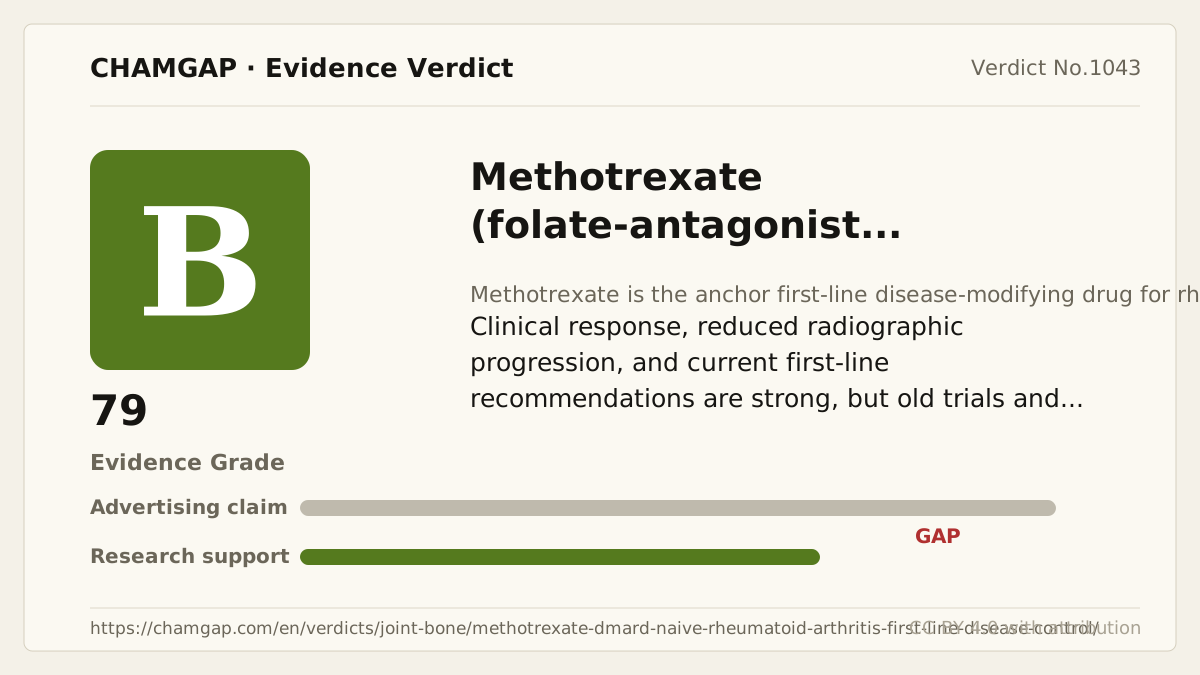
[Chamgap] Methotrexate x first-line disease control and inhibition of joint damage in disease-modifying-antirheumatic-drug-naive rheumatoid arthritis — Evidence Grade B·79. 5 cited sources checked. Source: https://chamgap.com/en/verdicts/joint-bone/methotrexate-dmard-naive-rheumatoid-arthritis-first-line-disease-control/ · CC BY 4.0CC BY 4.0 — free to use with attribution; do not distort grades, numbers, or verdict meaning.
What this document does and does not do
Chamgap is an information source. It reports what research has and has not confirmed; it does not tell readers what to take or buy. That decision belongs to readers and, when needed, medical or legal professionals. This verdict reflects literature available up to the search date and may change as new research appears. Nothing here is medical advice.