
Manual material handling training,
does it really help with Prevention of low back pain, back-related disability, and absence in workers?
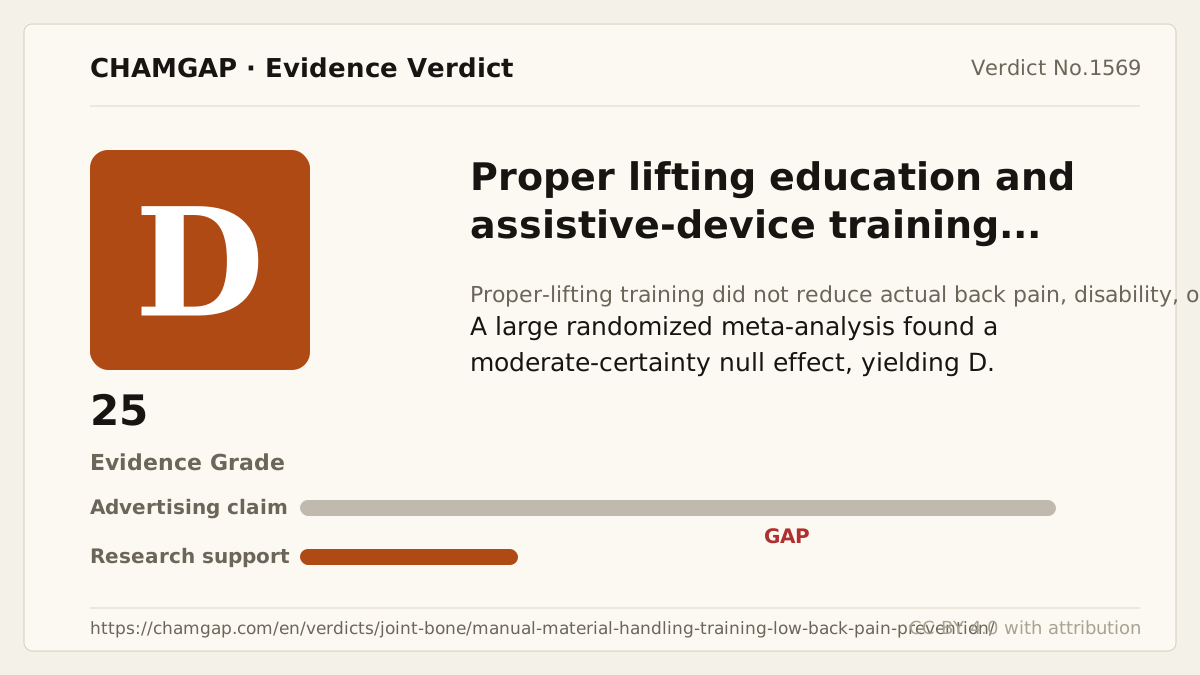
research showsWorkplace proper-lifting and assistive-device training is graded D for preventing low back pain, related disability, and absence. The 2011 Cochrane review found null effects for training versus no intervention, OR 1.17 (95% CI 0.68 to 2.02), and versus minor advice, RR 0.93 (95% CI 0.69 to 1.25). The key comparison of seven trials and 19,317 workers provided moderate-certainty evidence of no effect.
ads claimBetter lifting knowledge or posture may be expanded into prevention of actual back pain, disability, or absence.
Useful facts when choosing a product
- Programs teach workers lifting technique, posture, hazard awareness, and use of handling equipment for loads or patients.
- The key Cochrane comparison of seven trials and 19,317 workers found no preventive effect with moderate certainty.
- Direct harm is uncommon, but misplaced confidence may obscure higher-level risks involving workload, staffing, and work design.
Chamgap Semantic Classification Code
Candidate index · review held
P.proper-lifting-education-and-assistive-device-training.device.low-back-pain-back-related-disability-and-absence-in-workers.prevent.noneProcedures, devices and tests > Proper lifting education and assistive-device training > Device delivered > low back pain, back-related disability, and absence in workers > Occurrence-prevention claim > No intervention
An automated migration candidate, not an issued permanent code; exact claim scope remains under review. This machine-generated migration candidate helps retrieval but is not a permanent assignment. The original verdict ID and URL remain authoritative.
What the research actually shows
In the Verbeek Cochrane review, confidence intervals for the no-intervention comparison, OR 1.17, and minor-advice comparison, RR 0.93, both crossed the null. An earlier review by Martimo and colleagues likewise found no reduction in pain, disability, or sickness absence across six randomized trials and 17,720 participants. Both syntheses assessed clinical outcomes rather than knowledge alone.
Why this is classified as D (25)
The key meta-analysis of seven trials and 19,317 workers found a moderate-certainty null effect on back-pain prevention, with no improvement in disability or absence, yielding D with 25 points.
Counterpoint. Unlike analgesics, TENS, or herbal treatments, this verdict concerns prevention by workplace education.
Rejudgment record. New verdict — Applied rule ② because the pooled prevention effect in seven randomized trials and 19,317 workers was null with moderate GRADE certainty and disability and absence were not improved
Sub-claim grades by effect
This ingredient is marketed for several effects. A single overall grade blends strong and weak claims together, so each effect is graded separately here. The overall grade reflects the strongest disconfirming or core claim.
| Effect (sub-claim) | Grade | Basis |
|---|---|---|
| Prevention of low back pain in workers | D | The pooled effect from seven trials and 19,317 workers was null with moderate certainty. |
| Prevention of back-related disability | D | No significant reduction was established with education or equipment training. |
| Prevention of back-related sickness absence | D | Systematic reviews found no reduction in sickness absence. |
Cross-check — AI research and Codex final gate
Evidence Table
| Study | Design | Sample | Funding | Endpoint | Result | Weight |
|---|---|---|---|---|---|---|
| Verbeek JH et al. 2011 | Cochrane systematic review and meta-analysis | Nine randomized trials and nine cohorts; key analysis seven trials and 19,317 workers | Academic Cochrane review | Back pain, back-related disability, and sickness absence | OR 1.17 versus no intervention and RR 0.93 versus minor advice; moderate-certainty null effects. | Key direct synthesis |
| Martimo KP et al. 2008 | Systematic review of randomized and cohort studies | Six randomized trials with 17,720 participants and five cohorts with 772 participants | Academic institutions including the Finnish Institute of Occupational Health | Back pain, disability, and sickness absence | Training alone or combined with lifting equipment had no significant preventive effect. | Independent null synthesis |
Receipt — 2 References
All 2 cited sources were verified for existence at the original page (as of 2026-07-23).
Final verification and publication gate: Codex · Evidence date: 2026-07-23 · Corrections: none
Cite this verdict
[Chamgap] Manual material handling training x prevention of low back pain, disability, and absence — Evidence Grade D·25. 2 cited sources checked. Source: https://chamgap.com/en/verdicts/joint-bone/manual-material-handling-training-low-back-pain-prevention/ · CC BY 4.0CC BY 4.0 — free to use with attribution; do not distort grades, numbers, or verdict meaning.
What this document does and does not do
Chamgap is an information source. It reports what research has and has not confirmed; it does not tell readers what to take or buy. That decision belongs to readers and, when needed, medical or legal professionals. This verdict reflects literature available up to the search date and may change as new research appears. Nothing here is medical advice.