
Lumbar traction,
does it really help with Improved pain and function in subacute or chronic nonspecific low-back pain?
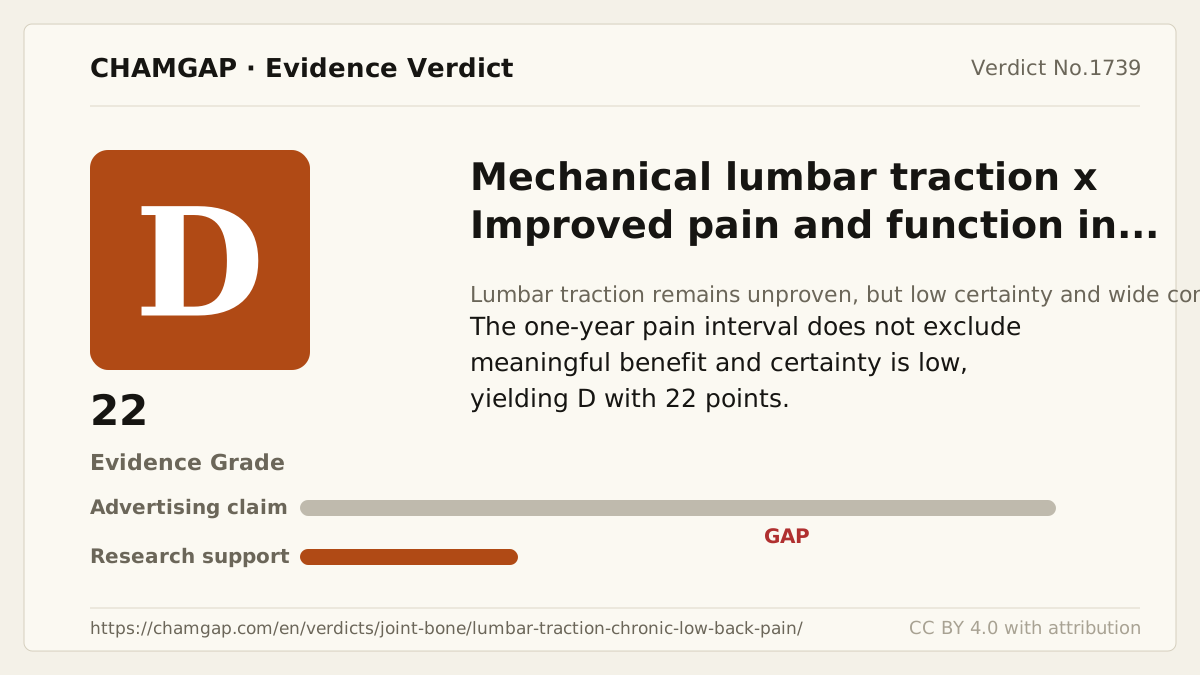
research showsLumbar traction is rated D with 22 points because the evidence is unproven rather than refuted. F is reserved for repeated refutation in the same indication. The Wegner 2013 Cochrane review included 32 randomized trials and 2,762 participants, with certainty ranging from very low to moderate across outcomes and comparisons. The one-year pain confidence interval of -19.32 to 1.12 does not exclude a clinically meaningful benefit.
ads claimA common claim says that separating spinal structures releases compression, restores disks, and removes pain. Repeated clinical trials have not shown that this mechanical explanation translates into better pain or function.
Useful facts when choosing a product
- The pivotal trial compared high-dose mechanical traction with low-dose sham traction designed to lack a therapeutic effect.
- The 151 randomized participants should be distinguished from 150 analyzed at 12 weeks and 148 at six months.
- The Cochrane review included manual and mechanical traction, both alone and added to other care.
- Some trials reported worsened pain, aggravated neurologic signs, and subsequent surgery, so treatment should stop and be reassessed if symptoms worsen.
Chamgap Semantic Classification Code
Candidate index · review held
UNK.mechanical-lumbar-traction.UNK.pain-and-function-in-subacute-or-chronic-nonspecific-low-back-pain.improve.shamUnknown > Mechanical lumbar traction > Unknown > pain and function in subacute or chronic nonspecific low-back pain > Improvement claim > Sham procedure or device
An automated migration candidate, not an issued permanent code; exact claim scope remains under review. This machine-generated migration candidate helps retrieval but is not a permanent assignment. The original verdict ID and URL remain authoritative.
What the research actually shows
The 1997 Beurskens Spine trial randomized 151 adults with nonspecific low-back pain to mechanical traction or sham and did not confirm benefit. The Wegner 2013 Cochrane review included 32 randomized trials and 2,762 participants, with certainty from very low to moderate depending on outcome and comparison. The one-year pain confidence interval of -19.32 to 1.12 does not exclude a clinically meaningful benefit. The three-to-five-week pain estimate of -18.49 (-24.12 to -12.87) came from a restricted two-trial short-term subgroup synthesis and does not represent all 32 trials.
Why this is classified as D (22)
F requires repeated refutation in the same indication, but this evidence is unproven. Certainty in the 32-trial, 2,762-participant Cochrane review ranged from very low to moderate, and the one-year pain interval of -19.32 to 1.12 did not exclude meaningful benefit. The restricted two-trial short-term subgroup was not used to upgrade, giving D with 22 points.
Counterpoint. Rest during treatment or contact with a therapist may provide temporary comfort. That differs from a specific traction-force effect and does not replace evidence-based chronic low-back-pain management such as education and exercise.
Rejudgment record. Cross-check applied — F is reserved for repeated refutation in the same indication, whereas this evidence is unproven rather than refuted. The Wegner 2013 Cochrane review included 32 randomized trials and 2,762 participants, with certainty from very low to moderate across outcomes and comparisons. The one-year pain interval of -19.32 to 1.12 does not exclude clinically meaningful benefit. The three-to-five-week estimate of -18.49 (-24.12 to -12.87) was a restricted two-trial short-term subgroup synthesis, not an effect representing all 32 trials, and was not the main basis for upgrading.
Sub-claim grades by effect
This ingredient is marketed for several effects. A single overall grade blends strong and weak claims together, so each effect is graded separately here. The overall grade reflects the strongest disconfirming or core claim.
| Effect (sub-claim) | Grade | Basis |
|---|---|---|
| Pain relief in chronic low-back pain | D | Low certainty and a wide interval left pain benefit unproven but not excluded. |
| Improvement in low-back-pain-related function | D | Roland function and pooled functional outcomes did not improve versus sham or control. |
| Improved global recovery and return to work | D | Global improvement and work-absence or return-to-work outcomes repeatedly showed no benefit. |
Cross-check — AI research and Codex final gate
Evidence Table
| Study | Design | Sample | Funding | Endpoint | Result | Weight |
|---|---|---|---|---|---|---|
| Beurskens AJ et al. 1997 | Randomized sham-controlled clinical trial | 151 randomized (77 traction and 74 sham); 150 in the actual 12-week analysis; 148 at six months | Funding source not reported in the original article; manufacturer leadership could not be determined | Primary patient global impression and severity of three main complaints; secondary pain, Roland function, and work absence | Traction was not significantly better than sham for primary or secondary clinical outcomes at 12 weeks or six months. | Pivotal direct sham trial |
| Wegner I et al. 2013 | Cochrane systematic review | 32 randomized trials and 2,762 participants | Review funding was inadequately reported; no evidence of manufacturer leadership | Pain, function, global improvement, and return to work | Certainty ranged from very low to moderate; the one-year pain CI of -19.32 to 1.12 did not exclude meaningful benefit. The three-to-five-week estimate of -18.49 (-24.12 to -12.87) was a restricted two-trial subgroup synthesis. | Low certainty and a confidence interval that does not exclude benefit |
Receipt — 2 References
All 2 cited sources were verified for existence at the original page (as of 2026-07-24).
Final verification and publication gate: Codex · Evidence date: 2026-07-24 · Corrections: none
Cite this verdict
[Chamgap] Lumbar traction x improved pain and function in chronic low-back pain — Evidence Grade D·22. 2 cited sources checked. Source: https://chamgap.com/en/verdicts/joint-bone/lumbar-traction-chronic-low-back-pain/ · CC BY 4.0CC BY 4.0 — free to use with attribution; do not distort grades, numbers, or verdict meaning.
What this document does and does not do
Chamgap is an information source. It reports what research has and has not confirmed; it does not tell readers what to take or buy. That decision belongs to readers and, when needed, medical or legal professionals. This verdict reflects literature available up to the search date and may change as new research appears. Nothing here is medical advice.