
Lumbar radiofrequency denervation,
does it really help with Long-term pain and function improvement in chronic low back pain?
research showsLumbar radiofrequency denervation is rated D because evidence for chronic low back pain is weak. MINT (Juch 2017, JAMA 318(1):68-81) randomized 681 participants. Three-month pain differences were -0.18 (95% CI -0.76 to 0.40) for facet-joint pain, -0.71 (-1.35 to -0.06) for sacroiliac-joint pain, and -0.99 (-1.73 to -0.25) for the combined group. The prespecified minimal clinically important difference was two points on the pain scale; although some confidence intervals excluded zero, none reached two points. Maas 2015, Cochrane 2015(10):CD008572, found no high-quality evidence, giving D with 28 points.
ads claimMarketing can imply that burning a nerve removes the cause of pain for years, but diagnostic blocks are imperfect, nerves can regrow, degenerative contributors remain, and repeat procedures may be required.
Useful facts when choosing a product
- This invasive procedure uses imaging guidance to create a radiofrequency thermal lesion in a nerve thought to carry pain.
- A positive diagnostic nerve block does not guarantee durable relief.
- Temporary procedural pain, altered sensation, and nerve injury can occur, and the procedure does not replace exercise rehabilitation.
Chamgap Semantic Classification Code
Candidate index · review held
P.lumbar-radiofrequency-denervation-of-facet-or-sacroiliac-joint-nerves.procedural.long-term-pain-and-function-improvement-in-chronic-low-back-pain.improve.UNKProcedures, devices and tests > Lumbar radiofrequency denervation of facet or sacroiliac joint nerves > Procedural > Long-term pain and function improvement in chronic low back pain > Improvement claim > Unknown
An automated migration candidate, not an issued permanent code; exact claim scope remains under review. This machine-generated migration candidate helps retrieval but is not a permanent assignment. The original verdict ID and URL remain authoritative.
What the research actually shows
MINT by Juch in 2017 (JAMA 318(1):68-81) randomized 681 participants with facet-joint, sacroiliac-joint, or combined suspected pain. Three-month zero-to-ten pain differences were -0.18 (95% CI -0.76 to 0.40), -0.71 (-1.35 to -0.06), and -0.99 (-1.73 to -0.25), respectively. The prespecified minimal clinically important difference was two points, so even confidence intervals excluding zero did not reach clinical importance. Maas 2015, Cochrane 2015(10):CD008572, synthesized 23 trials with 1,309 participants and found no convincing high-quality evidence.
Why this is classified as D (28)
In MINT, 681 were randomized and 599 entered the primary analysis; the facet comparison was statistically null and all three comparisons missed the two-point clinical-importance threshold. Cochrane found no high-quality evidence, supporting D with 28 points.
Counterpoint. It may be tried selectively, but evidence does not support advertising it as a reliable long-term treatment for chronic low back pain in general.
Rejudgment record. Cross-check applied — In MINT, 681 participants were randomized and 599 entered the three-month primary analysis; the facet comparison was statistically null, all facet, sacroiliac, and combined comparisons missed the prespecified two-point minimal clinically important difference, and Cochrane found no high-quality evidence
Sub-claim grades by effect
This ingredient is marketed for several effects. A single overall grade blends strong and weak claims together, so each effect is graded separately here. The overall grade reflects the strongest disconfirming or core claim.
| Effect (sub-claim) | Grade | Basis |
|---|---|---|
| Reduction in chronic low back pain at three months | D | All three MINT comparisons missed the two-point threshold. |
| Improvement in back-pain-related function | D | Cochrane found no convincing functional benefit. |
| Maintenance of long-term pain relief | D | Long-term results are inconsistent and nerve regrowth can prompt repeat procedures. |
Cross-check — AI research and Codex final gate
Evidence Table
| Study | Design | Sample | Funding | Endpoint | Result | Weight |
|---|---|---|---|---|---|---|
| Juch JNS et al. 2017 MINT | Three pragmatic randomized controlled trials | 681 randomized; 599 in the actual three-month primary analysis | Netherlands Organization for Health Research and Development, Dutch Society for Anesthesiology, and Dutch health insurers | Three-month pain intensity on a zero-to-ten scale; prespecified two-point minimal clinically important difference | Differences were -0.18 (95% CI -0.76 to 0.40), -0.71 (-1.35 to -0.06), and -0.99 (-1.73 to -0.25); some confidence intervals excluded zero, but all missed the two-point threshold. | Largest direct clinical trial program |
| Maas ET et al. 2015 Cochrane | Systematic review and meta-analysis of randomized trials | 23 randomized trials and 1,309 participants | Public and academic support including the Netherlands health-research organization; not manufacturer-led | Short-, intermediate-, and long-term pain and function | No high-quality or convincing evidence supported pain relief or functional improvement. | Independent synthesis |
Receipt — 2 References
All 2 cited sources were verified for existence at the original page (as of 2026-07-24).
Final verification and publication gate: Codex · Evidence date: 2026-07-24 · Corrections: none
Cite this verdict
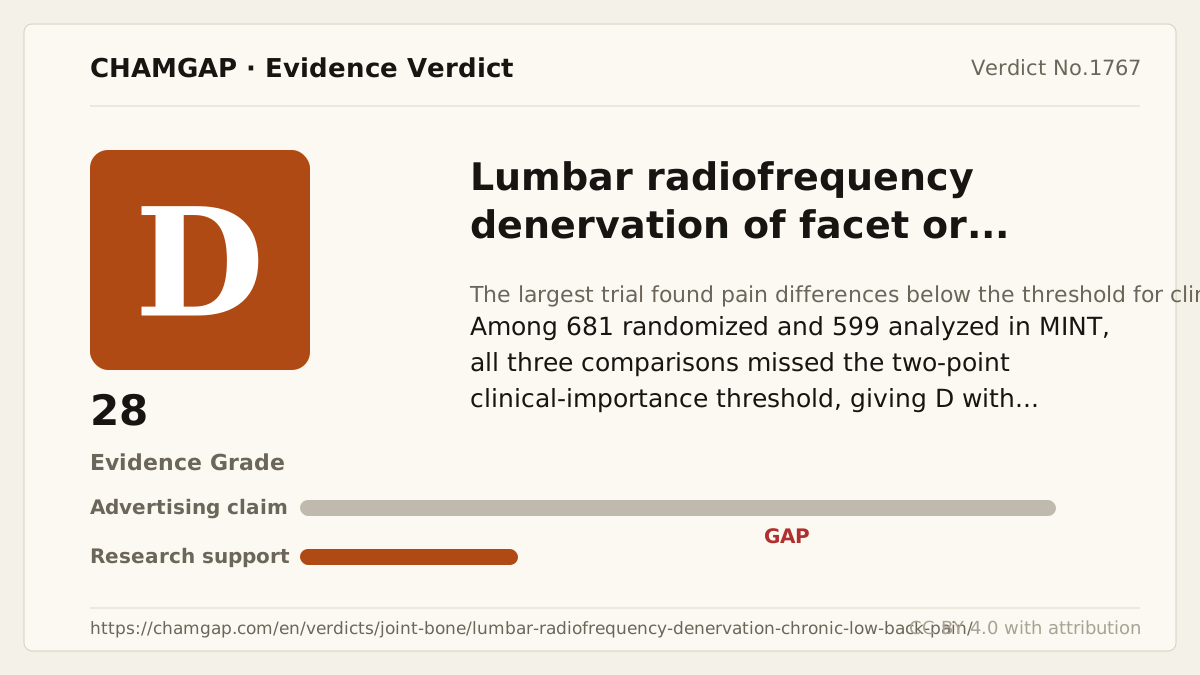
[Chamgap] Lumbar radiofrequency denervation x chronic low back pain — Evidence Grade D·28. 2 cited sources checked. Source: https://chamgap.com/en/verdicts/joint-bone/lumbar-radiofrequency-denervation-chronic-low-back-pain/ · CC BY 4.0CC BY 4.0 — free to use with attribution; do not distort grades, numbers, or verdict meaning.
What this document does and does not do
Chamgap is an information source. It reports what research has and has not confirmed; it does not tell readers what to take or buy. That decision belongs to readers and, when needed, medical or legal professionals. This verdict reflects literature available up to the search date and may change as new research appears. Nothing here is medical advice.