
Low-molecular-weight collagen peptide, 3 g daily for 180 days,
does it really help with Reduced pain in early knee osteoarthritis?
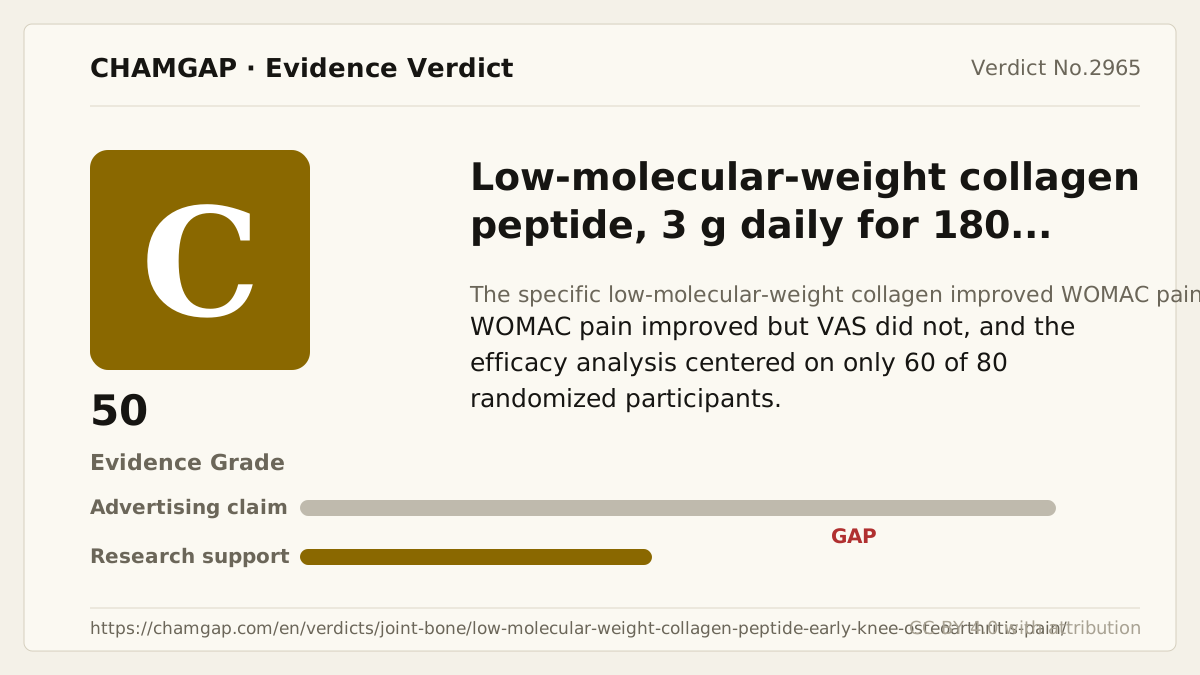
research showsGrade C. In the 60-person primary per-protocol analysis, 180-day WOMAC pain change was -1.90±4.14 versus +0.61±3.97 with placebo, an approximate between-group difference of -2.51 points, P=.006. Concurrent VAS pain was null, P=.299.
ads claimThis applies to the tested 3-g low-molecular-weight peptide in early knee osteoarthritis. It does not establish that every oral collagen product or every pain scale improves.
Useful facts when choosing a product
- The tested dose was 3 g daily of low-molecular-weight collagen peptide.
- WOMAC pain was positive while VAS pain was null.
- NEWTREE supported research and publication and manufactured product and placebo.
Chamgap Semantic Classification Code
Candidate index · review held
S.low-molecular-weight-collagen-peptide.oral.knee-osteoarthritis-pain.reduce.placeboSupplements and nutraceuticals > Low-molecular-weight collagen peptide > Oral > Knee osteoarthritis pain > Reduction claim > Placebo
An automated migration candidate, not an issued permanent code; exact claim scope remains under review. This machine-generated migration candidate helps retrieval but is not a permanent assignment. The original verdict ID and URL remain authoritative.
What the research actually shows
KCT0005507 randomized 80 adults with Kellgren-Lawrence grade 1-2 knee osteoarthritis, 40 per arm, in a double-blind placebo-controlled 180-day trial. The primary endpoint was change in WOMAC pain from baseline to day 180. The paper did not report a confidence interval for this between-group comparison. Sample size assumed a 10-point WOMAC total difference, not the primary WOMAC pain endpoint, and no clinical success threshold was prespecified. The paper's post hoc statement that observed SMD 0.46 exceeded an external AAOS minimum difference of 0.39 was post hoc interpretation. NEWTREE Co., Ltd. supported the research and publication and manufactured product and placebo. Do-Un Kim was a NEWTREE employee, and Seung Un Kim was affiliated with subsidiary EVERSPRING. The paper stated that neither company participated in design, recruitment, collection, analysis, or interpretation. Registration was prospective.
Why this is classified as C (50)
The prespecified WOMAC pain endpoint was positive, but a 60-person PP analysis, 25% exclusion, total n=80, and manufacturer-only evidence give C with 50 points.
Counterpoint. One positive pain scale cannot establish an effect for all oral collagen.
Rejudgment record. Cross-check applied — Positive primary WOMAC pain result, null VAS, 60/80 PP analysis, 25% exclusion, small sample, and manufacturer support
| Endpoint | P | Symptom or function itself is the target - including patient reports and performance tests |
| Replication | R1 | Single confirmatory trial |
| Independence | I0 | Evidence comes only from manufacturer studies |
| Effect size | E+ | Meets the clinically important threshold |
Stored derived and displayed grades match; this is not a current recalculation or validity check (C).
Sub-claim grades by effect
This ingredient is marketed for several effects. A single overall grade blends strong and weak claims together, so each effect is graded separately here. The overall grade reflects the strongest disconfirming or core claim.
| Effect (sub-claim) | Grade | Basis |
|---|---|---|
| Reduced WOMAC pain | C | The PP analysis found P=.006. |
| Reduced VAS pain | D | The between-group result was null, P=.299. |
Cross-check — AI research and Codex final gate
Evidence Table
| Study | Design | Sample | Funding | Endpoint | Result | Weight |
|---|---|---|---|---|---|---|
| Kim DU et al. 2025 | Double-blind placebo-controlled randomized trial | 80 randomized, 40/40; 60 in the primary per-protocol efficacy analysis | NEWTREE supported research and publication and manufactured product and placebo; two authors were company or subsidiary employees | Change in WOMAC pain at day 180 | -1.90±4.14 vs +0.61±3.97, approximately -2.51 points between groups, P=.006; VAS P=.299 | Pivotal manufacturer-supported trial |
Receipt — 1 References
All 1 cited sources were verified for existence at the original page (as of 2026-08-26).
Final verification and publication gate: Codex · Evidence date: 2026-08-26 · Corrections: none
Cite this verdict
[Chamgap] Benefit of Low-Molecular-Weight Collagen Peptide for Early Knee Osteoarthritis Pain — Evidence Grade C·50. 1 cited sources checked. Source: https://chamgap.com/en/verdicts/joint-bone/low-molecular-weight-collagen-peptide-early-knee-osteoarthritis-pain/ · CC BY 4.0CC BY 4.0 — free to use with attribution; do not distort grades, numbers, or verdict meaning.
What this document does and does not do
Chamgap is an information source. It reports what research has and has not confirmed; it does not tell readers what to take or buy. That decision belongs to readers and, when needed, medical or legal professionals. This verdict reflects literature available up to the search date and may change as new research appears. Nothing here is medical advice.