
Long-term high-heel use,
does it really help with Increased midfoot pain?
research showsThe grade is C with 50 points. A one-time retrospective comparison assessed 95 women with prior workplace high-heel exposure and 102 workplace nonusers. Midfoot pain was 42% versus 28%, corresponding to a risk difference of about 14 percentage points, a relative risk of about 1.50, and an odds ratio of about 1.86. Radiographic findings and overall foot scores did not differ, and this cross-sectional assessment cannot establish causation.
ads claimThe central event in this verdict is midfoot pain. Radiographic hallux-valgus and joint findings and overall foot scores did not differ significantly.
Useful facts when choosing a product
- Exposure required workplace heels at least 5 cm high for at least five years.
- Controls reported never wearing high heels at work.
- Hours per week were not reported; leisure-wear days in the prior week were collected.
- Median workplace exposure in the exposed group was 20 years.
Chamgap Semantic Classification Code
Candidate index · review held
UNK.long-term-workplace-use-of-high-heels-at-least-5-cm-high.UNK.midfoot-pain.increase.UNKUnknown > Long-term workplace use of high heels at least 5 cm high > Unknown > midfoot pain > Increase claim > Unknown
An automated migration candidate, not an issued permanent code; exact claim scope remains under review. This machine-generated migration candidate helps retrieval but is not a permanent assignment. The original verdict ID and URL remain authoritative.
What the research actually shows
Borchgrevink and colleagues conducted a one-time retrospective exposure-group comparison and cross-sectional assessment of 197 women aged 40 to 66. The 95 exposed women had regularly worn heels at least 5 cm high at work for at least five years; the 102 controls reported never wearing high heels at work. Median workplace exposure was 20 years, IQR 10 to 30. The study asked years of use and leisure-wear days in the preceding week but did not report hours per week. Blinded examiners assessed weight-bearing radiographs and foot scores. Trondelag Orthopaedic Workshop partly supported the study, and the paper states that there were no other sponsors.
Why this is classified as C (50)
A roughly 14-percentage-point midfoot-pain difference and substantial limitations of a single retrospective cross-sectional comparison give C with 50 points.
Counterpoint. The pain result was not null, and differences in selected pain locations and callosities may matter for preventive footwear choices.
Rejudgment record. Cross-check applied — The retrospective exposure-group and cross-sectional structure, 95 versus 102 participants, midfoot pain of 42% versus 28%, risk difference, relative risk, odds ratio, null radiographs, and the no-other-sponsors statement were applied
| Endpoint | P | Symptom or function itself is the target - including patient reports and performance tests |
| Replication | R1 | Single confirmatory trial |
| Independence | I1 | Mixed funding sources |
| Effect size | E+ | Meets the clinically important threshold |
Stored derived and displayed grades match; this is not a current recalculation or validity check (C).
Sub-claim grades by effect
This ingredient is marketed for several effects. A single overall grade blends strong and weak claims together, so each effect is graded separately here. The overall grade reflects the strongest disconfirming or core claim.
| Effect (sub-claim) | Grade | Basis |
|---|---|---|
| Increased radiographic hallux-valgus angle or joint disease | D | Hallux-valgus angle and radiographic joint disease did not differ significantly. |
| Increased foot pain | C | A small association appeared at selected sites, including midfoot pain of 42% versus 28%. |
| Worse overall foot function score | D | Total AOFAS and SEFAS scores did not differ significantly between groups. |
Cross-check — AI research and Codex final gate
Evidence Table
| Study | Design | Sample | Funding | Endpoint | Result | Weight |
|---|---|---|---|---|---|---|
| Borchgrevink GE et al. 2016 | One-time retrospective comparison formed from prior workplace exposure | 197 women: 95 exposed and 102 controls | Partly funded by Trondelag Orthopaedic Workshop; the paper states there were no other sponsors | Weight-bearing radiographic deformity, AOFAS and SEFAS scores, and site-specific pain | Midfoot pain was 40/95 (42%) versus 29/102 (28%), P=.04; risk difference about 14 percentage points, relative risk about 1.50, odds ratio about 1.86. Radiographic and total-score differences were null. | Decisive single observational study |
Receipt — 1 References
All 1 cited sources were verified for existence at the original page (as of 2026-08-05).
Final verification and publication gate: Codex · Evidence date: 2026-08-05 · Corrections: none
Cite this verdict
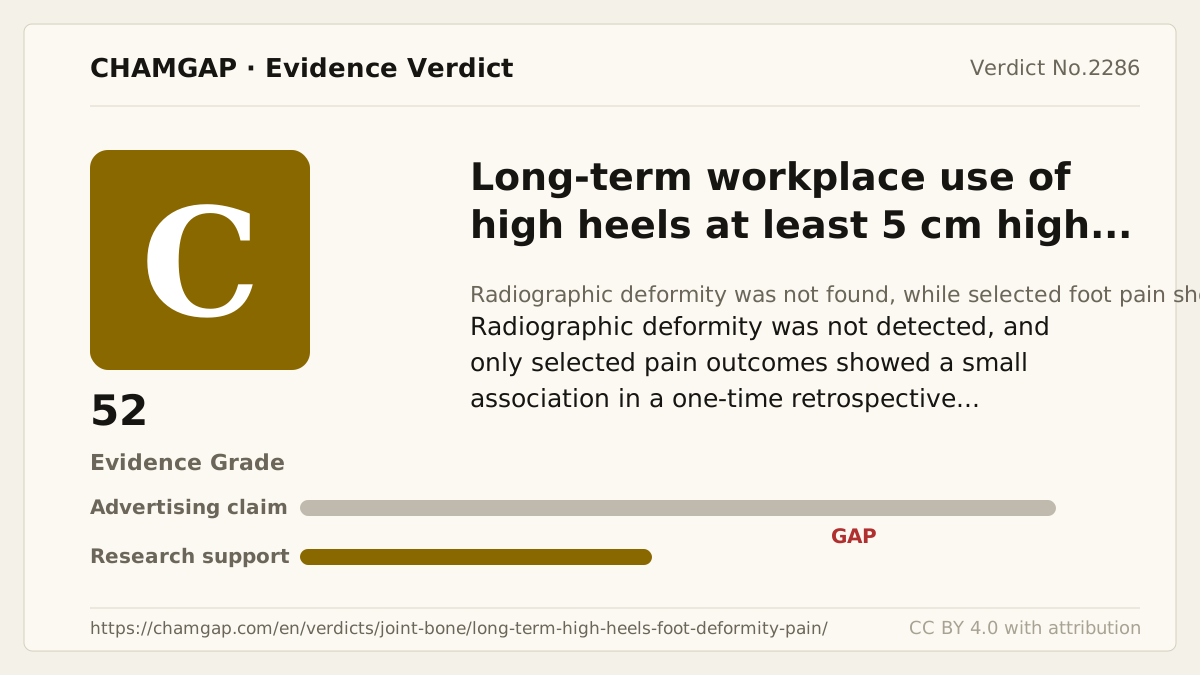
[Chamgap] Long-term high-heel use x midfoot pain — Evidence Grade C·50. 1 cited sources checked. Source: https://chamgap.com/en/verdicts/joint-bone/long-term-high-heels-foot-deformity-pain/ · CC BY 4.0CC BY 4.0 — free to use with attribution; do not distort grades, numbers, or verdict meaning.
What this document does and does not do
Chamgap is an information source. It reports what research has and has not confirmed; it does not tell readers what to take or buy. That decision belongs to readers and, when needed, medical or legal professionals. This verdict reflects literature available up to the search date and may change as new research appears. Nothing here is medical advice.