
L-leucine,
does it really help with Improved muscle mass, grip strength, and walking function in older adults with sarcopenia?
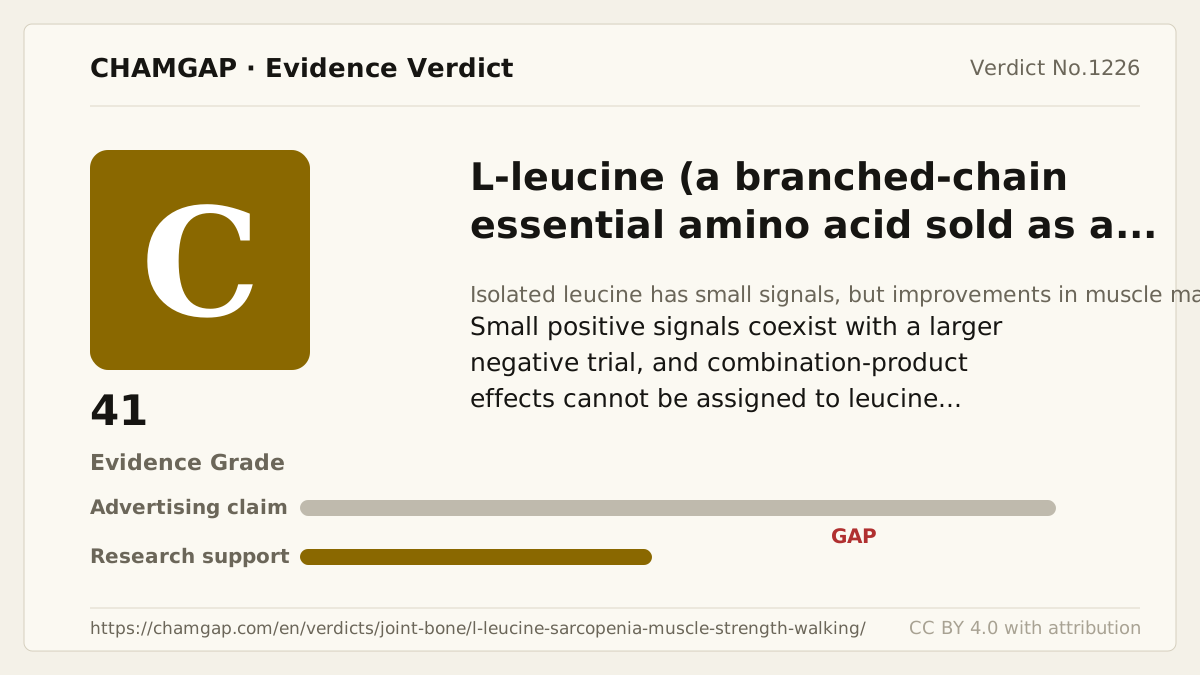
research showsSingle-ingredient L-leucine is rated C because a small trial found signals in walking and selected body-composition measures, but overall improvements in muscle mass, grip strength, and physical function are inconsistent. A meta-analysis of 17 randomized trials found no improvement in total lean mass or grip strength with isolated leucine, while significant grip and gait-speed effects were concentrated in combinations containing vitamin D or protein. The 145-participant LACE trial also found no improvement in physical performance or muscle mass over 12 months.
ads claimMarketing converts an acute muscle-protein-synthesis mechanism into promised gains in muscle mass, grip, and walking. Long-term clinical outcomes are less certain, and results from multi-ingredient nutrition products should not be presented as leucine-only effects.
Useful facts when choosing a product
- L-leucine is an essential branched-chain amino acid found in dietary protein and sold in powders and capsules.
- Adequate protein and energy intake plus individualized resistance exercise remain the foundation of sarcopenia care; leucine does not replace them.
- Trials commonly used 6 to 7.5 g/day and generally reported acceptable tolerability, but people with kidney disease or prescribed protein restriction should consult a clinician.
Chamgap Semantic Classification Code
Candidate index · review held
S.l-leucine.UNK.muscle-mass-grip-strength-and-walking-function-with-sarcopenia.improve.MULTISupplements and nutraceuticals > L-leucine > Unknown > muscle mass, grip strength, and walking function with sarcopenia > Improvement claim > Multiple: primary unresolved
An automated migration candidate, not an issued permanent code; exact claim scope remains under review. This machine-generated migration candidate helps retrieval but is not a permanent assignment. The original verdict ID and URL remain authoritative.
What the research actually shows
The 50-participant Martínez-Arnau 2020 double-blind trial reported improvements in walking time and selected lean-mass measures but was small. The multicenter LACE trial randomized 145 participants to 2.5 g leucine three times daily or placebo for 12 months and found no improvement in SPPB or muscle mass. The 17-trial Guo 2022 meta-analysis found no effect of isolated leucine on total lean mass, grip strength, or leg press; signals for grip and gait speed in combination groups could not be separated from vitamin D and other co-ingredients.
Why this is classified as C (41)
A small isolated-leucine trial provides a positive signal, but a larger long-term trial and the isolated-ingredient meta-analysis do not support the main outcomes. Non-specific combination-product results place the verdict at the lower end of C, 43 points.
Counterpoint. When dietary protein is inadequate, correcting total protein intake takes priority over adding one amino acid, and impaired gait or falls also require assessment of exercise, disease, and medicines.
Rejudgment record. Cross-check applied — Accepted selected walking and body-composition signals from a small isolated-ingredient trial, but applied C for limited and conflicting evidence plus attribution rule ⑤ because a larger long-term trial and isolated-leucine meta-analysis were negative and positive combination trials included vitamin D and protein
Sub-claim grades by effect
This ingredient is marketed for several effects. A single overall grade blends strong and weak claims together, so each effect is graded separately here. The overall grade reflects the strongest disconfirming or core claim.
| Effect (sub-claim) | Grade | Basis |
|---|---|---|
| Improved muscle mass | C | A small signal conflicts with a larger long-term negative trial. |
| Improved grip strength | C | The isolated-leucine meta-analysis was negative, and combination effects have uncertain attribution. |
| Improved walking function | C | One small trial found a walking-time signal, but the overall evidence is inconsistent. |
Cross-check — AI research and Codex final gate
Evidence Table
| Study | Design | Sample | Funding | Endpoint | Result | Weight |
|---|---|---|---|---|---|---|
| Guo Y et al. 2022 | Systematic review and meta-analysis of 17 randomized trials | Older adults in 17 randomized trials | Academic research; formulations and co-ingredients varied across included trials | Lean mass, grip strength, leg press, gait speed, and physical function | Isolated leucine had no significant effect on total lean mass, grip strength, or leg press, while some combination groups showed grip and gait-speed signals. | Key synthesis with ingredient-attribution limitations |
| LACE Study Group. 2022 | Multicenter double-blind 2-by-2 factorial randomized placebo-controlled trial | 145 adults aged 70 years or older with sarcopenia | Public funding from the United Kingdom NIHR | SPPB and muscle mass over 12 months | Leucine did not improve physical performance or muscle mass. | Larger long-term direct negative trial |
| Martínez-Arnau FM et al. 2020 | Double-blind randomized placebo-controlled trial | 50 institutionalized older adults | Bonusan Research supplied the supplement and placebo | Muscle mass, strength, walking time, and respiratory function at 13 weeks | Walking time and selected lean-mass measures improved, but strength and functional outcomes were not uniformly positive. | Small positive signal |
Receipt — 3 References
All 3 cited sources were verified for existence at the original page (as of 2026-07-23).
Final verification and publication gate: Codex · Evidence date: 2026-07-23 · Corrections: none
Cite this verdict
[Chamgap] L-leucine x improved muscle mass, grip strength, and walking function in sarcopenia — Evidence Grade C·41. 3 cited sources checked. Source: https://chamgap.com/en/verdicts/joint-bone/l-leucine-sarcopenia-muscle-strength-walking/ · CC BY 4.0CC BY 4.0 — free to use with attribution; do not distort grades, numbers, or verdict meaning.
What this document does and does not do
Chamgap is an information source. It reports what research has and has not confirmed; it does not tell readers what to take or buy. That decision belongs to readers and, when needed, medical or legal professionals. This verdict reflects literature available up to the search date and may change as new research appears. Nothing here is medical advice.