
Hydroxychloroquine,
does it really help with Improved pain and function in hand osteoarthritis?
research showsHydroxychloroquine is rated F for improving pain and function in hand osteoarthritis. Independent double-blind randomized trials involving 196 participants, 248 participants, and 153 participants with inflammatory or erosive hand osteoarthritis repeatedly found no benefit over placebo for pain or function. A meta-analysis of six randomized trials and 842 participants was also null, with an SMD of 0.14 (95% CI -0.20 to 0.48) for hand-osteoarthritis pain and 0.08 (-0.23 to 0.40) for dysfunction. The American College of Rheumatology and Arthritis Foundation guideline strongly recommends against hydroxychloroquine for hand, knee, or hip osteoarthritis because well-designed trials found no efficacy. Repeated refutation plus an explicit guideline recommendation against use yields F with 6 points. Retinopathy, QT prolongation, hypoglycemia, and myopathy are separate serious safety concerns.
ads claimThe pharmacologic ability to modulate inflammation and immunity may be extended into a claim of benefit for inflammatory hand osteoarthritis. Efficacy and approval in rheumatoid arthritis cannot be transferred to osteoarthritis, and trials remained null even in inflammatory and erosive hand disease.
Useful facts when choosing a product
- Hydroxychloroquine is a prescription immunomodulator used for malaria, rheumatoid arthritis, and lupus; treatment of hand osteoarthritis is not an approved indication.
- Hand-osteoarthritis trials generally tested 200 to 400 mg per day for 24 to 52 weeks and found no benefit for pain or function.
- Long-term use requires weight-based dosing and ophthalmic screening because retinal toxicity can be irreversible; visual changes require prompt assessment.
- QT prolongation and ventricular arrhythmia, cardiomyopathy, severe hypoglycemia, skeletal-muscle myopathy, and neuropathy can occur. Concomitant QT-prolonging drugs, heart disease, reduced kidney function, and glucose-lowering medicines require particular caution.
Chamgap Semantic Classification Code
Candidate index · review held
M.hydroxychloroquine-sulfate.UNK.pain-and-function-in-hand-osteoarthritis.improve.placeboMedicinal interventions > Hydroxychloroquine sulfate > Unknown > pain and function in hand osteoarthritis > Improvement claim > Placebo
An automated migration candidate, not an issued permanent code; exact claim scope remains under review. This machine-generated migration candidate helps retrieval but is not a permanent assignment. The original verdict ID and URL remain authoritative.
What the research actually shows
The HERO trial by Kingsbury and colleagues randomized 248 participants with at least moderate hand pain and radiographic osteoarthritis to hydroxychloroquine 200 to 400 mg per day or placebo for 12 months; the primary pain outcome at six months and all major secondary outcomes were null. The 196-person trial by Lee and colleagues also found no difference in pain, AUSCAN, or AIMS2-SF function at 24 weeks. OA-TREAT followed 153 participants with inflammatory and erosive hand osteoarthritis for 52 weeks and found AUSCAN pain scores of 26.7 versus 26.5 and function scores of 48.1 versus 51.3, with no significant difference or radiographic benefit. A 2022 meta-analysis of six randomized trials concluded that high-quality hand-osteoarthritis evidence showed no pain or function benefit. The ACR and Arthritis Foundation strongly recommend against use based on these consistent results.
Why this is classified as F (6)
Three separate hand-osteoarthritis trials repeatedly refuted improvement in pain or function, a meta-analysis of six trials and 842 participants confirmed the null result, and the ACR and Arthritis Foundation strongly recommend against hydroxychloroquine for hand, knee, and hip osteoarthritis. Both F criteria of repeated randomized and meta-analytic refutation and an explicit guideline recommendation against use are met, yielding F with 6 points. Serious prescription-drug toxicity remains separate under safety.
Counterpoint. Depending on the patient, guideline-supported options can include exercise and hand therapy, orthoses, and topical nonsteroidal anti-inflammatory drugs. Marked swelling or morning stiffness should prompt evaluation for rheumatoid arthritis, gout, psoriatic arthritis, or another diagnosis first.
Rejudgment record. New verdict — Applied F because separate hand-osteoarthritis randomized trials repeatedly refuted pain and function benefits, a six-trial meta-analysis confirmed the null result, and the ACR and Arthritis Foundation strongly recommend against hydroxychloroquine for hand, knee, and hip osteoarthritis
Sub-claim grades by effect
This ingredient is marketed for several effects. A single overall grade blends strong and weak claims together, so each effect is graded separately here. The overall grade reflects the strongest disconfirming or core claim.
| Effect (sub-claim) | Grade | Basis |
|---|---|---|
| Improved pain in hand osteoarthritis | F | Multiple double-blind randomized trials and a meta-analysis repeatedly found no pain benefit over placebo. |
| Improved function in hand osteoarthritis | F | AUSCAN and other function measures were null across multiple trials and the meta-analysis. |
| Symptom improvement in inflammatory and erosive hand osteoarthritis | F | OA-TREAT selected the subgroup considered most likely to respond and still found null pain, function, and imaging outcomes. |
Cross-check — AI research and Codex final gate
Evidence Table
| Study | Design | Sample | Funding | Endpoint | Result | Weight |
|---|---|---|---|---|---|---|
| Kingsbury SR et al. HERO trial, 2018 | Twelve-month multicenter randomized double-blind placebo-controlled trial | 248 participants with symptomatic and radiographic hand osteoarthritis | Charitable research funding from Arthritis Research UK | Primary mean hand pain at six months and secondary function, grip, and structural outcomes | The between-group pain difference at six months was -0.16 points (95% CI -0.73 to 0.40; p=0.57), and secondary outcomes did not improve. | Large key direct randomized trial; null |
| Lee W et al. 2018 | Twenty-four-week randomized double-blind placebo-controlled trial | 196 participants with symptomatic hand osteoarthritis | Noncommercial academic research support in the Netherlands | Pain and AUSCAN and AIMS2-SF function at 24 weeks | Hydroxychloroquine 400 mg per day did not improve pain or function versus placebo. | Independent direct randomized replication; null |
| Kedor C et al. OA-TREAT, 2021 | Fifty-two-week multicenter investigator-initiated randomized double-blind placebo-controlled trial | 153 participants with inflammatory and erosive hand osteoarthritis; 75 active and 78 placebo | Public funding from the German Federal Ministry of Education and Research; investigator initiated | AUSCAN pain and function and radiographic progression at 52 weeks | Pain was 26.7 versus 26.5 (p=0.92), function was 48.1 versus 51.3 (p=0.36), and radiographic progression did not differ. | Confirmatory inflammatory-subgroup randomized trial; null |
| Singh A et al. 2022 | Systematic review and meta-analysis of randomized osteoarthritis trials | Six randomized trials and 842 participants; four hand and two knee trials | No commercial funding reported | Pain and physical function | For hand osteoarthritis, pain was SMD 0.14 (95% CI -0.20 to 0.48) and dysfunction was SMD 0.08 (-0.23 to 0.40), with no clinical benefit. | High-quality synthesis confirming repeated null results |
Receipt — 6 References
All 6 cited sources were verified for existence at the original page (as of 2026-07-21).
Final verification and publication gate: Codex · Evidence date: 2026-07-21 · Corrections: none
Cite this verdict
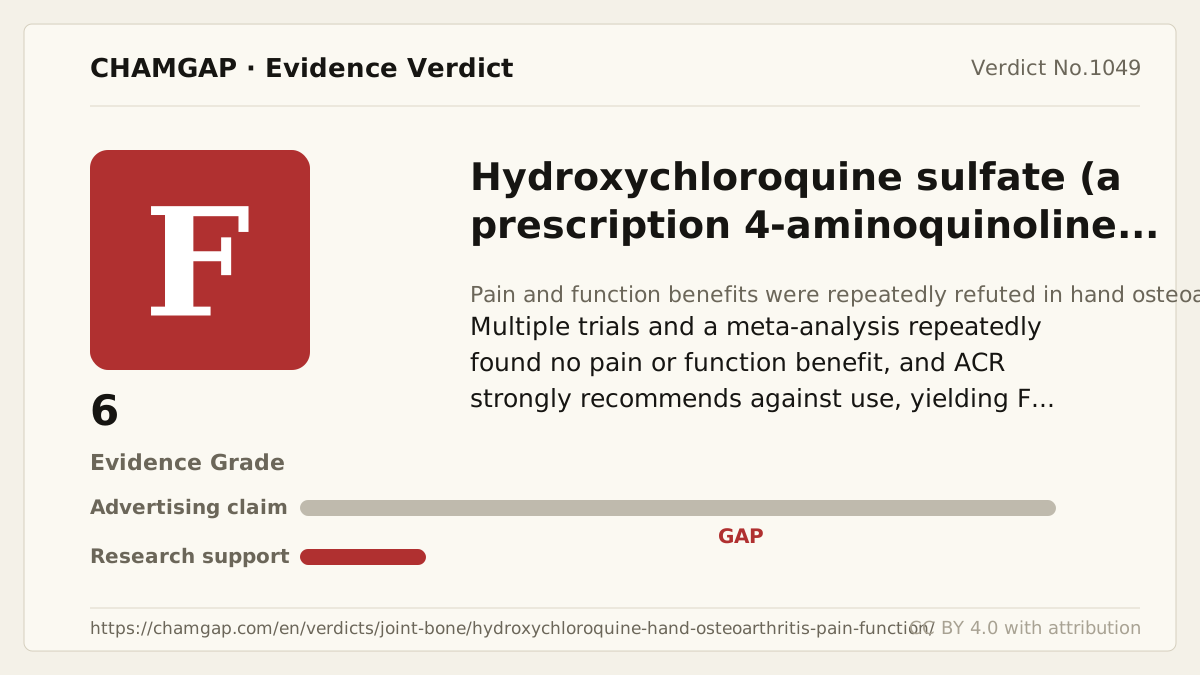
[Chamgap] Hydroxychloroquine x improved pain and function in hand osteoarthritis — Evidence Grade F·6. 6 cited sources checked. Source: https://chamgap.com/en/verdicts/joint-bone/hydroxychloroquine-hand-osteoarthritis-pain-function/ · CC BY 4.0CC BY 4.0 — free to use with attribution; do not distort grades, numbers, or verdict meaning.
What this document does and does not do
Chamgap is an information source. It reports what research has and has not confirmed; it does not tell readers what to take or buy. That decision belongs to readers and, when needed, medical or legal professionals. This verdict reflects literature available up to the search date and may change as new research appears. Nothing here is medical advice.