
Glucosamine sulfate,
does it really help with Improvement of chronic low back pain and disability associated with degenerative lumbar disease?
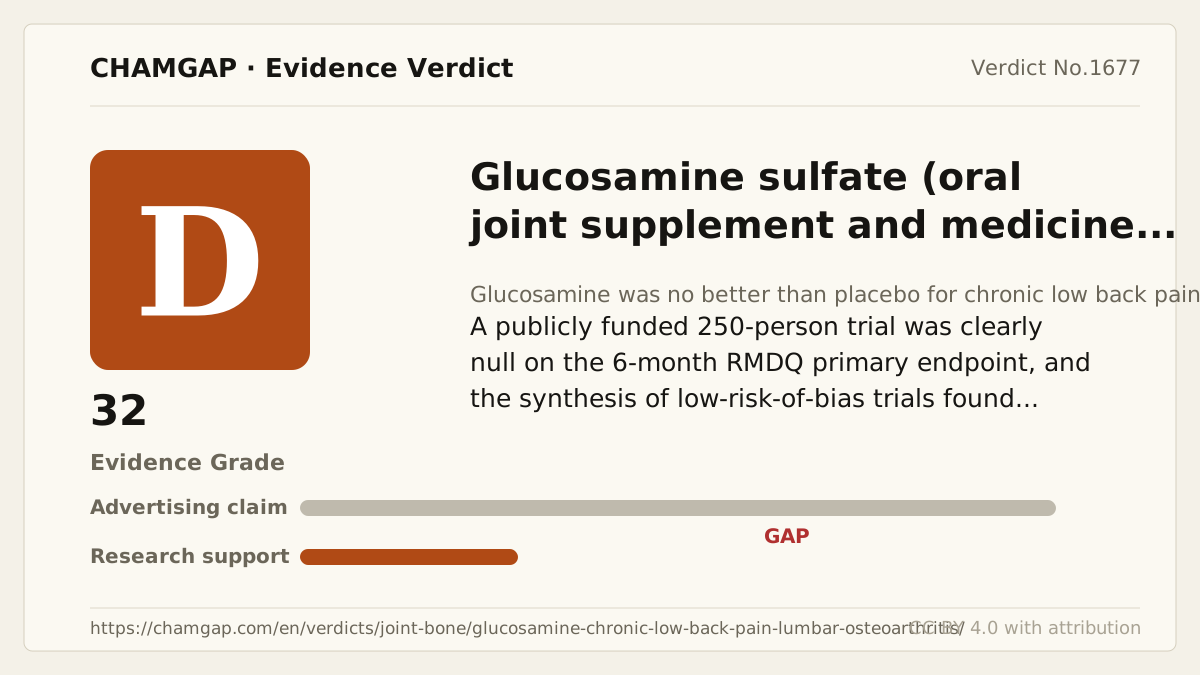
research showsA publicly funded 250-person trial was clearly null on the 6-month RMDQ primary endpoint, and the synthesis of low-risk-of-bias trials found no benefit, supporting D with 32 points.
ads claimMarketing suggests that ingesting a cartilage building block replenishes worn lumbar joints or discs and relieves chronic back pain. The most rigorous direct trial found no difference from placebo in pain-related disability or pain.
Useful facts when choosing a product
- The pivotal trial used glucosamine sulfate 1,500 mg/day for 6 months.
- Evidence or marketing for knee osteoarthritis cannot be transferred directly to chronic low back pain with degenerative lumbar findings.
- Chronic low back pain calls for assessment of function, exercise, sleep and psychological factors, and neurologic warning signs.
Chamgap Semantic Classification Code
Candidate index · review held
UNK.glucosamine-sulfate.oral.chronic-low-back-pain-and-disability-associated-with-degenerative-lumbar-disease.improve.placeboUnknown > Glucosamine sulfate > Oral > chronic low back pain and disability associated with degenerative lumbar disease > Improvement claim > Placebo
An automated migration candidate, not an issued permanent code; exact claim scope remains under review. This machine-generated migration candidate helps retrieval but is not a permanent assignment. The original verdict ID and URL remain authoritative.
What the research actually shows
Wilkens 2010 randomized 250 people with chronic low back pain and degenerative lumbar MRI findings to glucosamine sulfate 1,500 mg/day or placebo. Seventeen participants left by 6 months, but the intention-to-treat linear mixed-model primary analysis covered all 250 randomized participants. Six-month RMDQ was 5.0 in both groups, with P=0.72 for the between-group change, so the primary endpoint failed; pain at rest or activity and quality of life were also nonsignificant. A 2013 systematic review evaluated 3 trials and 309 participants: the two low-risk-of-bias trials found no benefit for pain or disability, while the positive high-risk trial reported a functional difference below the MCID.
Why this is classified as D (32)
A publicly funded 250-person trial was clearly null on the 6-month RMDQ primary endpoint, and the synthesis of low-risk-of-bias trials found no benefit, supporting D with 32 points. The key evidence is failure of the primary RMDQ endpoint and null pain results in a 250-person intention-to-treat trial, supported by other low-risk-of-bias null studies; the repeated evidence is not extensive enough for F, so D.
Counterpoint. One small study was positive, but it was open-label, at high risk of bias, and its functional difference was below the MCID. Pain is a direct treatment endpoint, yet the most credible trial was null, so C is not justified.
Rejudgment record. Cross-check applied — The key evidence is failure of the primary RMDQ endpoint and null pain results in a 250-person intention-to-treat trial, supported by other low-risk-of-bias null studies; the repeated evidence is not extensive enough for F, so D
Sub-claim grades by effect
This ingredient is marketed for several effects. A single overall grade blends strong and weak claims together, so each effect is graded separately here. The overall grade reflects the strongest disconfirming or core claim.
| Effect (sub-claim) | Grade | Basis |
|---|---|---|
| Improvement in pain-related disability at 6 months | D | The primary RMDQ endpoint was identical to placebo and failed. |
| Reduction in chronic low back pain intensity | D | Pain at rest and during activity did not differ significantly from placebo. |
| Functional improvement sustained to 1 year | D | The 1-year RMDQ difference and MCID response difference were also nonsignificant. |
Cross-check — AI research and Codex final gate
Evidence Table
| Study | Design | Sample | Funding | Endpoint | Result | Weight |
|---|---|---|---|---|---|---|
| Wilkens P et al. 2010 | Double-blind randomized placebo-controlled trial | 250 randomized; primary intention-to-treat mixed-model analysis included 250, with 17 withdrawals by 6 months | Norwegian nonprofit and professional research grants; study products were purchased from Pharma Nord, which had no study role | Primary 6-month RMDQ pain-related disability endpoint | Mean 6-month RMDQ was 5.0 in both groups; P=0.72 for between-group change, so the primary endpoint failed. | Key direct null trial |
| Sodha R et al. 2013 | Systematic review of randomized trials | 3 trials and 309 participants | No specific grant funding | Chronic low back pain and functional disability | Two low-risk-of-bias trials found no pain or disability benefit, and the functional difference in a positive high-risk trial was below the MCID. | Replication and quality assessment |
Receipt — 2 References
All 2 cited sources were verified for existence at the original page (as of 2026-07-24).
Final verification and publication gate: Codex · Evidence date: 2026-07-24 · Corrections: none
Cite this verdict
[Chamgap] Glucosamine sulfate x improvement of chronic low back pain and disability associated with degenerative lumbar disease — Evidence Grade D·32. 2 cited sources checked. Source: https://chamgap.com/en/verdicts/joint-bone/glucosamine-chronic-low-back-pain-lumbar-osteoarthritis/ · CC BY 4.0CC BY 4.0 — free to use with attribution; do not distort grades, numbers, or verdict meaning.
What this document does and does not do
Chamgap is an information source. It reports what research has and has not confirmed; it does not tell readers what to take or buy. That decision belongs to readers and, when needed, medical or legal professionals. This verdict reflects literature available up to the search date and may change as new research appears. Nothing here is medical advice.