
Etelcalcetide,
does it really help with Improved PTH response versus cinacalcet in hemodialysis patients with secondary hyperparathyroidism?
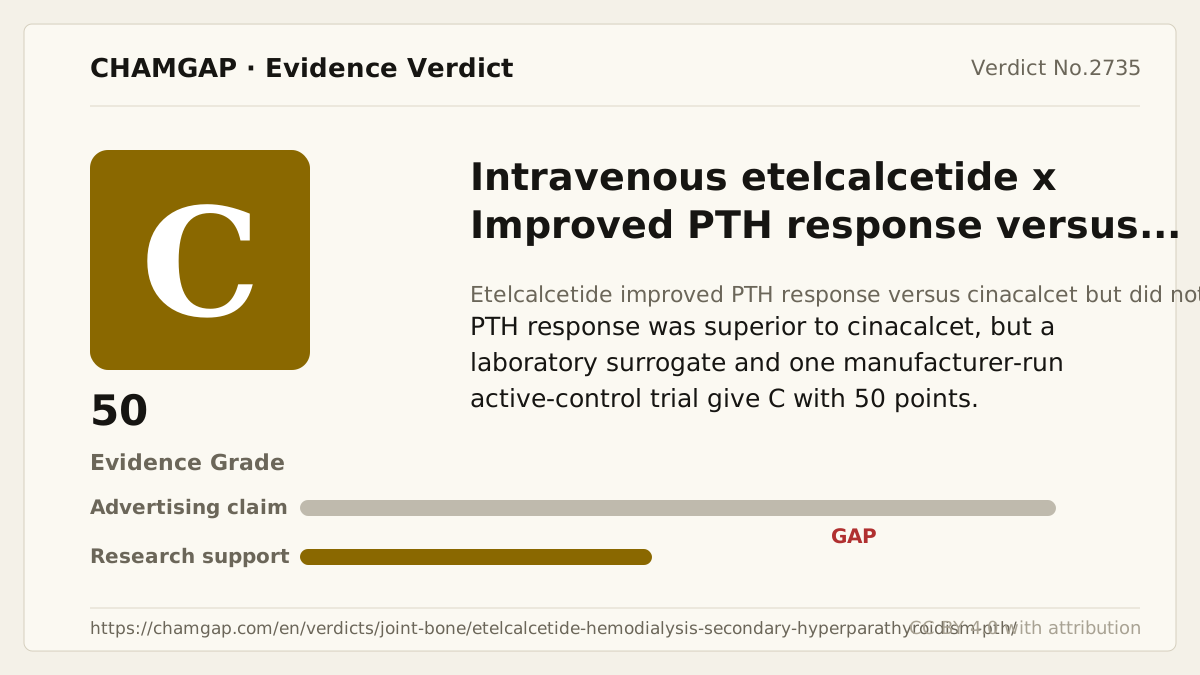
research showsThe grade is C with 50 points. In a 683-patient double-blind double-dummy active-control trial, more than 30% mean PTH reduction during weeks 20–27 occurred in 68.2% with etelcalcetide versus 57.7% with cinacalcet. The cinacalcet-minus-etelcalcetide difference was -10.5 points (95% CI -17.5 to -3.5), with noninferiority P<.001 and superiority P=.004. The primary outcome was serum PTH, not fracture, cardiovascular events, or survival, and evidence came from one Amgen-sponsored active-control noninferiority trial.
ads claim'A higher PTH response rate than cinacalcet' is accurate. 'Fewer fractures or cardiovascular events' was not tested. Monitoring burdens from hypocalcemia and hypotension must also be disclosed.
Useful facts when choosing a product
- The active comparator was oral cinacalcet, with double dummy in both groups.
- The primary noninferiority margin was 12.0 percentage points.
- Amgen participated in design and coordinated data collection, management, and analysis.
Chamgap Semantic Classification Code
Candidate index · review held
M.etelcalcetide.intravenous.pth-response.improve.MULTIMedicinal interventions > etelcalcetide > Intravenous > PTH response > Improvement claim > Multiple: primary unresolved
An automated migration candidate, not an issued permanent code; exact claim scope remains under review. This machine-generated migration candidate helps retrieval but is not a permanent assignment. The original verdict ID and URL remain authoritative.
What the research actually shows
This 26-week multinational trial randomized 683 patients to etelcalcetide, 340, or cinacalcet, 343, and analyzed all randomized patients by intention to treat. Missing PTH data used prespecified multiple imputation. Amgen sponsored the trial, participated in design, and coordinated data collection, management, and analysis. The FDA commented that comparative claims require a fair comparison and that the dosing algorithm appeared to favor etelcalcetide. The authors replied that etelcalcetide started at 5 mg, not its lowest dose, whereas cinacalcet started at 30 mg, its lowest dose.
Why this is classified as C (50)
PTH-response superiority was established, but noninferiority design and use of an active comparator without a placebo arm are two limitations in one Amgen-sponsored surrogate-endpoint trial, making B2 and giving C with 50 points.
Counterpoint. The 10.5-point absolute advantage in a greater-than-30% PTH response was statistically clear, while clinical-event benefit requires separate testing.
Rejudgment record. Cross-check applied — PTH-response superiority was established, but noninferiority design and active control without a placebo arm are two limitations; the primary endpoint was a serum surrogate and Amgen participated in design and coordinated data collection, management, and analysis
| Endpoint | S | Surrogate marker - laboratory or imaging measures |
| Replication | R1 | Single confirmatory trial |
| Independence | I0 | Evidence comes only from manufacturer studies |
| Effect size | E+ | Meets the clinically important threshold |
Stored derived and displayed grades match; this is not a current recalculation or validity check (C).
Sub-claim grades by effect
This ingredient is marketed for several effects. A single overall grade blends strong and weak claims together, so each effect is graded separately here. The overall grade reflects the strongest disconfirming or core claim.
| Effect (sub-claim) | Grade | Basis |
|---|---|---|
| Improved PTH response versus cinacalcet | C | Rates were 68.2% versus 57.7%, superiority P=.004. |
| Reduced fractures or cardiovascular events | ? | These were not the trial's primary outcome and clinical-event benefit was not tested. |
Cross-check — AI research and Codex final gate
Evidence Table
| Study | Design | Sample | Funding | Endpoint | Result | Weight |
|---|---|---|---|---|---|---|
| Block GA et al. 2017 etelcalcetide versus cinacalcet | Multinational double-blind double-dummy active-control noninferiority randomized trial | 683 randomized and analyzed by intention to treat, 340 versus 343; prespecified multiple imputation for 42 versus 33 with missing data | Sponsored by Amgen; the manufacturer participated in design and coordinated data collection, management, and analysis | Proportion with more than 30% reduction in mean serum PTH during weeks 20–27 | 68.2% versus 57.7%; cinacalcet-minus-etelcalcetide difference -10.5 points (95% CI -17.5 to -3.5), noninferiority P<.001, superiority P=.004 | Single manufacturer-sponsored active-control trial with a laboratory primary endpoint |
Receipt — 1 References
All 1 cited sources were verified for existence at the original page (as of 2026-08-18).
Final verification and publication gate: Codex · Evidence date: 2026-08-18 · Corrections: none
Cite this verdict
[Chamgap] Etelcalcetide x PTH response in hemodialysis secondary hyperparathyroidism — Evidence Grade C·50. 1 cited sources checked. Source: https://chamgap.com/en/verdicts/joint-bone/etelcalcetide-hemodialysis-secondary-hyperparathyroidism-pth/ · CC BY 4.0CC BY 4.0 — free to use with attribution; do not distort grades, numbers, or verdict meaning.
What this document does and does not do
Chamgap is an information source. It reports what research has and has not confirmed; it does not tell readers what to take or buy. That decision belongs to readers and, when needed, medical or legal professionals. This verdict reflects literature available up to the search date and may change as new research appears. Nothing here is medical advice.