
Early oral antibiotics for bone and joint infection,
does it really help with No increase in one-year treatment failure beyond the prespecified margin versus prolonged intravenous therapy?
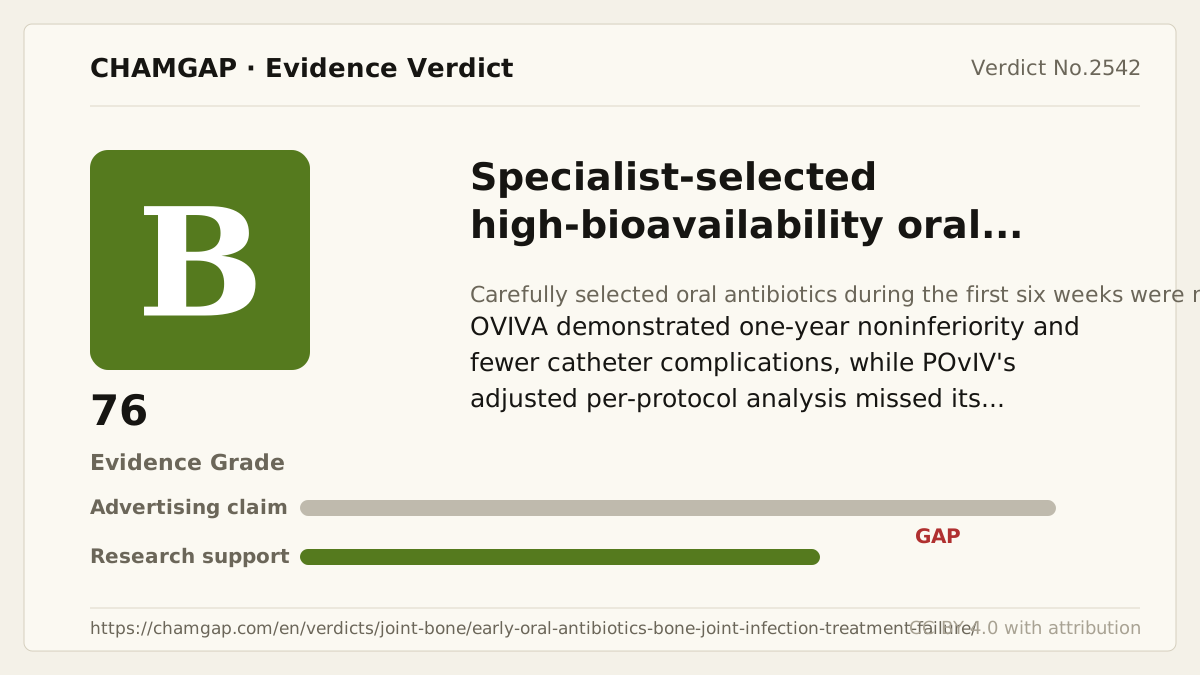
research showsThe grade is B. OVIVA randomized 1,054 participants, 527 per arm. Its primary multiple-imputation analysis of all randomized participants found an oral-minus-intravenous treatment-failure difference of -1.38 points (90% CI -4.94 to 2.19), within the prespecified 7.5-point noninferiority margin. Catheter complications were also 5/523 (1.0%) versus 49/523 (9.4%). In fracture-related infection, POvIV passed its primary analysis but its adjusted per-protocol upper bound was 0.71, above the 0.67 margin. The open noninferiority design limits certainty, giving B with 76 points.
ads claimThis does not mean any oral antibiotic is interchangeable with intravenous treatment. Source control, cultures, susceptibility, absorption, interactions, and adherence were reviewed by specialist teams before selecting eligible oral regimens.
Useful facts when choosing a product
- OVIVA compared route during the first six weeks, not necessarily a six-week total course; later oral therapy was allowed in both groups.
- Intravenous catheter complications occurred in 5/523 oral-assigned versus 49/523 intravenous-assigned participants.
- The POvIV citation is authored by Major Extremity Trauma Research Consortium (METRC), and its ClinicalTrials.gov registration is NCT01714596.
Chamgap Semantic Classification Code
Candidate index · review held
M.specialist-selected-high-bioavailability-oral-antibiotics.oral.no-increase-in-treatment-failure-beyond-the-prespecified-margin.increase.UNKMedicinal interventions > Specialist-selected high-bioavailability oral antibiotics > Oral > No increase in treatment failure beyond the prespecified margin > Increase claim > Unknown
An automated migration candidate, not an issued permanent code; exact claim scope remains under review. This machine-generated migration candidate helps retrieval but is not a permanent assignment. The original verdict ID and URL remain authoritative.
What the research actually shows
Li's OVIVA trial randomized 1,054 participants at 26 UK hospitals to oral or intravenous delivery during the first six weeks. One-year endpoint data were available for 1,015, and the primary analysis included all randomized participants by imputing 39 missing outcomes. We checked the primary failure outcome and 7.5-point margin against ISRCTN91566927. The 233-participant POvIV trial at 24 trauma centers is authored bibliographically by Major Extremity Trauma Research Consortium (METRC), not an individual. US Department of Defense METRC support and ClinicalTrials.gov NCT01714596 were confirmed.
Why this is classified as B (76)
A large publicly funded trial met a prespecified noninferiority margin and reduced catheter complications, but noninferiority design and the narrower trial's adjusted per-protocol miss limit certainty, giving B with 76 points.
Counterpoint. B does not mean oral therapy was superior. It grades the narrower claim that carefully selected early oral treatment did not increase failure beyond a prespecified margin.
Rejudgment record. Cross-check applied — We checked OVIVA's margin, imputed intention-to-treat, complete-case and per-protocol analyses, and catheter complications against the article, protocol, and registry, and separated POvIV's primary and adjusted per-protocol results.
| Endpoint | H | Hard endpoint - actual events such as death |
| Replication | R1 | Single confirmatory trial |
| Independence | I2 | Decisive evidence is publicly or non-profit funded |
| Effect size | E+ | Meets the clinically important threshold |
Stored derived and displayed grades match; this is not a current recalculation or validity check (B).
Sub-claim grades by effect
This ingredient is marketed for several effects. A single overall grade blends strong and weak claims together, so each effect is graded separately here. The overall grade reflects the strongest disconfirming or core claim.
| Effect (sub-claim) | Grade | Basis |
|---|---|---|
| Carefully selected oral antibiotics during the first six weeks are noninferior to intravenous therapy for complex bone and joint infection failure. | B | OVIVA's 90% CI upper bound of 2.19 points was within the prespecified 7.5-point margin. |
| Early oral conversion reduces intravenous catheter complications. | B | OVIVA found 1.0% versus 9.4%. |
Cross-check — AI research and Codex final gate
Evidence Table
| Study | Design | Sample | Funding | Endpoint | Result | Weight |
|---|---|---|---|---|---|---|
| Li HK et al., OVIVA 2019 | Twenty-six-center open-label randomized noninferiority trial | 1,054 randomized, 527 per arm; endpoints available for 1,015, with all randomized participants included by multiple imputation | NIHR Health Technology Assessment programme | Definitive treatment failure within one year | Oral-minus-intravenous difference -1.38 points, 90% CI -4.94 to 2.19, within the 7.5-point margin; catheter complications 5/523 versus 49/523 | Pivotal large publicly funded hard-outcome noninferiority evidence |
| Major Extremity Trauma Research Consortium (METRC), POvIV 2025 | Twenty-four-trauma-center open-label randomized noninferiority trial | 233 randomized | US Department of Defense METRC support; ClinicalTrials.gov NCT01714596 confirmed | Number of infection-related reoperations within one year | Mean 1.3 versus 1.1; unadjusted modified-ITT upper bound 0.59 met the 0.67 margin, while adjusted per-protocol upper bound 0.71 did not | Analysis-dependent supporting evidence in the narrower fracture-related population |
Receipt — 2 References
All 2 cited sources were verified for existence at the original page (as of 2026-08-14).
Final verification and publication gate: Codex · Evidence date: 2026-08-14 · Corrections: none
Cite this verdict
[Chamgap] Early oral antibiotics for bone and joint infection x noninferior treatment failure — Evidence Grade B·76. 2 cited sources checked. Source: https://chamgap.com/en/verdicts/joint-bone/early-oral-antibiotics-bone-joint-infection-treatment-failure/ · CC BY 4.0CC BY 4.0 — free to use with attribution; do not distort grades, numbers, or verdict meaning.
What this document does and does not do
Chamgap is an information source. It reports what research has and has not confirmed; it does not tell readers what to take or buy. That decision belongs to readers and, when needed, medical or legal professionals. This verdict reflects literature available up to the search date and may change as new research appears. Nothing here is medical advice.