
Comfrey root extract ointment,
does it really help with Reduced acute nonspecific upper or lower back pain?
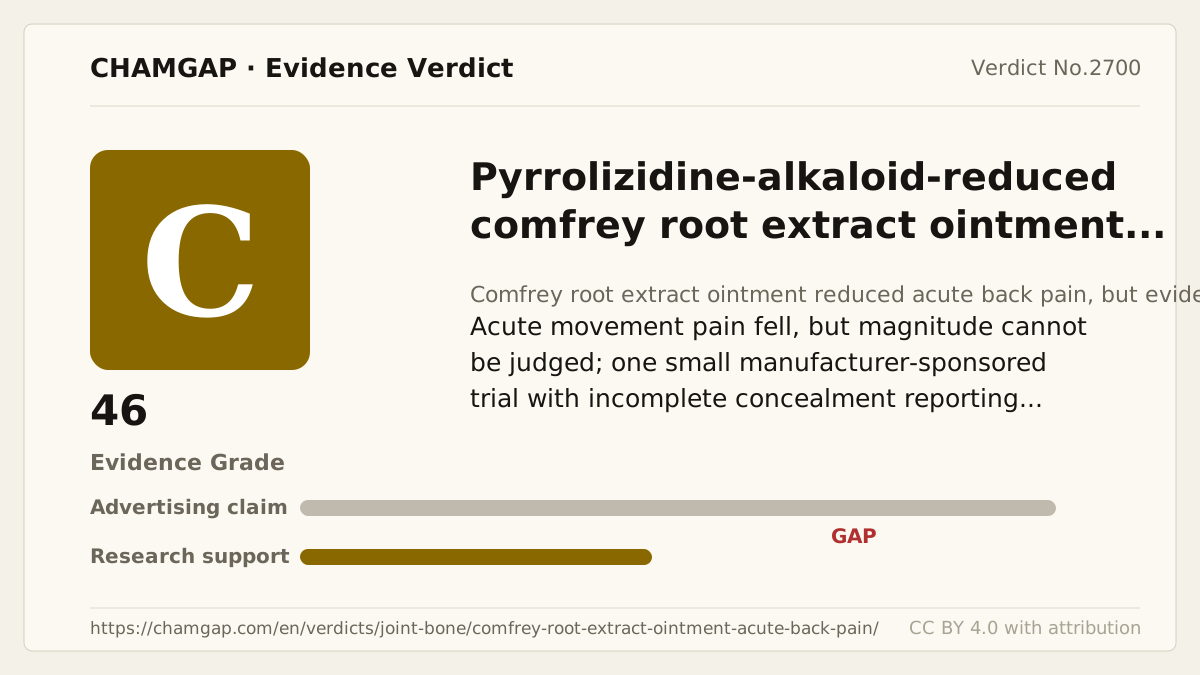
research showsThe grade is C with 46 points. In a 120-person randomized trial, movement pain fell from 104.8 to 12.7 mm with comfrey and from 100.0 to 56.5 mm with placebo; the primary AUC difference had P<0.0001. Evidence is one 120-person trial sponsored by manufacturer Merck Selbstmedikation, with no reported implementation method for allocation concealment.
ads claimThe tested product was not any comfrey salve. It contained 35 g of a specified comfrey-root fluid extract per 100 g and was reduced in pyrrolizidine alkaloids. The result does not extend to homemade comfrey, leaf products, or oral ingestion.
Useful facts when choosing a product
- Participants applied 4 g of Kytta-Salbe f three times daily for 5±1 days.
- Each 100 g contained 35 g of comfrey-root fluid extract, and the test product was reduced in pyrrolizidine alkaloids.
- EudraCT 2006-003621-87 identifies the trial report and the same study as the paper.
Chamgap Semantic Classification Code
Candidate index · review held
S.pyrrolizidine-alkaloid-reduced-comfrey-root-extract-ointment.UNK.acute-nonspecific-upper-or-lower-back-pain.reduce.placeboSupplements and nutraceuticals > Pyrrolizidine-alkaloid-reduced comfrey root extract ointment > Unknown > acute nonspecific upper or lower back pain > Reduction claim > Placebo
An automated migration candidate, not an issued permanent code; exact claim scope remains under review. This machine-generated migration candidate helps retrieval but is not a permanent assignment. The original verdict ID and URL remain authoritative.
What the research actually shows
Four German centers randomized 120 participants equally to comfrey or appearance-matched placebo; all 120 were included in ITT/full analysis. The primary endpoint was AUC of standardized-movement VAS over four visits and matched the trial report. Public reporting did not reveal sequence generation or practical allocation concealment, and the trial was smaller than 200. Five-day follow-up fits the natural course of acute pain and was not separately counted as a short-duration flaw. The trial report names Merck Selbstmedikation GmbH as sponsor, and the second author was affiliated with the company.
Why this is classified as C (46)
The pain difference was significant but its magnitude cannot be judged; one 120-person manufacturer-sponsored trial with unreported concealment implementation gives C with 46 points.
Counterpoint. Broken skin, pregnancy, breastfeeding, prolonged or extensive use require safety review, and oral comfrey should not be confused with this topical product.
Rejudgment record. Cross-check applied — Cross-checked the article and EudraCT clinical trial report for the primary VAS AUC, all-120 analysis, sponsor and author affiliation, allocation reporting, and product composition
| Endpoint | P | Symptom or function itself is the target - including patient reports and performance tests |
| Replication | R1 | Single confirmatory trial |
| Independence | I0 | Evidence comes only from manufacturer studies |
| Effect size | EX | The clinical size of the effect could not be judged |
| Precision | CX | No pooled confidence interval could be confirmed |
Stored derived and displayed grades match; this is not a current recalculation or validity check (C).
Sub-claim grades by effect
This ingredient is marketed for several effects. A single overall grade blends strong and weak claims together, so each effect is graded separately here. The overall grade reflects the strongest disconfirming or core claim.
| Effect (sub-claim) | Grade | Basis |
|---|---|---|
| Comfrey root extract ointment reduces acute nonspecific back pain | C | The primary VAS AUC difference had P<0.0001. |
| Oral comfrey provides the same benefit | ? | The trial evaluated only a topical ointment reduced in pyrrolizidine alkaloids. |
Cross-check — AI research and Codex final gate
Evidence Table
| Study | Design | Sample | Funding | Endpoint | Result | Weight |
|---|---|---|---|---|---|---|
| Giannetti BM, Staiger C, Bulitta M, Predel HG. 2010 | Four-center randomized double-blind placebo-ointment-controlled trial | 120 randomized (60/60), all 120 in ITT/full analysis, 118 per protocol | Sponsored by Merck Selbstmedikation GmbH; second author affiliated with the manufacturer | AUC of VAS pain during standardized movement over four visits | Summed VAS 104.8 to 12.7 mm versus 100.0 to 56.5 mm; primary AUC P<0.0001; adjusted between-group difference and variance not reported | Small single positive manufacturer-sponsored trial |
Receipt — 1 References
All 1 cited sources were verified for existence at the original page (as of 2026-08-15).
Final verification and publication gate: Codex · Evidence date: 2026-08-15 · Corrections: none
Cite this verdict
[Chamgap] Comfrey root extract ointment x acute back pain — Evidence Grade C·46. 1 cited sources checked. Source: https://chamgap.com/en/verdicts/joint-bone/comfrey-root-extract-ointment-acute-back-pain/ · CC BY 4.0CC BY 4.0 — free to use with attribution; do not distort grades, numbers, or verdict meaning.
What this document does and does not do
Chamgap is an information source. It reports what research has and has not confirmed; it does not tell readers what to take or buy. That decision belongs to readers and, when needed, medical or legal professionals. This verdict reflects literature available up to the search date and may change as new research appears. Nothing here is medical advice.