
Colchicine,
does it really help with Pain reduction and flare relief in acute gout?
research showsLow-dose colchicine is graded B because early treatment of an acute gout flare reduces pain and increases treatment success over placebo. In the AGREE trial, at least 50% pain reduction without rescue medication at 24 hours occurred in 37.8% with low-dose colchicine and 15.5% with placebo; efficacy was similar to high dose with far fewer gastrointestinal adverse effects. A 2021 Cochrane review also supported benefit over placebo but rated the limited evidence as low certainty. This indication is distinct from verdicts 661 for cardiovascular disease, 746 for COVID-19, and 1007 for knee osteoarthritis.
ads claimPromotion or self-treatment may extend a gout medicine to every joint pain or encourage repetition of obsolete high doses. Evidence fits early low-dose treatment of diagnosed acute gout, while high doses add toxicity without greater efficacy.
Useful facts when choosing a product
- Acute gout should be treated early with the prescribed low-dose regimen; obsolete repeated high-dose schedules should not be copied without medical direction.
- Diarrhea, nausea, vomiting, and abdominal pain are common, and severe gastrointestinal symptoms can be an early toxicity signal.
- Kidney or liver impairment may require dose reduction or avoidance, and overdose can cause bone-marrow suppression, muscle injury, multiorgan failure, and death.
- Strong CYP3A4 or P-glycoprotein inhibitors are hazardous; selected macrolides, azoles, cyclosporine, and statins require interaction review.
Chamgap Semantic Classification Code
Candidate index · review held
M.colchicine.UNK.pain-reduction-and-flare-relief-in-acute-gout.relieve.placeboMedicinal interventions > colchicine > Unknown > Pain reduction and flare relief in acute gout > Symptom-relief claim > Placebo
An automated migration candidate, not an issued permanent code; exact claim scope remains under review. This machine-generated migration candidate helps retrieval but is not a permanent assignment. The original verdict ID and URL remain authoritative.
What the research actually shows
AGREE compared early self-administered low dose, 1.2 mg followed by 0.6 mg one hour later, with high dose totaling 4.8 mg and placebo. Low dose improved 24-hour pain response and rescue-medication use over placebo, with an adverse-event rate not statistically distinguishable from placebo; high dose caused diarrhea in 76.9%, severe diarrhea in 19.2%, and vomiting in 17.3%. The 2021 Cochrane review synthesized four trials and concluded that low-dose colchicine may improve pain success over placebo, although certainty was low. The result applies to early treatment of diagnosed acute gout, not other arthritis or prophylaxis.
Why this is classified as B (64)
Low dose was superior to placebo on patient-centered pain during an acute flare and provided efficacy similar to high dose with better gastrointestinal safety. Limited trial quantity and certainty prevent an A grade, yielding B with 64 points.
Counterpoint. Suitability depends on diagnosis, time from flare onset, kidney and liver function, and interacting medicines, making adherence to a prescribed early low-dose regimen essential.
Rejudgment record. Cross-check applied — Applied B because the AGREE randomized double-blind placebo-controlled trial improved direct patient-centered pain and rescue-medication outcomes in acute gout and low dose had a gastrointestinal safety advantage over high dose, while limited trial quantity and certainty prevent A; cardiovascular, COVID-19, and knee-osteoarthritis indications were kept separate
Sub-claim grades by effect
This ingredient is marketed for several effects. A single overall grade blends strong and weak claims together, so each effect is graded separately here. The overall grade reflects the strongest disconfirming or core claim.
| Effect (sub-claim) | Grade | Basis |
|---|---|---|
| Acute-gout pain reduction with low-dose colchicine | B | AGREE found significantly more patients achieving at least 50% pain reduction at 24 hours than placebo. |
| Increased acute-gout flare treatment success with low-dose colchicine | B | Reduced rescue-medication use and the Cochrane synthesis supported improved treatment success. |
| Acute-gout flare relief with early low-dose colchicine | B | When given early in AGREE, low-dose colchicine produced more pain responses and less rescue-medication use than placebo. |
Cross-check — AI research and Codex final gate
Evidence Table
| Study | Design | Sample | Funding | Endpoint | Result | Weight |
|---|---|---|---|---|---|---|
| Terkeltaub RA et al. 2010 AGREE | Multicenter randomized double-blind placebo-controlled dose-comparison trial | 184 patients with acute gout | Funded by URL Pharma; a company executive participated in design, collection, analysis, and writing | At least 50% pain reduction at 24 hours without rescue medication and adverse events | Response was 37.8% with low dose versus 15.5% with placebo; efficacy resembled high dose with far fewer gastrointestinal adverse effects. | Key direct pain randomized trial |
| McKenzie BJ et al. 2021 Cochrane review | Systematic review of colchicine randomized trials in acute gout | Four trials with low dose, high dose, placebo, and active comparators | Cochrane Musculoskeletal | At least 50% pain reduction, inflammation, function, and adverse events | Low-certainty evidence suggested that low dose may increase treatment success over placebo and may have benefit similar to an NSAID. | Independent synthesis with certainty limitation |
Receipt — 2 References
All 2 cited sources were verified for existence at the original page (as of 2026-07-23).
Final verification and publication gate: Codex · Evidence date: 2026-07-23 · Corrections: none
Cite this verdict
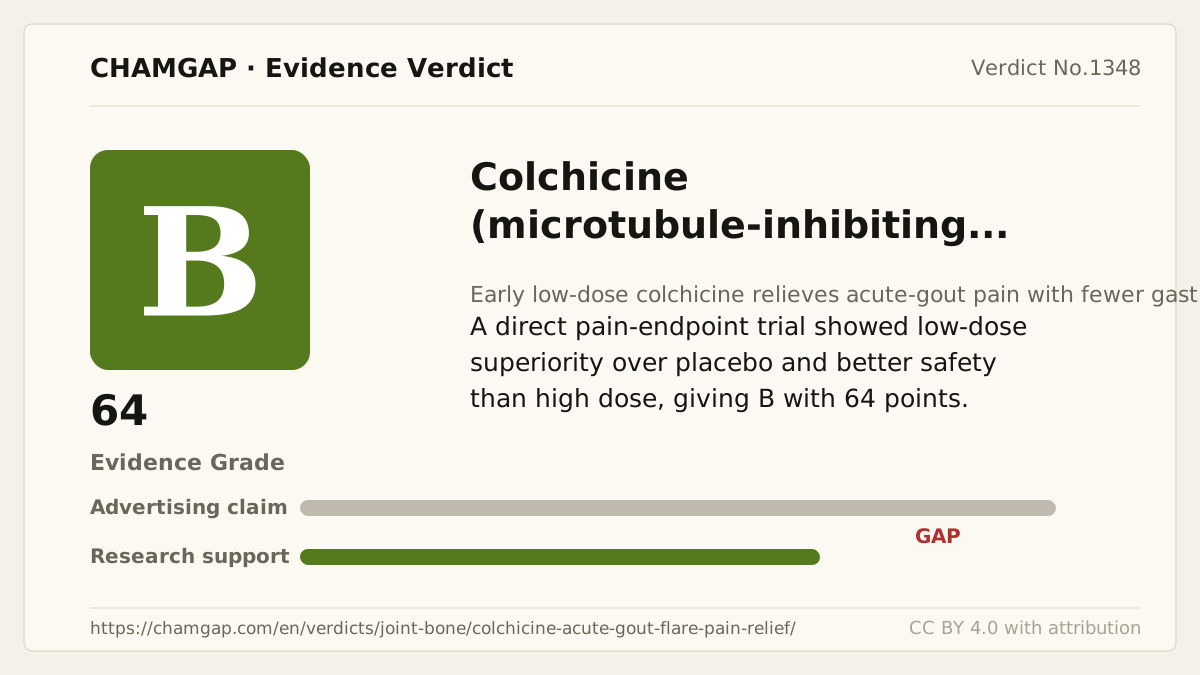
[Chamgap] Colchicine x pain reduction and flare relief in acute gout — Evidence Grade B·64. 2 cited sources checked. Source: https://chamgap.com/en/verdicts/joint-bone/colchicine-acute-gout-flare-pain-relief/ · CC BY 4.0CC BY 4.0 — free to use with attribution; do not distort grades, numbers, or verdict meaning.
What this document does and does not do
Chamgap is an information source. It reports what research has and has not confirmed; it does not tell readers what to take or buy. That decision belongs to readers and, when needed, medical or legal professionals. This verdict reflects literature available up to the search date and may change as new research appears. Nothing here is medical advice.