
Carbonated soft drinks and cola,
does it really help with Lower bone mineral density or increased fracture?
research showsThe grade is C. In 73,572 postmenopausal women followed for up to 30 years, each additional daily soda serving was associated with 14% more hip fractures, RR 1.14, 95% CI 1.06 to 1.23. Yet the association did not differ between cola and noncola or by caffeine, and controlled studies did not reproduce the simple claim that soda directly pulls calcium into urine. The association was statistically positive but small by convention, giving 56 points.
ads claimThe chemistry statement that phosphate binds calcium must not be converted directly into 'cola melts bone.' A ten-day trial comparing 2.5 L of cola with 2.5 L of milk changed calcium supply at the same time, so it could not separate milk displacement from a cola-specific effect.
Useful facts when choosing a product
- Phosphate salts can bind calcium and alter absorption, parathyroid hormone, and urinary handling. In a controlled eight-week study of 62 healthy adults, adding 1,000 mg phosphorus daily without calcium decreased rather than increased urinary calcium, and fasting plasma phosphate did not change.
- In an eight-week metabolic study of eight healthy women, a high-carbonated-beverage diet produced serum calcium, ionized calcium, parathyroid hormone, bone-formation markers, and 24-hour urinary calcium measures similar to control.
- In Framingham women, daily cola was associated with 3.7% lower femoral-neck density and 5.4% lower Ward's-area density than less than monthly use. Total phosphorus intake was not significantly higher, but the calcium-to-phosphorus ratio was lower.
- A ten-day study in 11 young men compared 2.5 L daily cola with the same volume of milk. It changed calcium supply together with beverage type and was not a clean test of direct calcium loss.
Chamgap Semantic Classification Code
Candidate index · review held
F.repeated-consumption-of-carbonated-soft-drinks.oral.bone-mineral-density-or-increased-fracture.reduce.placeboFoods and beverages > Repeated consumption of carbonated soft drinks > Oral > bone mineral density or increased fracture > Reduction claim > Placebo
An automated migration candidate, not an issued permanent code; exact claim scope remains under review. This machine-generated migration candidate helps retrieval but is not a permanent assignment. The original verdict ID and URL remain authoritative.
What the research actually shows
The Nurses' Health Study repeatedly assessed diet about every four years in 73,572 postmenopausal women and identified 1,873 hip fractures over up to 30 years. RR per daily serving was 1.14, 95% CI 1.06 to 1.23; regular soda was 1.19, 1.02 to 1.38, and diet soda 1.12, 1.03 to 1.21. Fractures were initially captured by participant report; hip-fracture reporting is known to be accurate, but a self-reported endpoint remains a limitation. Framingham measured density cross-sectionally in 1,413 women and 1,125 men. Cola correlated with lower hip density in women but not in men, spine, or noncola drinks. Both adjusted for calcium and other factors, but residual confounding and beverage substitution remain. NIH and public support were documented.
Why this is classified as C (54)
A publicly funded large cohort found a long-term hip-fracture association, but its magnitude was small by convention and the endpoint was captured by self-report. Cola specificity, sex differences, and all-soda fracture findings were not aligned, giving C with 54 points.
Counterpoint. This grade measures evidence for the bone-weakening claim, not overall safety. Sugar, dental and metabolic outcomes, and caffeine sensitivity are separate questions.
Rejudgment record. Cross-check applied — Recognized a large female cohort association with clinical fracture while accounting for small magnitude, observational design, inconsistent cola specificity, and controlled metabolic evidence
| Endpoint | H | Hard endpoint - actual events such as death |
| Replication | R1 | Single confirmatory trial |
| Independence | I2 | Decisive evidence is publicly or non-profit funded |
| Effect size | E~ | Statistically positive but below the threshold |
Stored derived and displayed grades match; this is not a current recalculation or validity check (C).
Sub-claim grades by effect
This ingredient is marketed for several effects. A single overall grade blends strong and weak claims together, so each effect is graded separately here. The overall grade reflects the strongest disconfirming or core claim.
| Effect (sub-claim) | Grade | Basis |
|---|---|---|
| Soda intake and increased hip fracture in postmenopausal women | C | A large cohort found RR 1.14 per daily serving, but the evidence is observational. |
| Phosphoric acid directly pulls bone calcium into urine | D | Controlled metabolic studies did not consistently increase urinary calcium. |
| Cola is uniquely worse for bone than other carbonated drinks | D | A density study supported specificity, but the fracture cohort did not distinguish cola from noncola. |
Cross-check — AI research and Codex final gate
Evidence Table
| Study | Design | Sample | Funding | Endpoint | Result | Weight |
|---|---|---|---|---|---|---|
| Fung et al. 2014 Nurses' Health Study | Prospective cohort | 73,572 postmenopausal women and 1,873 hip fractures | US National Institutes of Health grants | Incident hip fracture | RR 1.14 per additional daily serving, 95% CI 1.06 to 1.23 | Primary clinical-event evidence |
| Tucker et al. 2006 Framingham Osteoporosis Study | Cross-sectional observational analysis | 1,413 women and 1,125 men | USDA and NIH support | Spine and hip bone mineral density | Cola correlated with lower hip density in women; findings were null in men and for noncola drinks | Supporting sex- and beverage-type comparison |
| Trautvetter et al. 2016 | Double-blind placebo-controlled eight-week nutrition intervention | 62 completers | Not confirmed in the accessible record | Serum and urinary calcium, phosphate, and bone-metabolism markers | Urinary calcium decreased in the phosphorus-only arm; fasting plasma phosphate did not change | Counterevidence to direct calcium-leaching mechanism |
Receipt — 4 References
All 4 cited sources were verified for existence at the original page (as of 2026-08-04).
Final verification and publication gate: Codex · Evidence date: 2026-08-04 · Corrections: none
Cite this verdict
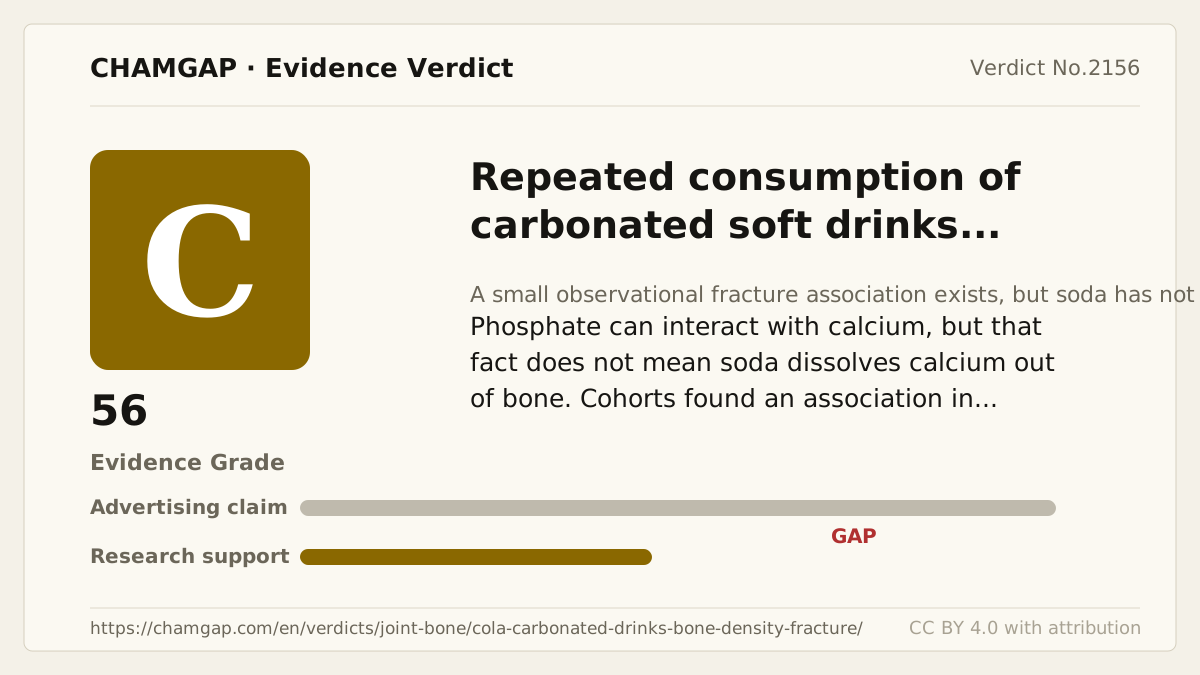
[Chamgap] Carbonated soft drinks and cola x lower bone density or more fractures — Evidence Grade C·54. 4 cited sources checked. Source: https://chamgap.com/en/verdicts/joint-bone/cola-carbonated-drinks-bone-density-fracture/ · CC BY 4.0CC BY 4.0 — free to use with attribution; do not distort grades, numbers, or verdict meaning.
What this document does and does not do
Chamgap is an information source. It reports what research has and has not confirmed; it does not tell readers what to take or buy. That decision belongs to readers and, when needed, medical or legal professionals. This verdict reflects literature available up to the search date and may change as new research appears. Nothing here is medical advice.