
Cemented hip hemiarthroplasty,
does it really help with Prevention of periprosthetic fracture compared with uncemented hemiarthroplasty in older adults with displaced femoral-neck fracture?
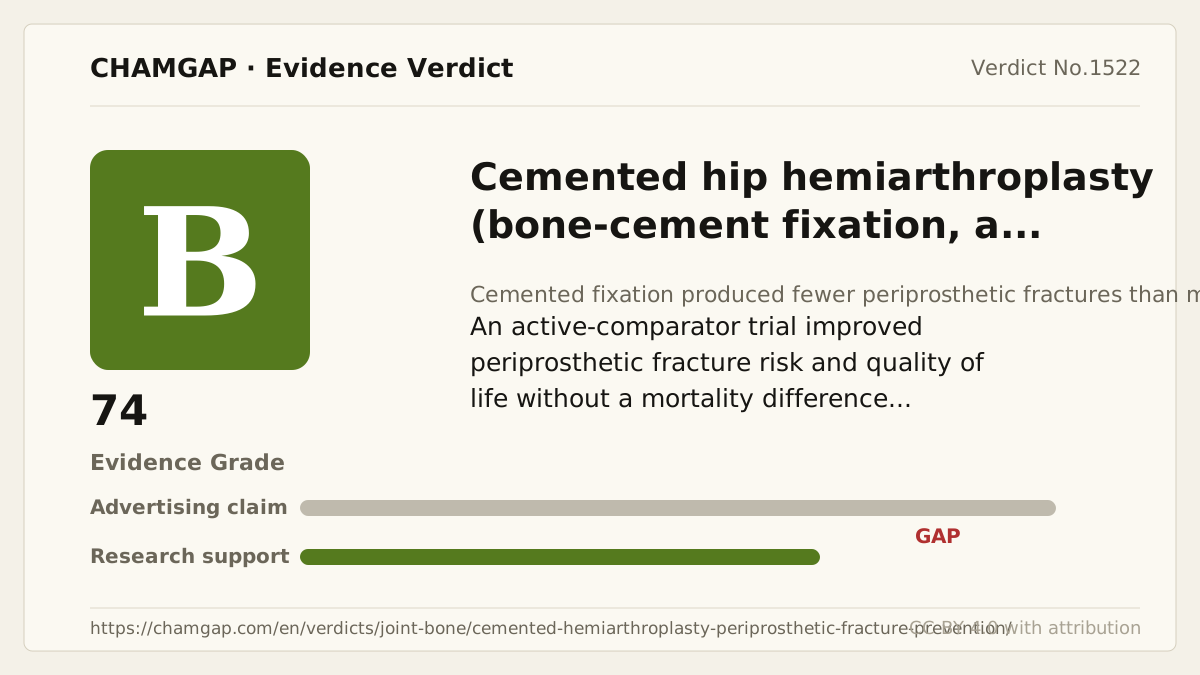
research showsCemented hip hemiarthroplasty is rated B because the randomized WHiTE-5 comparison with modern uncemented hemiarthroplasty reduced periprosthetic fractures from 2.1% to 0.5% and modestly improved four-month EQ-5D. The trial enrolled 1,225 patients aged 60 years or older with an intracapsular hip fracture, while 12-month mortality was 23.9% versus 27.8% without a statistically significant difference. Because this was superiority over an active surgical comparator rather than placebo, the boundary rule limits the rating to B.
ads claimDescriptions can portray cemented fixation as universally safer for every hip fracture or as life prolonging. The direct comparison concerns fixation methods in older patients with displaced intracapsular femoral-neck fractures selected for hemiarthroplasty.
Useful facts when choosing a product
- Cemented hemiarthroplasty fixes the femoral stem with polymethylmethacrylate bone cement during partial hip replacement.
- WHiTE-5 compared cemented fixation with a modern hydroxyapatite-coated uncemented stem in patients aged at least 60 years with an intracapsular hip fracture.
- Bone cement implantation syndrome is an intraoperative complication that can present with hypoxia, hypotension, arrhythmia, or cardiac arrest around cement insertion.
- Infection, dislocation, venous thromboembolism, bleeding, and anesthetic complications are general risks of hip hemiarthroplasty.
Chamgap Semantic Classification Code
Candidate index · review held
P.cemented-hip-hemiarthroplasty.procedural.periprosthetic-fracture.prevent.activeProcedures, devices and tests > Cemented hip hemiarthroplasty > Procedural > periprosthetic fracture > Occurrence-prevention claim > Active comparator
An automated migration candidate, not an issued permanent code; exact claim scope remains under review. This machine-generated migration candidate helps retrieval but is not a permanent assignment. The original verdict ID and URL remain authoritative.
What the research actually shows
Fernandez and colleagues randomized 1,225 patients aged at least 60 years with an intracapsular hip fracture in WHiTE-5, assigning 610 to cemented and 615 to modern uncemented hemiarthroplasty. Four-month EQ-5D was 0.371 versus 0.315, and periprosthetic fractures occurred in 0.5% versus 2.1%. Twelve-month mortality did not differ significantly. Later randomized-trial syntheses generally support advantages in function, pain, and prosthesis-related complications, but do not establish consistent mortality superiority.
Why this is classified as B (74)
A large randomized active-comparator trial showed fixation-specific reductions in periprosthetic fracture and better EQ-5D. Because it compared two active operations and did not establish a mortality difference, the active-comparator ceiling gives B with 74 points.
Counterpoint. This verdict compares cemented with uncemented fixation when hemiarthroplasty is performed; it is not a verdict on treating osteoporosis or on whether the fracture requires surgery.
Rejudgment record. New verdict — Applied B because a large randomized active-comparator trial showed fewer periprosthetic fractures and better quality of life with cemented fixation than with modern uncemented fixation, while mortality superiority was not established
Sub-claim grades by effect
This ingredient is marketed for several effects. A single overall grade blends strong and weak claims together, so each effect is graded separately here. The overall grade reflects the strongest disconfirming or core claim.
| Effect (sub-claim) | Grade | Basis |
|---|---|---|
| Prevention of periprosthetic fracture compared with uncemented fixation | B | WHiTE-5 found rates of 0.5% versus 2.1%, although event counts were small and the confidence interval was wide. |
| Improved early health-related quality of life compared with uncemented fixation | B | Cemented fixation was superior with an adjusted four-month EQ-5D difference of 0.055. |
| Reduced 12-month mortality compared with uncemented fixation | C | Rates were 23.9% versus 27.8%, with an odds ratio of 0.80 (95% CI 0.62 to 1.05), so a significant difference was not established. |
Cross-check — AI research and Codex final gate
Evidence Table
| Study | Design | Sample | Funding | Endpoint | Result | Weight |
|---|---|---|---|---|---|---|
| Fernandez MA et al. WHiTE-5, 2022 | Multicenter randomized active-controlled trial | 1,225 patients aged at least 60 years with an intracapsular hip fracture | Public funding from the United Kingdom NIHR | Four-month EQ-5D, periprosthetic fracture, and 12-month mortality | Cemented fixation had higher EQ-5D, 0.371 versus 0.315, and fewer fractures, 0.5% versus 2.1%, without a significant mortality difference. | Pivotal modern active-comparator trial |
| Li N et al. 2020 | Systematic review and meta-analysis of randomized trials | Eight randomized trials involving 1,577 hips in older patients with femoral-neck fracture | Academic research | Mortality, function, pain, and prosthesis-related complications | Cemented fixation had fewer prosthesis-related complications, but Harris Hip Score and other functional measures did not differ significantly and no mortality difference was established. | Supportive synthesis of comparative direction |
Receipt — 2 References
All 2 cited sources were verified for existence at the original page (as of 2026-07-23).
Final verification and publication gate: Codex · Evidence date: 2026-07-23 · Corrections: none
Cite this verdict
[Chamgap] Cemented hip hemiarthroplasty x prevention of periprosthetic fracture — Evidence Grade B·74. 2 cited sources checked. Source: https://chamgap.com/en/verdicts/joint-bone/cemented-hemiarthroplasty-periprosthetic-fracture-prevention/ · CC BY 4.0CC BY 4.0 — free to use with attribution; do not distort grades, numbers, or verdict meaning.
What this document does and does not do
Chamgap is an information source. It reports what research has and has not confirmed; it does not tell readers what to take or buy. That decision belongs to readers and, when needed, medical or legal professionals. This verdict reflects literature available up to the search date and may change as new research appears. Nothing here is medical advice.