
Celecoxib,
does it really help with Reduced pain and stiffness and improved physical function in symptomatic knee osteoarthritis?
research showsCelecoxib is rated B because repeated placebo-controlled randomized trials show reduced pain and stiffness and improved physical function in symptomatic knee osteoarthritis. A Cochrane review of 36 trials and 17,206 participants found small improvements in pain and function versus placebo and similar pain relief to traditional NSAIDs. The mean effects may not be clearly clinically important, however, and 34 of 36 trials were manufacturer funded, with additional large completed-trial data unavailable, preventing an A grade. This is the first active prescription NSAID in a knee-osteoarthritis corpus otherwise dominated by supplements, is aligned with the B grade for avocado-soybean unsaponifiables verdict 201, and does not imply cartilage or structural disease modification.
ads claimMarketing can simplify COX-2 selectivity into a claim that the stomach is safe and the arthritis itself is treated. Celecoxib is a symptom-relieving medicine for pain, stiffness, and function; it may reduce but does not eliminate gastrointestinal risk, while cardiovascular and renal risk and cartilage progression remain separate issues.
Useful facts when choosing a product
- A common adult osteoarthritis prescription totals 200 mg daily, taken as 200 mg once daily or 100 mg twice daily, but the individualized lowest effective dose for the shortest necessary duration takes priority.
- Celecoxib is an NSAID for pain and inflammatory symptoms; it has not been established to regenerate damaged cartilage or reliably slow structural progression of osteoarthritis.
- Risks include myocardial infarction or stroke, gastrointestinal bleeding or ulceration, worsening kidney function, increased blood pressure, and edema. Cardiovascular or kidney disease, older age, and anticoagulant use require particular review.
- It should not be duplicated with another NSAID. Black stool, vomiting blood, chest pain, shortness of breath, reduced urination, or rapidly increasing edema requires urgent medical attention.
Chamgap Semantic Classification Code
Candidate index · review held
M.celecoxib.UNK.pain-and-stiffness-and-improved-physical-function-in-symptomatic-knee-osteoarthritis.reduce.MULTIMedicinal interventions > Celecoxib > Unknown > pain and stiffness and improved physical function in symptomatic knee osteoarthritis > Reduction claim > Multiple: primary unresolved
An automated migration candidate, not an issued permanent code; exact claim scope remains under review. This machine-generated migration candidate helps retrieval but is not a permanent assignment. The original verdict ID and URL remain authoritative.
What the research actually shows
The 2017 Cochrane review by Puljak and colleagues included 36 trials and 17,206 participants and estimated about a 3% absolute improvement in pain on a 500-point WOMAC scale versus placebo, with a small physical-function benefit. Pain relief was similar to traditional NSAIDs, but much evidence was low or very low quality and industry involvement was widespread. Two multicenter trials by Bingham and colleagues randomized 1,207 participants to celecoxib 200 mg daily, etoricoxib 30 mg daily, or placebo and confirmed direct WOMAC pain and function improvements over 12 weeks. In a 388-person trial, Gordo and colleagues found celecoxib noninferior to ibuprofen and superior to placebo on WOMAC total score. PRECISION was a safety rather than efficacy trial; moderate-dose celecoxib was noninferior to ibuprofen and naproxen for cardiovascular safety in higher-risk arthritis patients, which does not mean that celecoxib has no NSAID-class risk.
Why this is classified as B (66)
Thirty-six placebo-controlled trials and the Cochrane review repeatedly improve direct patient-centered pain, stiffness, and physical-function endpoints, with symptomatic efficacy similar to other NSAIDs. The placebo-adjusted improvement is only about 3% to 4%, 34 of 36 trials were manufacturer funded, large completed-trial data were unavailable, and long-term disease modification is unproven, yielding B with 66 points. Cardiovascular, gastrointestinal, renal, and edema risks remain separate safety issues.
Counterpoint. Exercise, weight management, and physical therapy remain foundational, with a time-limited course considered when pain blocks activity after individual risk review. If there is no benefit, escalating indefinitely is less appropriate than stopping or switching, and symptom relief should not be interpreted as halted radiographic progression.
Rejudgment record. Cross-check revision — Adjusted to B with 66 points because 36 placebo-controlled trials repeatedly improve pain and function but the placebo-adjusted effect is only about 3% to 4% and 34 of 36 trials were manufacturer funded; unavailable large-trial data and no structural modification also limit confidence
Sub-claim grades by effect
This ingredient is marketed for several effects. A single overall grade blends strong and weak claims together, so each effect is graded separately here. The overall grade reflects the strongest disconfirming or core claim.
| Effect (sub-claim) | Grade | Basis |
|---|---|---|
| Reduced pain in symptomatic knee osteoarthritis | B | Multiple placebo-controlled trials are repeatedly positive, but the average placebo-adjusted effect is small and industry funding is concentrated. |
| Reduced stiffness in symptomatic knee osteoarthritis | B | WOMAC subscales and active-comparator trials support improvement, but this is symptomatic relief. |
| Improved physical function in symptomatic knee osteoarthritis | B | Repeated direct function endpoints are positive but do not establish cartilage regeneration or slowed structural progression. |
Cross-check — AI research and Codex final gate
Evidence Table
| Study | Design | Sample | Funding | Endpoint | Result | Weight |
|---|---|---|---|---|---|---|
| Puljak L et al. 2017 Cochrane review | Systematic review and meta-analysis of randomized trials | Thirty-six trials and 17,206 participants; 9,402 received celecoxib | Thirty-four of 36 trials were manufacturer funded and 34 of 36 included pharmaceutical-employee authors | WOMAC pain, physical function, quality of life, withdrawals, and serious adverse events | Pain and function improved slightly versus placebo and pain relief was similar to traditional NSAIDs, but the clinical importance of the average difference was small. | Core synthesis limited by industry concentration and unavailable large-trial data |
| Bingham CO 3rd et al. 2007 | Two identically designed multicenter randomized double-blind placebo- and active-controlled trials | 1,207 participants with knee or hip osteoarthritis | Merck-supported product-development trials | WOMAC pain, physical function, and patient global assessment | Celecoxib 200 mg daily and etoricoxib were superior to placebo on all coprimary outcomes over 12 weeks. | Large direct symptom and function randomized evidence with industry funding |
| Gordo AC et al. 2017 | Multicenter randomized double-blind placebo- and active-controlled noninferiority trial | 388 participants with knee osteoarthritis; 153 celecoxib, 156 ibuprofen, and 79 placebo | Pfizer employee authors and company development context | Arthritis pain, WOMAC, pain satisfaction, and upper gastrointestinal tolerability | Celecoxib was noninferior to ibuprofen, and both active groups improved WOMAC total score versus placebo. | Direct replication in knee osteoarthritis with industry concentration |
| Nissen SE et al. 2016 PRECISION | Large randomized double-blind cardiovascular-safety noninferiority trial | 24,081 patients with osteoarthritis or rheumatoid arthritis at increased cardiovascular risk | Pfizer sponsored with blinded event adjudication and academic oversight | Cardiovascular death, myocardial infarction, stroke, and gastrointestinal and renal safety | Moderate-dose celecoxib was noninferior to naproxen and ibuprofen for cardiovascular safety, without showing an absence of NSAID-class risk. | Large hard safety endpoints kept separate from the symptom-efficacy grade |
Receipt — 4 References
All 4 cited sources were verified for existence at the original page (as of 2026-07-21).
Final verification and publication gate: Codex · Evidence date: 2026-07-21 · Corrections: none
Cite this verdict
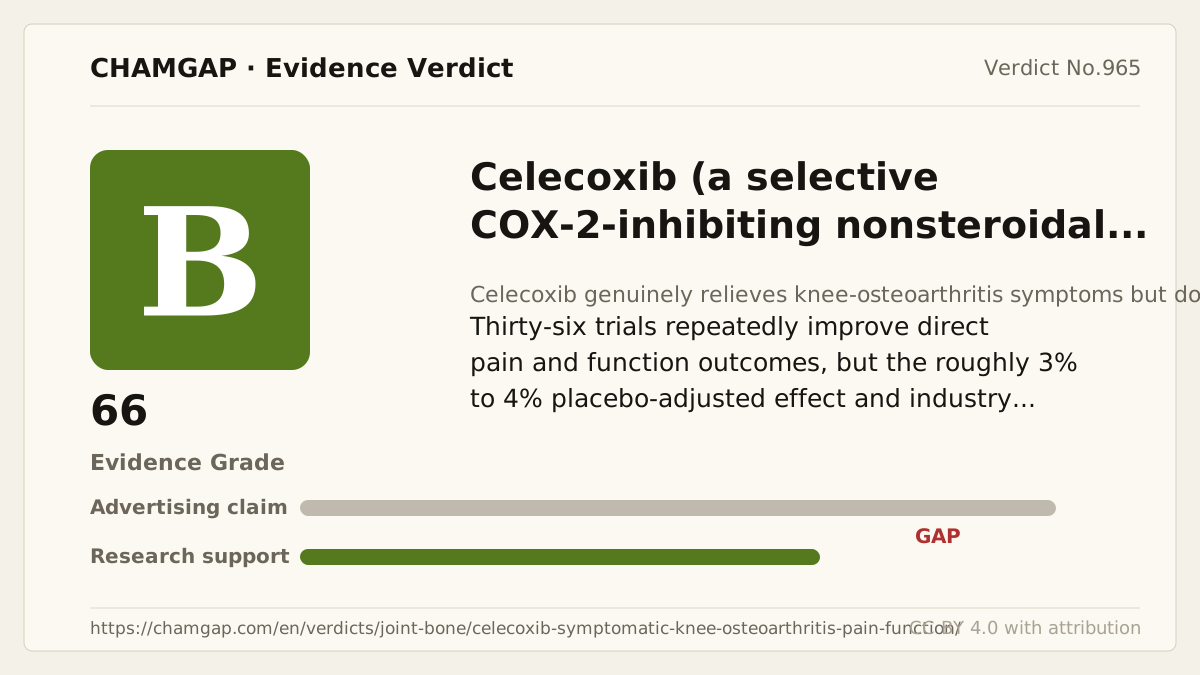
[Chamgap] Celecoxib x pain, stiffness, and function in symptomatic knee osteoarthritis — Evidence Grade B·66. 4 cited sources checked. Source: https://chamgap.com/en/verdicts/joint-bone/celecoxib-symptomatic-knee-osteoarthritis-pain-function/ · CC BY 4.0CC BY 4.0 — free to use with attribution; do not distort grades, numbers, or verdict meaning.
What this document does and does not do
Chamgap is an information source. It reports what research has and has not confirmed; it does not tell readers what to take or buy. That decision belongs to readers and, when needed, medical or legal professionals. This verdict reflects literature available up to the search date and may change as new research appears. Nothing here is medical advice.