
Burosumab,
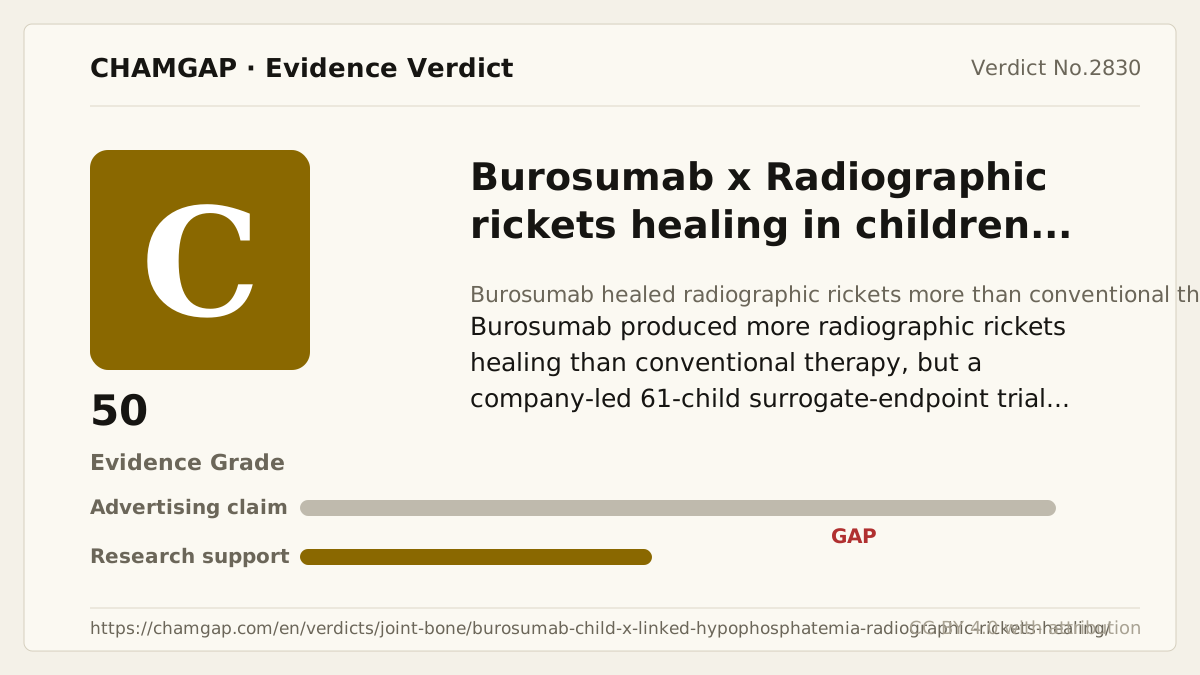
does it really help with Radiographic rickets healing in children with X-linked hypophosphatemia?
research showsThe grade is C with 50 points. At week 40, radiographic rickets change on RGI-C was +1.9 with burosumab versus +0.8 with oral phosphate plus active vitamin D, mean difference 1.1 points (95% CI 0.8 to 1.5), P<0.0001. Because the primary endpoint was the RGI-C global score, a qualitative assessment of change from baseline in wrist and knee radiographs, this radiographic surrogate caps the grade at C. Radiographic healing is not proof of fewer fractures, fewer deformity operations, or greater final height.
ads claimThis comparison concerns children with XLH and residual radiographic rickets despite conventional therapy. It should not be generalized to adults, other causes of hypophosphatemia, fracture prevention, or avoidance of deformity surgery.
Useful facts when choosing a product
- Treatment-related adverse events occurred in 17/29 (58.6%) versus 7/32 (21.9%); injection-site reactions occurred in 15/29 (51.7%) versus none.
- No new ectopic mineralization occurred in either group, no new or worsened nephrocalcinosis was reported, and parathyroid hormone changes were small without a clear between-group safety signal.
- Burosumab, sold as Crysvita, has reimbursed use in South Korea, alongside continuing patient-group discussion about rare-disease access.
Chamgap Semantic Classification Code
Candidate index · review held
UNK.burosumab.UNK.radiographic-rickets-healing-with-x-linked-hypophosphatemia.assess.MULTIUnknown > Burosumab > Unknown > Radiographic rickets healing with X-linked hypophosphatemia > Association or change assessment > Multiple: primary unresolved
An automated migration candidate, not an issued permanent code; exact claim scope remains under review. This machine-generated migration candidate helps retrieval but is not a permanent assignment. The original verdict ID and URL remain authoritative.
What the research actually shows
This open-label active-controlled phase 3 trial at 16 sites randomized 61 previously treated children aged 1 to 12 years to burosumab (29) or continued oral phosphate plus active vitamin D (32). Although treatment was open, the report states, "Patient identifiers, treatment, and treatment duration were unknown to the readers". Three blinded independent central radiology readers assessed the primary endpoint, so this was not an unblinded subjective endpoint. Limitation name: total sample of 61. List item: small trial (fewer than 200 total) - actual total 61. Avoidability: possible - XLH is very rare and 16 sites already participated, but longer international recruitment could have approached 200 and improved rare-harm evidence. Limitation name: oral phosphate plus active vitamin D control without placebo. List item: active comparator only. Avoidability: impossible - withdrawing established phosphate and active-vitamin-D therapy from growing children with genetic rickets would be ethically unacceptable. Ultragenyx and Kyowa Kirin designed, managed, analyzed, and supplied the trial, and three authors were Ultragenyx employees, so the decisive efficacy evidence was not independent of the manufacturers.
Why this is classified as C (50)
The randomized comparison showed a large, precise effect, but the primary endpoint was a radiographic surrogate, while company control and a 61-child sample further limit confidence, giving C with 50 points.
Counterpoint. Open administration was difficult to avoid for an injection versus frequent oral therapy, while blinded central radiology reduced detection bias for the primary endpoint.
Rejudgment record. Cross-check applied — Cross-checked Imel 2019 for conventional therapy, RGI-C, blinded radiology, sample size, harms, funder role, and employee authors
| Endpoint | S | Surrogate marker - laboratory or imaging measures |
| Replication | R1 | Single confirmatory trial |
| Independence | I0 | Evidence comes only from manufacturer studies |
| Effect size | E+ | Meets the clinically important threshold |
Stored derived and displayed grades match; this is not a current recalculation or validity check (C).
Sub-claim grades by effect
This ingredient is marketed for several effects. A single overall grade blends strong and weak claims together, so each effect is graded separately here. The overall grade reflects the strongest disconfirming or core claim.
| Effect (sub-claim) | Grade | Basis |
|---|---|---|
| Radiographic rickets healing at week 40 | C | Burosumab was superior by 1.1 RGI-C points. |
| Fewer fractures or deformity operations and improved final height | ? | The primary imaging endpoint cannot establish these outcomes. |
Cross-check — AI research and Codex final gate
Evidence Table
| Study | Design | Sample | Funding | Endpoint | Result | Weight |
|---|---|---|---|---|---|---|
| Imel EA et al. 2019 pediatric XLH phase 3 trial | 16-site randomized open-label active-controlled 64-week trial with blinded independent radiology | 61 participants; 29 burosumab versus 32 conventional therapy | Ultragenyx Pharmaceutical and Kyowa Kirin International | Change in radiographic rickets on RGI-C global score at week 40 | +1.9 versus +0.8; mean difference 1.1 points (95% CI 0.8 to 1.5); P<0.0001 | Pivotal single company-sponsored imaging-endpoint trial |
Receipt — 2 References
All 2 cited sources were verified for existence at the original page (as of 2026-08-18).
Final verification and publication gate: Codex · Evidence date: 2026-08-18 · Corrections: none
Cite this verdict
[Chamgap] Burosumab Benefits Radiographic Rickets Healing in Children With X-Linked Hypophosphatemia — Evidence Grade C·50. 2 cited sources checked. Source: https://chamgap.com/en/verdicts/joint-bone/burosumab-child-x-linked-hypophosphatemia-radiographic-rickets-healing/ · CC BY 4.0CC BY 4.0 — free to use with attribution; do not distort grades, numbers, or verdict meaning.
What this document does and does not do
Chamgap is an information source. It reports what research has and has not confirmed; it does not tell readers what to take or buy. That decision belongs to readers and, when needed, medical or legal professionals. This verdict reflects literature available up to the search date and may change as new research appears. Nothing here is medical advice.