
Bazedoxifene,
does it really help with Prevention of new vertebral fractures in postmenopausal women with osteoporosis?
research showsGrade B evidence shows that bazedoxifene reduces new morphometric vertebral fractures in postmenopausal women with osteoporosis. In the intention-to-treat population of 6,847 women in a three-year, randomized, double-blind phase 3 trial, new vertebral fractures occurred in 2.3% with bazedoxifene 20 mg versus 4.1% with placebo; the five-year extension sustained the effect at 4.5% versus 6.8%. However, nonvertebral fractures were not significantly reduced in the overall population and hip-fracture prevention has not been established. Unlike zoledronic acid A88, which has broad vertebral, hip, and nonvertebral fracture evidence, bazedoxifene is rated B with 72 points. Venous thromboembolism, hot flushes, and leg cramps require separate consideration.
ads claimThe broad phrase fracture prevention can be mistaken for prevention of hip and all nonvertebral fractures. Direct evidence is for new morphometric vertebral fractures in postmenopausal women with osteoporosis; hip-fracture protection has not been demonstrated.
Useful facts when choosing a product
- The pivotal phase 3 trial used oral bazedoxifene 20 mg once daily, with calcium and vitamin D supplementation as needed.
- Direct fracture evidence concerns prevention of new morphometric vertebral fractures in postmenopausal women with osteoporosis.
- Prevention of nonvertebral and hip fractures in the overall population has not been established, so the drug should not be described as providing broad fracture protection.
- Venous-thromboembolism risk requires review of current or previous thrombosis and management around prolonged immobilization, with counseling about hot flushes and leg cramps.
Chamgap Semantic Classification Code
Candidate index · review held
M.bazedoxifene.UNK.new-vertebral-fractures-with-osteoporosis.prevent.MULTIMedicinal interventions > Bazedoxifene > Unknown > new vertebral fractures with osteoporosis > Occurrence-prevention claim > Multiple: primary unresolved
An automated migration candidate, not an issued permanent code; exact claim scope remains under review. This machine-generated migration candidate helps retrieval but is not a permanent assignment. The original verdict ID and URL remain authoritative.
What the research actually shows
Silverman and colleagues assigned postmenopausal women with osteoporosis to bazedoxifene 20 or 40 mg, raloxifene 60 mg, or placebo for three years under double masking. Among 6,847 intention-to-treat participants, new vertebral fractures occurred in 2.3% with 20 mg, 2.5% with 40 mg, and 4.1% with placebo, while overall nonvertebral fractures were not significantly different. In the two-year extension enrolling 4,216 women, five-year new vertebral fractures were 4.5% with 20 mg versus 6.8% with placebo, while nonvertebral fractures remained similar. Bone density and turnover markers improved but are surrogate outcomes; increased venous thromboembolism, hot flushes, and leg cramps remain separated under safety.
Why this is classified as B (72)
A three-year, double-blind trial in 6,847 intention-to-treat participants directly reduced new vertebral fractures from 4.1% to 2.3%, with sustained benefit in the five-year extension. The two publications concern the same manufacturer-funded program, and overall nonvertebral and hip-fracture benefits are absent, placing bazedoxifene below broad-fracture zoledronic acid A88 at B with 72 points.
Counterpoint. Treatment selection should compare site-specific baseline fracture risk, thrombosis risk, and broader fracture data for alternative osteoporosis medicines.
Rejudgment record. New verdict — Applied grade B for a direct reduction in new vertebral fractures from 4.1% to 2.3% among 6,847 intention-to-treat participants in a three-year double-blind trial with sustained five-year benefit, while deducting for null overall nonvertebral results, unestablished hip-fracture prevention, a morphometric endpoint, and concentration in the same Wyeth-funded development trial; rated below broad-fracture zoledronic acid A88
Sub-claim grades by effect
This ingredient is marketed for several effects. A single overall grade blends strong and weak claims together, so each effect is graded separately here. The overall grade reflects the strongest disconfirming or core claim.
| Effect (sub-claim) | Grade | Basis |
|---|---|---|
| Prevention of new morphometric vertebral fractures in postmenopausal osteoporosis | B | Fractures fell to 2.3% versus 4.1% at three years and the benefit persisted at five years, but evidence is concentrated in the same manufacturer program. |
| Prevention of overall nonvertebral and hip fractures | D | Overall nonvertebral fractures were not significant in the large trial, and hip-fracture prevention was not established. |
| Increase in bone mineral density | C | Lumbar-spine and hip bone density improved, but this is a surrogate below fracture outcomes. |
Cross-check — AI research and Codex final gate
Evidence Table
| Study | Design | Sample | Funding | Endpoint | Result | Weight |
|---|---|---|---|---|---|---|
| Silverman SL et al. 2008 three-year bazedoxifene phase 3 trial | Multicenter randomized double-blind placebo- and active-controlled phase 3 trial | 7,492 enrolled; 6,847 in the intention-to-treat fracture analysis | Wyeth Research | Primary new vertebral fractures at 36 months; secondary nonvertebral fractures, bone density, and turnover markers | New vertebral fractures were 2.3% with 20 mg versus 4.1% with placebo, but overall nonvertebral fractures did not differ significantly. | Pivotal direct vertebral-fracture randomized trial |
| Silverman SL et al.; Bazedoxifene Study Group. 2012 five-year extension | Two-year extension analysis of the same randomized double-blind trial | 4,216 participants enrolled in the extension | Wyeth/Pfizer development program | Five-year new vertebral and nonvertebral fractures, bone density, and safety | New vertebral fractures were 4.5% with 20 mg versus 6.8% with placebo, while overall nonvertebral fractures were similar. | Support for durability; not an independent replication |
Receipt — 2 References
All 2 cited sources were verified for existence at the original page (as of 2026-07-22).
Final verification and publication gate: Codex · Evidence date: 2026-07-22 · Corrections: none
Cite this verdict
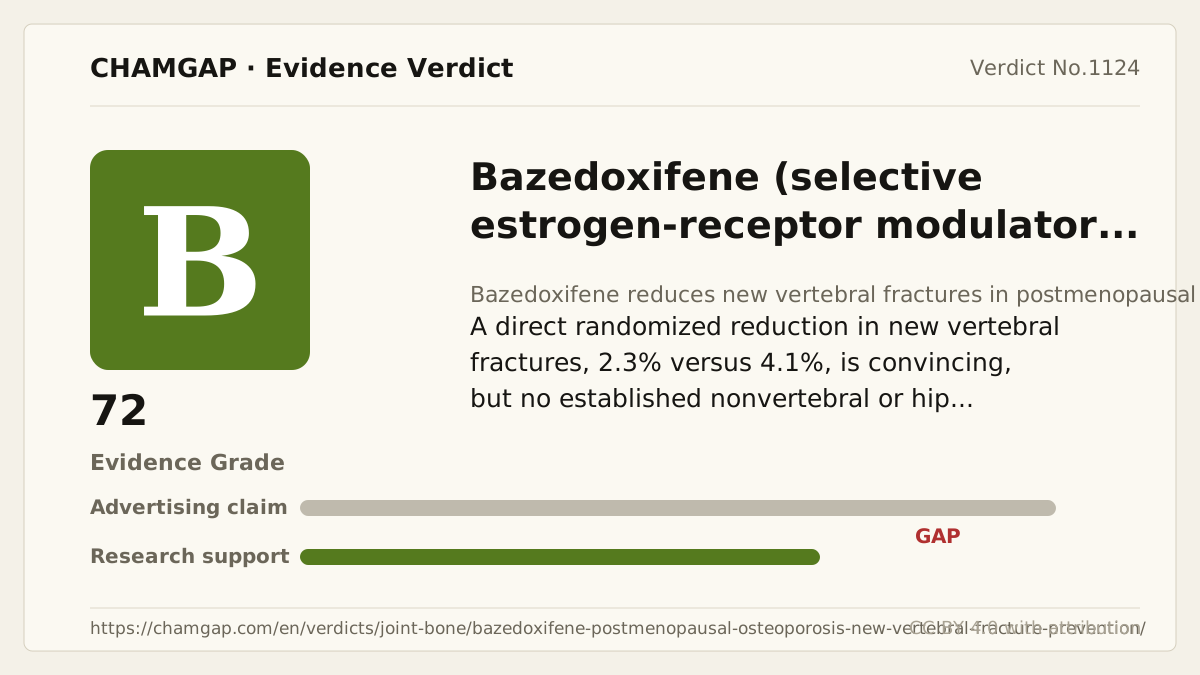
[Chamgap] Bazedoxifene x prevention of new vertebral fractures in postmenopausal osteoporosis — Evidence Grade B·72. 2 cited sources checked. Source: https://chamgap.com/en/verdicts/joint-bone/bazedoxifene-postmenopausal-osteoporosis-new-vertebral-fracture-prevention/ · CC BY 4.0CC BY 4.0 — free to use with attribution; do not distort grades, numbers, or verdict meaning.
What this document does and does not do
Chamgap is an information source. It reports what research has and has not confirmed; it does not tell readers what to take or buy. That decision belongs to readers and, when needed, medical or legal professionals. This verdict reflects literature available up to the search date and may change as new research appears. Nothing here is medical advice.