
Abaloparatide,
does it really help with Prevention of new vertebral and nonvertebral fractures in postmenopausal women with osteoporosis at high fracture risk?
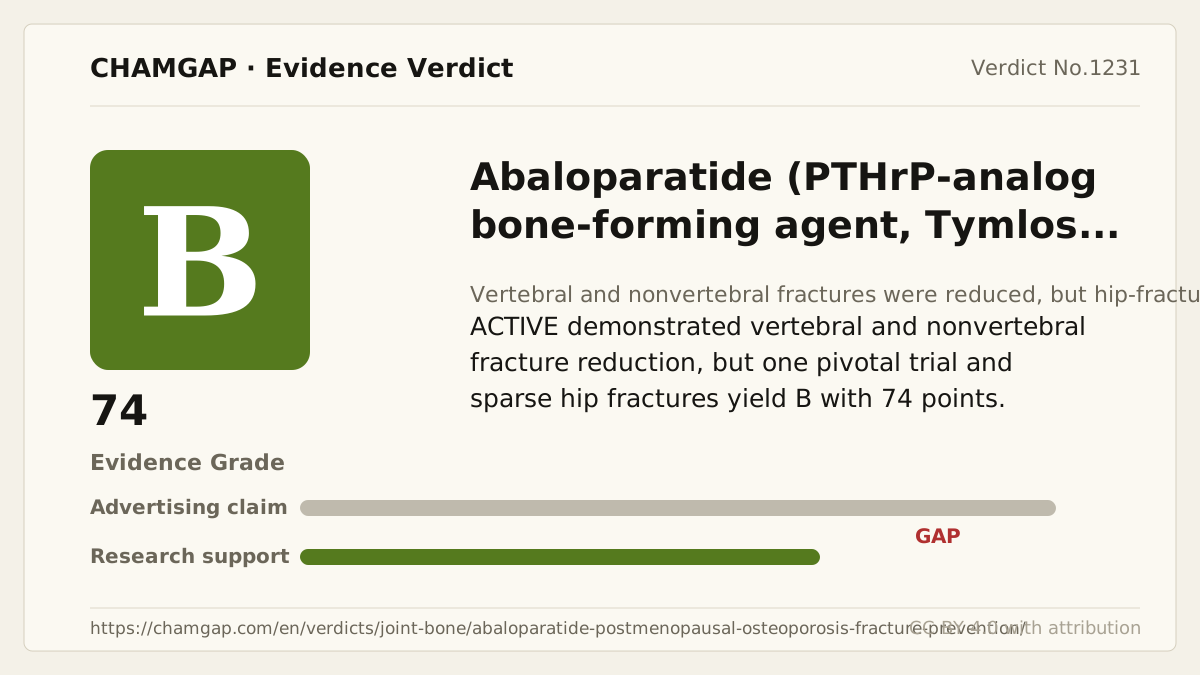
research showsAbaloparatide is rated B because randomized evidence shows fewer new vertebral and nonvertebral fractures in postmenopausal women with osteoporosis at high fracture risk. In the 2,463-participant ACTIVE trial, 18-month new vertebral fracture incidence was 0.58% versus 4.22%, and estimated nonvertebral fracture incidence was 2.7% versus 4.7%. The key hard-endpoint evidence is nevertheless concentrated in one pivotal trial, the nonvertebral result was borderline, and only two hip fractures occurred, so the single-pivotal-trial and sparse-hard-endpoint rule keeps the grade below A.
ads claimPromotion may treat bone-density gains and prevention at every fracture site as equally certain. Vertebral evidence is strongest, nonvertebral evidence is positive but less precise, and hip-fracture prevention remains unconfirmed.
Useful facts when choosing a product
- Abaloparatide is a once-daily subcutaneous bone-forming prescription injection for postmenopausal women with osteoporosis at high fracture risk and requires clinical follow-up.
- Lifetime cumulative use is generally limited to two years, and sequential antiresorptive treatment is commonly considered after discontinuation.
- Hypercalciuria or urinary stone risk, palpitations, dizziness, and orthostatic hypotension require caution, particularly during initial dosing and in susceptible patients.
Chamgap Semantic Classification Code
Candidate index · review held
M.abaloparatide.UNK.new-vertebral-and-nonvertebral-fractures-with-osteoporosis-at-high-fracture-risk.prevent.placeboMedicinal interventions > Abaloparatide > Unknown > new vertebral and nonvertebral fractures with osteoporosis at high fracture risk > Occurrence-prevention claim > Placebo
An automated migration candidate, not an issued permanent code; exact claim scope remains under review. This machine-generated migration candidate helps retrieval but is not a permanent assignment. The original verdict ID and URL remain authoritative.
What the research actually shows
ACTIVE randomized 2,463 postmenopausal women with osteoporosis at high fracture risk to abaloparatide, placebo, or open-label teriparatide for 18 months. New morphometric vertebral fractures occurred in 0.58% with abaloparatide and 4.22% with placebo; Kaplan-Meier estimated nonvertebral fracture rates were 2.7% and 4.7%. Reginster's network meta-analysis supported the direction of vertebral and nonvertebral benefit versus placebo, but direct abaloparatide fracture evidence remains centered on ACTIVE. Two hip fractures were too few to establish site-specific hip-fracture efficacy.
Why this is classified as B (74)
ACTIVE provides ingredient-specific vertebral and nonvertebral fracture reduction, but pivotal evidence is concentrated in one trial, the nonvertebral estimate is imprecise, and hip-fracture events were sparse. The single-pivotal-trial and sparse-hard-endpoint rule gives B with 74 points. Safety and duration limits are assessed separately.
Counterpoint. The large vertebral-fracture reduction can be clinically important for patients at very high fracture risk. Renal status, urinary-stone risk, adherence, and a sequential antiresorptive plan still require individualized assessment.
Rejudgment record. New verdict — Accepted ingredient-specific vertebral and nonvertebral fracture benefit in ACTIVE but applied B rather than A because pivotal evidence is concentrated in one original trial and hip-fracture events were sparse
Sub-claim grades by effect
This ingredient is marketed for several effects. A single overall grade blends strong and weak claims together, so each effect is graded separately here. The overall grade reflects the strongest disconfirming or core claim.
| Effect (sub-claim) | Grade | Basis |
|---|---|---|
| Prevention of new vertebral fractures | B | ACTIVE showed 0.58% versus 4.22%, but it remains one pivotal trial. |
| Prevention of nonvertebral fractures | B | Rates were 2.7% versus 4.7% with HR 0.57, but the confidence-interval upper bound was 1.00. |
| Prevention of hip fractures | C | Only two hip fractures occurred, both with placebo, leaving site-specific efficacy unconfirmed. |
Cross-check — AI research and Codex final gate
Evidence Table
| Study | Design | Sample | Funding | Endpoint | Result | Weight |
|---|---|---|---|---|---|---|
| Miller PD et al. ACTIVE. 2016 | Phase 3 randomized double-blind placebo-controlled trial | 2,463 postmenopausal women with osteoporosis | Funded by Radius Health | New morphometric vertebral and nonvertebral fractures | At 18 months, new vertebral fractures were 0.58% versus 4.22%; nonvertebral fractures were 2.7% versus 4.7%, HR 0.57 (95% CI 0.32 to 1.00). | Pivotal ingredient-specific hard-endpoint evidence |
| Reginster JY et al. 2019 | Network meta-analysis of randomized trials by fracture site | 22 randomized trials in postmenopausal osteoporosis | Funded by Radius Health with author conflicts reported | Vertebral, nonvertebral, and wrist fractures | Supported reduced vertebral and nonvertebral fracture risk with abaloparatide versus placebo. | Supportive synthesis, with direct evidence centered on ACTIVE |
Receipt — 2 References
All 2 cited sources were verified for existence at the original page (as of 2026-07-23).
Final verification and publication gate: Codex · Evidence date: 2026-07-23 · Corrections: none
Cite this verdict
[Chamgap] Abaloparatide x fracture prevention in high-risk postmenopausal osteoporosis — Evidence Grade B·74. 2 cited sources checked. Source: https://chamgap.com/en/verdicts/joint-bone/abaloparatide-postmenopausal-osteoporosis-fracture-prevention/ · CC BY 4.0CC BY 4.0 — free to use with attribution; do not distort grades, numbers, or verdict meaning.
What this document does and does not do
Chamgap is an information source. It reports what research has and has not confirmed; it does not tell readers what to take or buy. That decision belongs to readers and, when needed, medical or legal professionals. This verdict reflects literature available up to the search date and may change as new research appears. Nothing here is medical advice.