
Warfarin,
does it really help with Prevention of ischemic stroke and systemic embolism in nonvalvular atrial fibrillation?
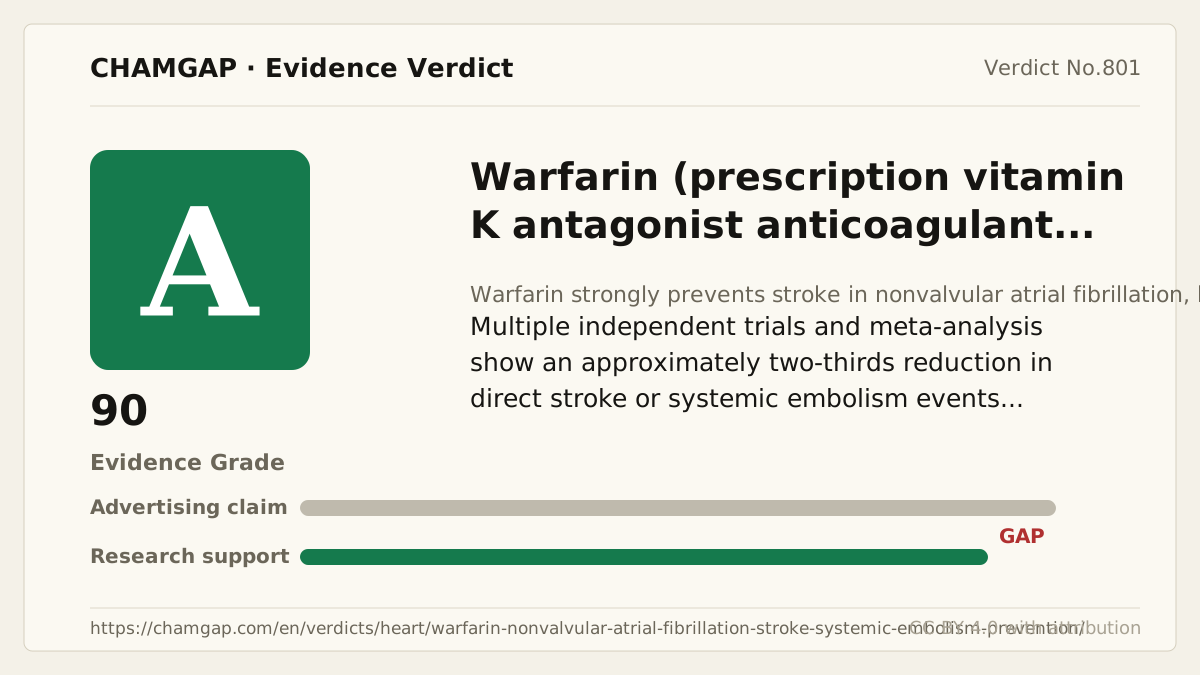
research showsWarfarin is rated A because prevention of ischemic stroke and systemic embolism in nonvalvular atrial fibrillation is established by repeated independent randomized trials and meta-analysis. In SPAF, stroke or systemic embolism fell from 7.4% per year with placebo to 2.3% per year with warfarin, a 67% reduction. A meta-analysis of six adjusted-dose warfarin trials involving 2,900 participants found a 64% reduction in stroke. These are direct clinical events, not laboratory surrogates. Major and intracranial bleeding, INR variability, drug and dietary interactions, and pregnancy risk remain separate safety issues.
ads claimEfficacy should not be expanded into claims that warfarin is the best anticoagulant for everyone or prevents stroke without bleeding risk. Prescribing weighs individual stroke and bleeding risk, ability to maintain INR control, concomitant medicines, and patient preference.
Useful facts when choosing a product
- Warfarin is a prescription vitamin K antagonist whose dose is individualized through regular INR testing and clinical review rather than kept fixed.
- Abrupt changes in vitamin K intake, alcohol use, and many medicines, including antibiotics, antifungals, and anti-inflammatory analgesics, can alter anticoagulation and require interaction checks.
- Serious bleeding is the central harm, and warfarin is generally contraindicated during pregnancy because of fetal risk. Surgery, bleeding symptoms, or possible pregnancy should be discussed promptly with the treating clinician.
Chamgap Semantic Classification Code
Candidate index · review held
UNK.warfarin.UNK.ischemic-stroke-and-systemic-embolism-in-nonvalvular-atrial-fibrillation.prevent.placeboUnknown > Warfarin > Unknown > ischemic stroke and systemic embolism in nonvalvular atrial fibrillation > Occurrence-prevention claim > Placebo
An automated migration candidate, not an issued permanent code; exact claim scope remains under review. This machine-generated migration candidate helps retrieval but is not a permanent assignment. The original verdict ID and URL remain authoritative.
What the research actually shows
The final SPAF report enrolled 1,330 patients with nonrheumatic atrial fibrillation and found that stroke or systemic embolism in warfarin-eligible patients fell from 7.4% per year with placebo to 2.3% per year with warfarin. Publicly funded BAATAF randomized 420 participants and observed 2 ischemic strokes with warfarin versus 13 in controls, an 86% reduction. The 571-participant Veterans Affairs cooperative trial found cerebral infarction in 19 of 265 placebo recipients versus 4 of 260 warfarin recipients among those without previous stroke. Hart's 2007 meta-analysis pooled six adjusted-dose warfarin trials with 2,900 participants and confirmed a 64% reduction in stroke versus control.
Why this is classified as A (90)
Multiple independent placebo- or control-group trials produced large reductions in direct clinical events, and the meta-analytic stroke reduction of 64% was consistent. Replication, independence, and direct outcomes support A with 90 points. INR variability and bleeding are recorded separately under safety rather than blended into efficacy.
Counterpoint. An A grade does not mean warfarin is optimal for every patient. Direct oral anticoagulants, kidney function, valvular disease, cost, adherence, and bleeding risk still shape individual treatment.
Rejudgment record. New verdict — Applied A because multiple independent randomized trials and meta-analysis show a large, consistent reduction in the direct clinical outcomes of ischemic stroke and systemic embolism; bleeding and INR-management issues were separated under safety
Sub-claim grades by effect
This ingredient is marketed for several effects. A single overall grade blends strong and weak claims together, so each effect is graded separately here. The overall grade reflects the strongest disconfirming or core claim.
| Effect (sub-claim) | Grade | Basis |
|---|---|---|
| Prevention of ischemic stroke in nonvalvular atrial fibrillation | A | Multiple independent randomized trials and meta-analysis found an approximately 64% reduction in direct stroke events. |
| Prevention of systemic embolism in nonvalvular atrial fibrillation | A | SPAF and related trials showed a significant reduction as part of a direct composite clinical outcome with stroke. |
| Prevention without bleeding risk | F | This is not an efficacy claim and is contrary to evidence; major and intracranial bleeding risks require INR management. |
Cross-check — AI research and Codex final gate
Evidence Table
| Study | Design | Sample | Funding | Endpoint | Result | Weight |
|---|---|---|---|---|---|---|
| Stroke Prevention in Atrial Fibrillation Investigators 1991 | Multicenter randomized warfarin, aspirin, and placebo-controlled trial | 1,330 participants with nonrheumatic atrial fibrillation | Independent multicenter investigation | Ischemic stroke or systemic embolism | In warfarin-eligible patients, events were 2.3% per year versus 7.4% per year with placebo, a 67% reduction. | Key randomized direct-clinical-event evidence |
| Ezekowitz MD et al. 1992 VA SPINAF | Randomized double-blind placebo-controlled trial | 571 men with chronic nonrheumatic atrial fibrillation | Public funding from the US Department of Veterans Affairs Cooperative Studies Program | Cerebral infarction | Among participants without previous stroke, cerebral infarction occurred in 19 of 265 placebo recipients and 4 of 260 warfarin recipients. | Independent replication with a direct outcome |
| Hart RG et al. 2007 | Systematic review and meta-analysis of randomized trials | 29 trials and 28,044 participants overall; six adjusted-dose warfarin versus control trials with 2,900 participants | Academic meta-analysis | Ischemic and hemorrhagic stroke, major bleeding, and death | Adjusted-dose warfarin reduced stroke by 64% versus control (95% CI 49% to 74%). | Synthesis confirming replication and effect magnitude |
Receipt — 3 References
All 3 cited sources were verified for existence at the original page (as of 2026-07-20).
Final verification and publication gate: Codex · Evidence date: 2026-07-20 · Corrections: none
Cite this verdict
[Chamgap] Warfarin x prevention of ischemic stroke and systemic embolism in nonvalvular atrial fibrillation — Evidence Grade A·90. 3 cited sources checked. Source: https://chamgap.com/en/verdicts/heart/warfarin-nonvalvular-atrial-fibrillation-stroke-systemic-embolism-prevention/ · CC BY 4.0CC BY 4.0 — free to use with attribution; do not distort grades, numbers, or verdict meaning.
What this document does and does not do
Chamgap is an information source. It reports what research has and has not confirmed; it does not tell readers what to take or buy. That decision belongs to readers and, when needed, medical or legal professionals. This verdict reflects literature available up to the search date and may change as new research appears. Nothing here is medical advice.