
Vitamin D3,
does it really help with Primary prevention of myocardial infarction, stroke, and cardiovascular death in generally healthy middle-aged and older adults?
research showsVitamin D3 for first-event prevention of myocardial infarction, stroke, or cardiovascular death in generally healthy middle-aged and older adults is rated D. VITAL randomized 25,871 participants to vitamin D3 2,000 IU per day or placebo and followed them for a median of 5.3 years, but major cardiovascular events were not reduced (HR 0.97, 95% CI 0.85 to 1.12). Myocardial infarction at HR 0.96, stroke at HR 0.95, and cardiovascular death at HR 1.11 were also nonsignificant. A meta-analysis of 21 trials and more than 83,000 participants was likewise null at RR 1.00 for major cardiovascular events. This efficacy axis is separate from deficiency correction or bone health, and hypercalcemia from excessive dosing remains under safety.
ads claimMarketing converts an observational association between low vitamin D blood levels and cardiovascular disease into prevention by supplements. Correcting a blood concentration and preventing myocardial infarction, stroke, or cardiovascular death are different clinical questions.
Useful facts when choosing a product
- VITAL used cholecalciferol 2,000 IU daily, and this dose did not prevent major cardiovascular events in generally healthy middle-aged and older adults.
- Vitamin D3 is fat soluble, so intake from multiple supplements and fortified foods should be added together, and no evidence shows that a higher dose reverses the cardiovascular null result.
- Correction of medically confirmed vitamin D deficiency and management of skeletal health are separate from a cardiovascular-event primary-prevention claim.
- Excessive or prolonged high dosing can cause hypercalcemia, nausea, confusion, kidney injury, or stones, so dose and calcium status should be assessed when clinically relevant.
Chamgap Semantic Classification Code
Candidate index · review held
S.vitamin-d3.UNK.primary-prevention-of-myocardial-infarction-stroke-and-cardiovascular-death-in-generally-healthy-middle-aged-and-older-adults.prevent.MULTISupplements and nutraceuticals > Vitamin D3 (cholecalciferol) > Unknown > Primary prevention of myocardial infarction, stroke, and cardiovascular death in generally healthy middle-aged and older adults > Occurrence-prevention claim > Multiple: primary unresolved
An automated migration candidate, not an issued permanent code; exact claim scope remains under review. This machine-generated migration candidate helps retrieval but is not a permanent assignment. The original verdict ID and URL remain authoritative.
What the research actually shows
Manson et al. 2019 reported VITAL, a nationwide two-by-two factorial trial testing vitamin D3 and marine omega-3 separately. In the vitamin D comparison, 805 major cardiovascular events occurred without a difference from placebo, and myocardial infarction, stroke, and cardiovascular death were each null. The 2019 analysis by Barbarawi et al. of 21 trials and 83,291 participants was null for all major cardiovascular outcomes. D-Health by Thompson et al. 2023 produced a small borderline composite signal whose confidence interval included one. Mirza et al. 2024 then pooled 18 long-term trials and 108,385 participants including D-Health and found MACE RR 0.99. Other vitamin D efficacy axes involving immunity, bone, depression, cancer, falls, or diabetes were excluded.
Why this is classified as D (24)
The 25,871-participant VITAL trial was null for major cardiovascular events and for myocardial infarction, stroke, and cardiovascular death separately, and a 21-trial, 83,291-participant meta-analysis confirmed the result. The large direct human null-evidence rule supports D with 24 points. Deficiency correction, other efficacy axes, and high-dose toxicity remain separate.
Counterpoint. People who need vitamin D for clinician-diagnosed deficiency, malabsorption, or skeletal risk can use it for those indications. This verdict concerns only first-event cardiovascular prevention in generally healthy middle-aged and older adults.
Rejudgment record. New verdict — Prioritized the direct null result for major cardiovascular events and components in the 25,871-participant VITAL trial and repeated null findings across 21 trials and 83,291 participants, separated deficiency correction and skeletal or other efficacy axes, and applied rule ②
Sub-claim grades by effect
This ingredient is marketed for several effects. A single overall grade blends strong and weak claims together, so each effect is graded separately here. The overall grade reflects the strongest disconfirming or core claim.
| Effect (sub-claim) | Grade | Basis |
|---|---|---|
| Primary prevention of myocardial infarction in generally healthy middle-aged and older adults | D | VITAL reported HR 0.96 and the randomized-trial meta-analysis reported RR 1.00, without significant reduction. Correction of confirmed deficiency is separate from this primary-prevention claim. |
| Primary prevention of stroke in generally healthy middle-aged and older adults | D | VITAL reported HR 0.95 and the randomized-trial meta-analysis reported RR 1.06, without significant reduction. |
| Primary prevention of cardiovascular death in generally healthy middle-aged and older adults | D | VITAL reported HR 1.11 and the randomized-trial meta-analysis reported RR 0.98, without significant reduction. |
Cross-check — AI research and Codex final gate
Evidence Table
| Study | Design | Sample | Funding | Endpoint | Result | Weight |
|---|---|---|---|---|---|---|
| Manson JE et al. 2019 (VITAL) | Nationwide randomized double-blind placebo-controlled two-by-two factorial trial | 25,871 generally healthy middle-aged and older adults | Public funding from the U.S. National Institutes of Health and other support | Composite and individual myocardial infarction, stroke, and cardiovascular-death outcomes | Major cardiovascular events had HR 0.97, with no significant reduction in myocardial infarction, stroke, or cardiovascular death individually. | Decisive large direct null trial |
| Barbarawi M et al. 2019 | Systematic review and meta-analysis of randomized clinical trials | 21 randomized trials and 83,291 participants | The article reported no specific funding | Major cardiovascular events, myocardial infarction, stroke, and cardiovascular death | Major cardiovascular events had RR 1.00, and no individual cardiovascular endpoint was significantly reduced. | Confirmatory large evidence synthesis |
| Thompson B et al. 2023 (D-Health) | Randomized double-blind placebo-controlled monthly-dosing trial | 21,315 adults aged 60 to 84 years | Public support including the Australian NHMRC | Composite major cardiovascular events including myocardial infarction, stroke, and coronary revascularization | At 60,000 IU per month, HR 0.91 (95% CI 0.81 to 1.01) favored a small reduction, but the confidence interval included the null. | Conflicting borderline signal |
| Mirza AMW et al. 2024 | Updated meta-analysis of long-term randomized trials | 18 randomized trials and 108,385 participants | Funding source not stated in the public abstract | MACE, myocardial infarction, stroke, cardiovascular death, and related outcomes | Even with D-Health included, MACE was RR 0.99 and myocardial infarction, stroke, and cardiovascular death were not significantly reduced. | Current confirmatory synthesis |
Receipt — 4 References
All 4 cited sources were verified for existence at the original page (as of 2026-07-20).
Final verification and publication gate: Codex · Evidence date: 2026-07-20 · Corrections: none
Cite this verdict
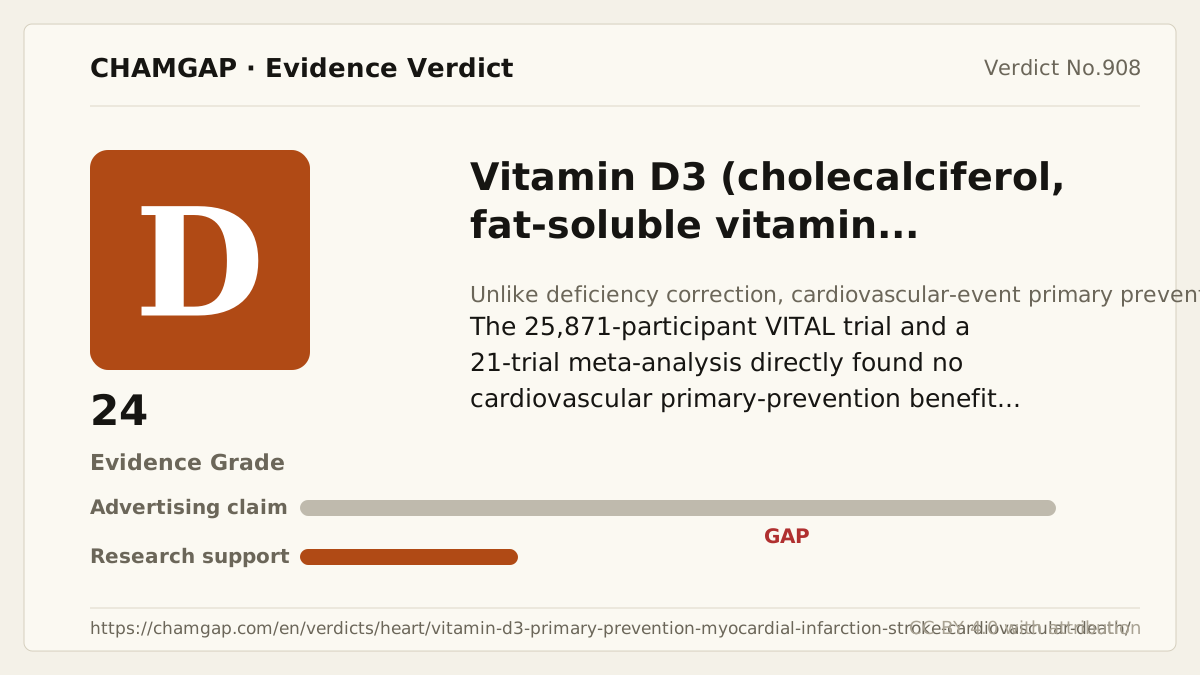
[Chamgap] Vitamin D3 x primary prevention of myocardial infarction, stroke, and cardiovascular death — Evidence Grade D·24. 4 cited sources checked. Source: https://chamgap.com/en/verdicts/heart/vitamin-d3-primary-prevention-myocardial-infarction-stroke-cardiovascular-death/ · CC BY 4.0CC BY 4.0 — free to use with attribution; do not distort grades, numbers, or verdict meaning.
What this document does and does not do
Chamgap is an information source. It reports what research has and has not confirmed; it does not tell readers what to take or buy. That decision belongs to readers and, when needed, medical or legal professionals. This verdict reflects literature available up to the search date and may change as new research appears. Nothing here is medical advice.