
Virgin coconut oil,
does it really help with Lower low-density lipoprotein cholesterol and prevent cardiovascular disease?
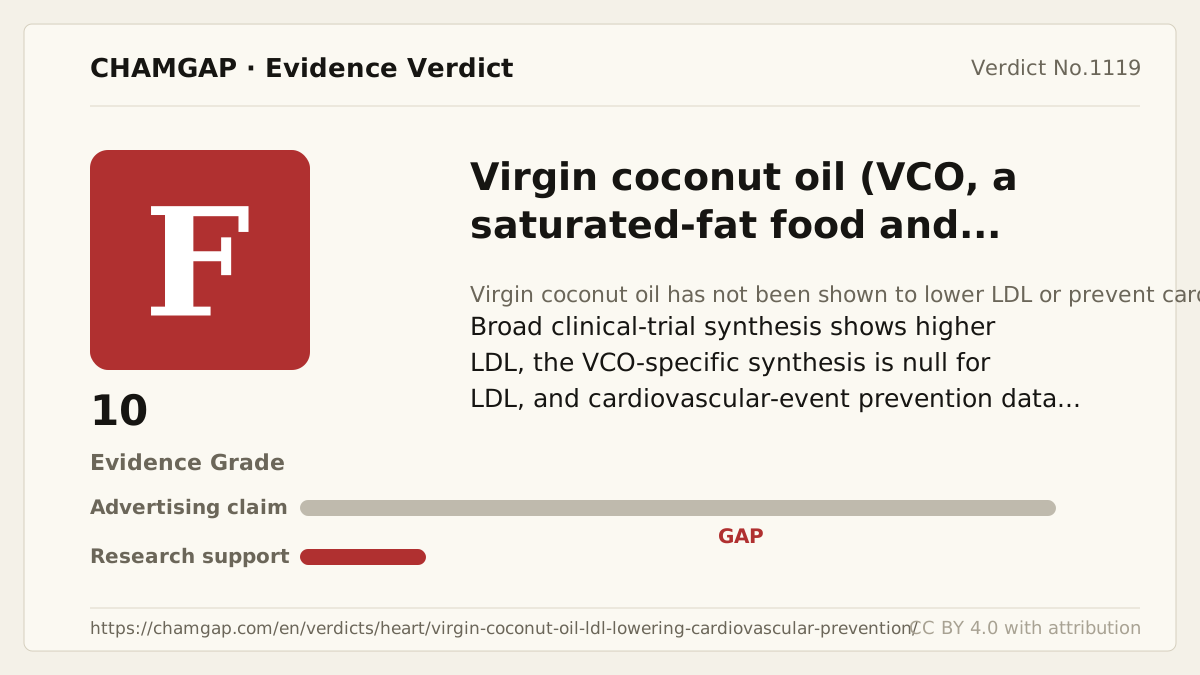
research showsLDL results conflict by comparator: +10.47 mg/dL (95% CI 3.01 to 17.94) versus unsaturated vegetable oils, but pooled MD -1.67 (-6.93 to 3.59) across multiple comparator oils. The cardiovascular-events trial had only two events versus two, and its confidence interval could not be verified. Because clinically meaningful benefit is not excluded, the grade is D with 30 points, not F.
ads claimMarketing turns medium-chain fat, virgin processing, natural origin, and higher high-density lipoprotein cholesterol into claims of lower LDL and heart protection. Lauric acid, the principal coconut-oil fatty acid, is a saturated fat that can raise LDL, and higher high-density lipoprotein cholesterol alone cannot establish a cardiovascular clinical benefit.
Useful facts when choosing a product
- Virgin coconut oil is coconut oil produced with minimal refining, bleaching, or deodorizing, but most of its fat remains saturated. The word virgin does not establish LDL lowering or cardiovascular prevention.
- Coconut oil provides about 9 kcal per gram, so adding it to an existing diet increases energy intake. Most trials substituted it for another fat, which is not the same as simple supplementation.
- Phenolic content and processing vary among VCO products, but product variation does not remove the saturated-fat content or the absence of cardiovascular-event evidence. Oxidation, contamination, and label accuracy can also vary by brand.
- For cardiovascular risk, evidence favors reducing saturated fat and replacing it with unsaturated-fat sources such as olive, canola, or soybean oil and nuts rather than adding coconut oil as if it were a medicine.
Chamgap Semantic Classification Code
Candidate index · review held
S.virgin-coconut-oil.UNK.low-density-lipoprotein-cholesterol-and-prevent-cardiovascular-disease.prevent.UNKSupplements and nutraceuticals > Virgin coconut oil > Unknown > low-density lipoprotein cholesterol and prevent cardiovascular disease > Occurrence-prevention claim > Unknown
An automated migration candidate, not an issued permanent code; exact claim scope remains under review. This machine-generated migration candidate helps retrieval but is not a permanent assignment. The original verdict ID and URL remain authoritative.
What the research actually shows
The 2020 Circulation meta-analysis pooled 16 reports comparing coconut oil with another fat for at least two weeks. Compared with nontropical vegetable oils, LDL cholesterol was 10.47 mg/dL higher and high-density lipoprotein cholesterol 4.00 mg/dL higher, with no significant benefit for glycemia, inflammation, or adiposity. The 2025 VCO-specific meta-analysis included 14 randomized trials, 1,049 participants from 11 countries, and interventions lasting two to 24 weeks. It found lower triglycerides and higher high-density lipoprotein cholesterol but no significant improvement in LDL, other lipids, fasting glucose, anthropometry, blood pressure, or C-reactive protein. Neither review was a cardiovascular-events trial. The 2017 advisory and 2026 ACC/AHA guideline favor replacing saturated fats such as coconut oil with unsaturated fats to lower LDL and atherosclerotic risk.
Why this is classified as D (30)
LDL results conflict by comparator: +10.47 mg/dL (95% CI 3.01 to 17.94) versus unsaturated vegetable oils, but pooled MD -1.67 (-6.93 to 3.59) across multiple comparator oils. The cardiovascular-events trial had only two events versus two, and its confidence interval could not be verified. Because clinically meaningful benefit is not excluded, the grade is D with 30 points, not F.
Counterpoint. Using a small amount instead of butter is a different question from adding VCO to lower LDL. Even when used for taste or cultural cooking, total saturated fat and the displaced fat matter, while cardiovascular prevention should center on proven dietary patterns and management of blood pressure, lipids, smoking, and physical activity. Grade-independent note: AHA advice and ACC/AHA guidance recommend avoiding or replacing coconut oil. These recommendations and safety concerns are not used to determine the efficacy grade.
Rejudgment record. New verdict — LDL results conflict by comparator: +10.47 mg/dL (95% CI 3.01 to 17.94) versus unsaturated vegetable oils, but pooled MD -1.67 (-6.93 to 3.59) across multiple comparator oils. The cardiovascular-events trial had only two events versus two, and its confidence interval could not be verified. Because clinically meaningful benefit is not excluded, the grade is D with 30 points, not F.
Sub-claim grades by effect
This ingredient is marketed for several effects. A single overall grade blends strong and weak claims together, so each effect is graded separately here. The overall grade reflects the strongest disconfirming or core claim.
| Effect (sub-claim) | Grade | Basis |
|---|---|---|
| Lower LDL cholesterol with virgin coconut oil | D | A broad coconut-oil meta-analysis found higher LDL than nontropical vegetable oils, and the current VCO-specific meta-analysis also found no LDL reduction. |
| Prevention of cardiovascular disease with virgin coconut oil | D | No direct trial shows fewer myocardial infarctions, strokes, or cardiovascular deaths, and American Heart Association guidance favors limiting saturated fat and replacing it with unsaturated fat. |
| Improved cardiovascular risk markers versus unsaturated vegetable oils | D | LDL was instead 10.47 mg/dL higher on average, and no clinical outcome establishes that higher high-density lipoprotein cholesterol offsets this. |
Cross-check — AI research and Codex final gate
Evidence Table
| Study | Design | Sample | Funding | Endpoint | Result | Weight |
|---|---|---|---|---|---|---|
| Neelakantan N et al. 2020 | Systematic review and meta-analysis of coconut-oil clinical trials | Sixteen reports of comparative trials lasting at least two weeks | Academic meta-analysis; external funding and conflict details were not specified in the PubMed record | Low- and high-density lipoprotein cholesterol, total cholesterol, triglycerides, glycemia, inflammation, and adiposity | Compared with nontropical vegetable oils, LDL was 10.47 mg/dL higher and high-density lipoprotein cholesterol 4.00 mg/dL higher, with no glycemic, inflammatory, or adiposity benefit. | Key synthesis showing an opposing LDL effect |
| Zhang Y et al. 2025 | Systematic review and meta-analysis of virgin-coconut-oil randomized trials | Fourteen randomized trials with 1,049 participants from 11 countries; two to 24 weeks | Funding not specified; the authors reported no competing interests | Lipids, glycemia, anthropometry, blood pressure, and C-reactive protein | Triglycerides decreased and high-density lipoprotein cholesterol increased, but LDL and other lipids, glycemia, anthropometry, blood pressure, and C-reactive protein did not improve significantly. | Direct VCO evidence null for LDL and lacking clinical events |
| Sacks FM et al.; American Heart Association. 2017 | Presidential advisory on dietary fats and cardiovascular disease | Review of randomized saturated-fat replacement trials and prospective observational evidence | American Heart Association scientific advisory | Low-density lipoprotein cholesterol and cardiovascular-disease incidence | Replacing saturated fat with unsaturated fat lowered LDL and cardiovascular disease; the advisory opposed coconut-oil use because it raises LDL without a countervailing benefit. | Professional guidance opposing the efficacy claim |
| 2026 ACC/AHA Multisociety Dyslipidemia Guideline | Multisociety clinical practice guideline for dyslipidemia | Synthesis of human clinical studies, systematic reviews, and meta-analyses through December 2024 | Joint ACC/AHA clinical practice guideline | LDL lowering and prevention of atherosclerotic cardiovascular disease | The guideline identified coconut oil as a saturated-fat source, recommended limiting saturated fat and replacing it with unsaturated fat, and did not recommend supplements for lipid lowering. | Current guideline context against this use |
Receipt — 4 References
All 4 cited sources were verified for existence at the original page (as of 2026-07-22).
Final verification and publication gate: Codex · Evidence date: 2026-07-22 · Corrections: none
Cite this verdict
[Chamgap] Virgin coconut oil x lower LDL cholesterol and cardiovascular-disease prevention — Evidence Grade D·30. 4 cited sources checked. Source: https://chamgap.com/en/verdicts/heart/virgin-coconut-oil-ldl-lowering-cardiovascular-prevention/ · CC BY 4.0CC BY 4.0 — free to use with attribution; do not distort grades, numbers, or verdict meaning.
What this document does and does not do
Chamgap is an information source. It reports what research has and has not confirmed; it does not tell readers what to take or buy. That decision belongs to readers and, when needed, medical or legal professionals. This verdict reflects literature available up to the search date and may change as new research appears. Nothing here is medical advice.