
Very-low-sodium diet,
does it really help with Increased death or major cardiovascular events?
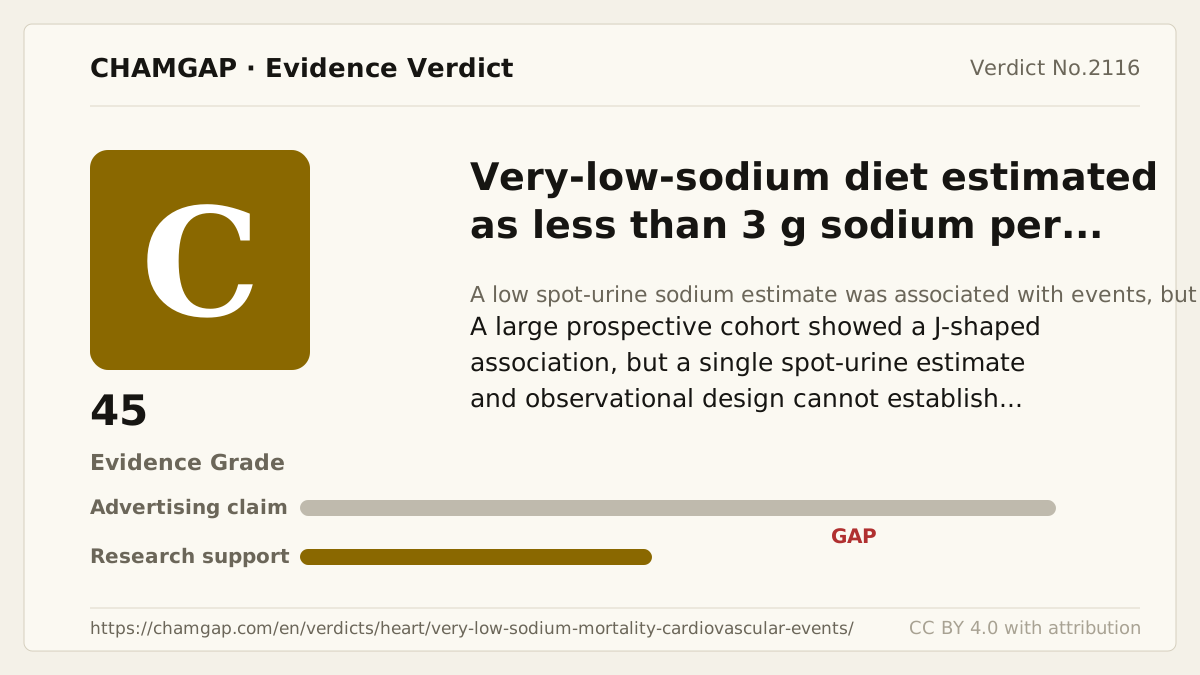
research showsThe grade is C with 54 points. In the analysis of 103,570 PURE participants, less than 3 g sodium/day with potassium above the median, estimated from one fasting morning urine sample using the Kawasaki formula, had a higher hazard of death or major cardiovascular events than the exact 4.00-to-4.99 g/day higher-potassium reference category, HR 1.19 (95% CI 1.02 to 1.38). The 3-to-5 g/day description is only a summary range. A single estimate may not represent long-term intake, so the association does not establish that lowering salt itself caused death.
ads claimThe association between a low single-sample estimate and event rates is real. It does not show that healthy people die because they deliberately lower sodium or that every low-sodium recommendation is harmful.
Useful facts when choosing a product
- PURE defined low sodium from a Kawasaki-formula estimate based on one fasting morning urine sample, not from controlled feeding or repeated 24-hour collections.
- The composite-event HR was 1.19 (95% CI 1.02 to 1.38) for less than 3 g/day with higher potassium versus the reference group.
- Verdict 2115 is C with 56 points for TOHP randomized sodium reduction measured by repeated 24-hour urine and long-term cardiovascular events; its direction and measurement method differ.
- Verdict 1714 is C with 58 points for DASH and blood pressure, a different endpoint from the harm claim assessed here.
Chamgap Semantic Classification Code
Candidate index · review held
D.very-low-sodium-diet-estimated.dietary.death-or-major-cardiovascular-events.increase.reference-exposureDietary patterns and eating practices > Very-low-sodium diet estimated > Dietary regimen > death or major cardiovascular events > Increase claim > Reference exposure
An automated migration candidate, not an issued permanent code; exact claim scope remains under review. This machine-generated migration candidate helps retrieval but is not a permanent assignment. The original verdict ID and URL remain authoritative.
What the research actually shows
PURE analyzed 103,570 participants in 18 countries and followed them for a median 8.2 years after estimating 24-hour sodium and potassium excretion from one fasting morning urine specimen with the Kawasaki formula. This was not repeated 24-hour urine collection. There were 7,884 deaths or major cardiovascular events. The exact reference category for HR 1.19 was 4.00 to 4.99 g sodium/day with potassium above the median; 3 to 5 g/day is a summary description. The current analysis received European Research Council and Heart and Stroke Foundation of Ontario support; PURE disclosed both public support and unrestricted grants from several pharmaceutical companies.
Why this is classified as C (54)
A significant hard-outcome association supports the harm claim, but a single spot-urine estimate and multiple category comparisons limit causal interpretation, giving C with 54 points.
Counterpoint. Large size and long follow-up are strengths, but the J-shaped association is not a randomized effect of sodium reduction.
Rejudgment record. Cross-check applied — A significant prospective association between spot-urine-estimated low sodium and events, limited by exposure measurement error and unreported multiplicity adjustment for multiple category comparisons
| Endpoint | H | Hard endpoint - actual events such as death |
| Replication | R1 | Single confirmatory trial |
| Independence | I1 | Mixed funding sources |
| Effect size | E+ | Meets the clinically important threshold |
Stored derived and displayed grades match; this is not a current recalculation or validity check (C).
Sub-claim grades by effect
This ingredient is marketed for several effects. A single overall grade blends strong and weak claims together, so each effect is graded separately here. The overall grade reflects the strongest disconfirming or core claim.
| Effect (sub-claim) | Grade | Basis |
|---|---|---|
| J-shaped association between spot-urine-estimated low sodium and events | C | The large cohort found HR 1.19, but this was not a causal intervention effect. |
| Sodium reduction itself increases death or cardiovascular events | C | A single-estimate observational study cannot establish causal harm from the act of reduction. |
Cross-check — AI research and Codex final gate
Evidence Table
| Study | Design | Sample | Funding | Endpoint | Result | Weight |
|---|---|---|---|---|---|---|
| O'Donnell M et al. 2019 PURE | Prospective cohort in 18 countries | 103,570 analyzed; median 8.2 years; 7,884 deaths or major cardiovascular events | Mixed public and nonprofit support plus unrestricted grants from several pharmaceutical companies | Death or major cardiovascular events | Less than 3 g sodium/day with higher potassium versus the exact 4.00-to-4.99 g/day higher-potassium reference: HR 1.19 (95% CI 1.02 to 1.38) | Large hard-outcome observational signal based on one spot-urine estimate |
Receipt — 2 References
All 2 cited sources were verified for existence at the original page (as of 2026-08-04).
Final verification and publication gate: Codex · Evidence date: 2026-08-04 · Corrections: none
Cite this verdict
[Chamgap] Very-low-sodium diet x increased death or major cardiovascular events — Evidence Grade C·54. 2 cited sources checked. Source: https://chamgap.com/en/verdicts/heart/very-low-sodium-mortality-cardiovascular-events/ · CC BY 4.0CC BY 4.0 — free to use with attribution; do not distort grades, numbers, or verdict meaning.
What this document does and does not do
Chamgap is an information source. It reports what research has and has not confirmed; it does not tell readers what to take or buy. That decision belongs to readers and, when needed, medical or legal professionals. This verdict reflects literature available up to the search date and may change as new research appears. Nothing here is medical advice.