
TOHP sodium-reduction diet,
does it really help with Reduced long-term cardiovascular events?
research showsThe grade is C. TOHP I and II randomized 3,126 participants. Among 2,415 with long-term morbidity follow-up, 200 cardiovascular events occurred and the adjusted HR was 0.75 (95% CI 0.57 to 0.99). Reduced sodium during intervention was verified with 24-hour urine, but morbidity follow-up was 77% and post-trial intake was not measured, giving C with 56 points.
ads claimThe 24-hour urine evidence is strong for intervention-period exposure, but it did not show that the difference persisted throughout follow-up. The 25% point estimate cannot be promised for every long-term sodium-reduction program.
Useful facts when choosing a product
- Net sodium reduction in TOHP I was 44 mmol/24 h, about 1.01 g sodium/day.
- Net reduction in TOHP II was 33 mmol/24 h, about 0.76 g sodium/day.
- These values came from repeated 24-hour urine collections, not spot-urine equations.
- Verdict 2116 is C with 54 points for an observational harm association based on one fasting morning urine estimate.
- Verdict 1714 is C with 58 points for DASH and blood pressure; this verdict concerns sodium reduction itself and long-term cardiovascular events.
Chamgap Semantic Classification Code
Candidate index · review held
D.tohp-dietary-sodium-reduction-intervention.dietary.long-term-cardiovascular-events.reduce.UNKDietary patterns and eating practices > TOHP dietary sodium-reduction intervention > Dietary regimen > long-term cardiovascular events > Reduction claim > Unknown
An automated migration candidate, not an issued permanent code; exact claim scope remains under review. This machine-generated migration candidate helps retrieval but is not a permanent assignment. The original verdict ID and URL remain authoritative.
What the research actually shows
TOHP I randomized 744 and TOHP II 2,382 participants, totaling 3,126. The original trial primary outcome was blood pressure, especially diastolic pressure; the long-term cardiovascular composite was a separate outcome from 10 to 15 years of observational follow-up of randomized trial participants. Repeated 24-hour urine during intervention showed net sodium reductions of 44 and 33 mmol/24 h, about 1.01 and 0.76 g sodium/day. Long-term morbidity follow-up was available for 2,415 participants (77%), with 200 composite cardiovascular events. After intervention ended, 24-hour urine, blood pressure, and actual sodium intake were not measured. NHLBI funded the trials and follow-up.
Why this is classified as C (56)
A significant hard-outcome signal after randomized and biomarker-confirmed intervention is limited by 77% morbidity follow-up and unmeasured post-trial intake, giving C with 56 points.
Counterpoint. This study followed actual cardiovascular events rather than blood pressure alone, but it is not a definitive long-term exposure trial.
Rejudgment record. Cross-check applied — Significant long-term cardiovascular-event reduction after randomized sodium intervention verified by 24-hour urine, limited by 77% morbidity follow-up and no post-trial exposure measurement
| Endpoint | H | Hard endpoint - actual events such as death |
| Replication | R1 | Single confirmatory trial |
| Independence | I2 | Decisive evidence is publicly or non-profit funded |
| Effect size | E+ | Meets the clinically important threshold |
Stored derived and displayed grades match; this is not a current recalculation or validity check (C).
Sub-claim grades by effect
This ingredient is marketed for several effects. A single overall grade blends strong and weak claims together, so each effect is graded separately here. The overall grade reflects the strongest disconfirming or core claim.
| Effect (sub-claim) | Grade | Basis |
|---|---|---|
| Reduced long-term composite cardiovascular events | C | HR was 0.75, but morbidity follow-up was 77% and post-trial exposure was unmeasured. |
| Reduced all-cause mortality | D | With 67 deaths and complete vital-status follow-up, HR 0.80 had a confidence interval including 1. |
Cross-check — AI research and Codex final gate
Evidence Table
| Study | Design | Sample | Funding | Endpoint | Result | Weight |
|---|---|---|---|---|---|---|
| Cook NR et al. 2007 TOHP follow-up | Observational long-term follow-up of two randomized sodium-reduction trials | 3,126 randomized; morbidity follow-up in 2,415 (77%), 200 cardiovascular events | US National Heart, Lung, and Blood Institute | Composite myocardial infarction, stroke, coronary revascularization, or cardiovascular death | Adjusted HR 0.75 (95% CI 0.57 to 0.99); all-cause mortality HR 0.80 (0.51 to 1.26) | Long-term hard-outcome signal rooted in randomized intervention |
| Adler AI, F Taylor, Martin, Gottlieb, RS Taylor, and Ebrahim 2014 Cochrane update | Systematic review of randomized trials | TOHP supplied the principal long-term event data in normotensive and prehypertensive participants | Source trials funded by NHLBI; one review author disclosed ownership of a diet-related trademark | Cardiovascular morbidity and mortality | Included the TOHP signal while noting possible bias from loss to follow-up for nonfatal events | Supporting assessment of follow-up limitations |
Receipt — 2 References
All 2 cited sources were verified for existence at the original page (as of 2026-08-04).
Final verification and publication gate: Codex · Evidence date: 2026-08-04 · Corrections: none
Cite this verdict
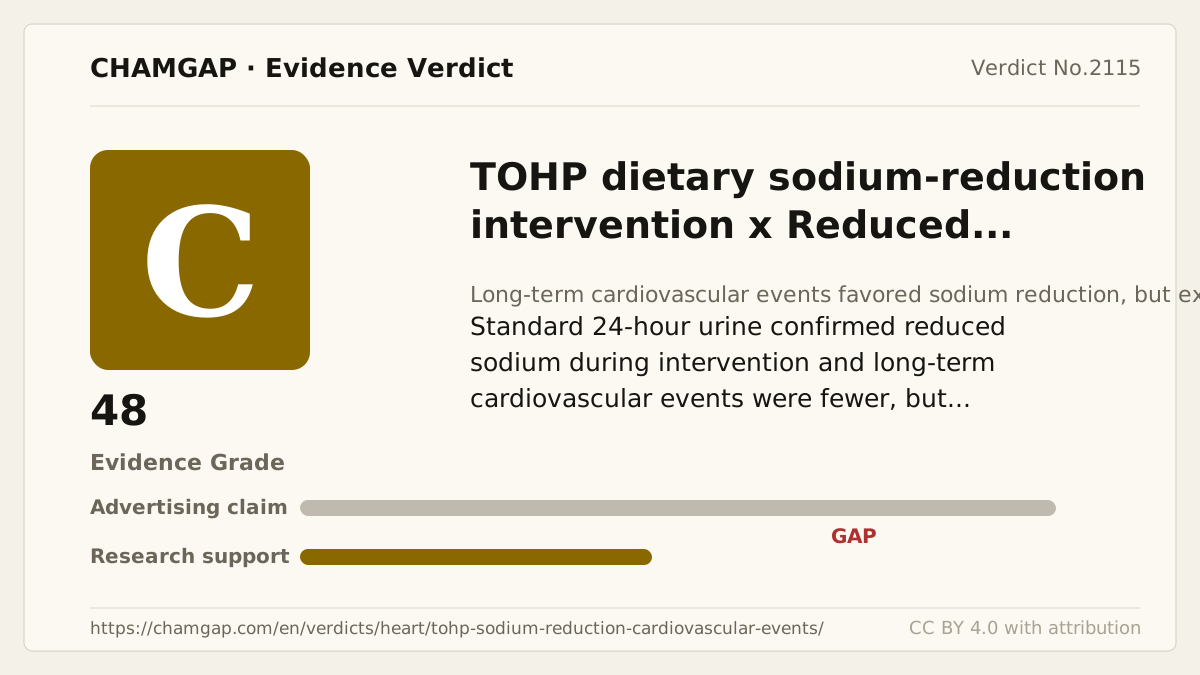
[Chamgap] TOHP sodium-reduction diet x fewer long-term cardiovascular events — Evidence Grade C·56. 2 cited sources checked. Source: https://chamgap.com/en/verdicts/heart/tohp-sodium-reduction-cardiovascular-events/ · CC BY 4.0CC BY 4.0 — free to use with attribution; do not distort grades, numbers, or verdict meaning.
What this document does and does not do
Chamgap is an information source. It reports what research has and has not confirmed; it does not tell readers what to take or buy. That decision belongs to readers and, when needed, medical or legal professionals. This verdict reflects literature available up to the search date and may change as new research appears. Nothing here is medical advice.